








Following a recent exploration of the complex dynamics within multidisciplinary health care teams, a persistent question has occupied the minds of many practitioners: What is the true, unique value of an Occupational Therapist (OT), and how can that contribution be better articulated to colleagues and the public? Within the high-pressure environment of modern medicine, the profession of occupational therapy often faces a persistent communication hurdle. While the clinical outcomes are profound, the "how" and "why" of the OT’s role—which often centers on the nuances of daily living—can sometimes be overshadowed by the more visible, acute interventions performed by other medical specialists.
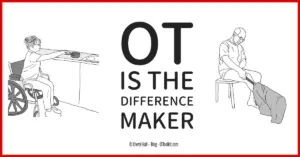
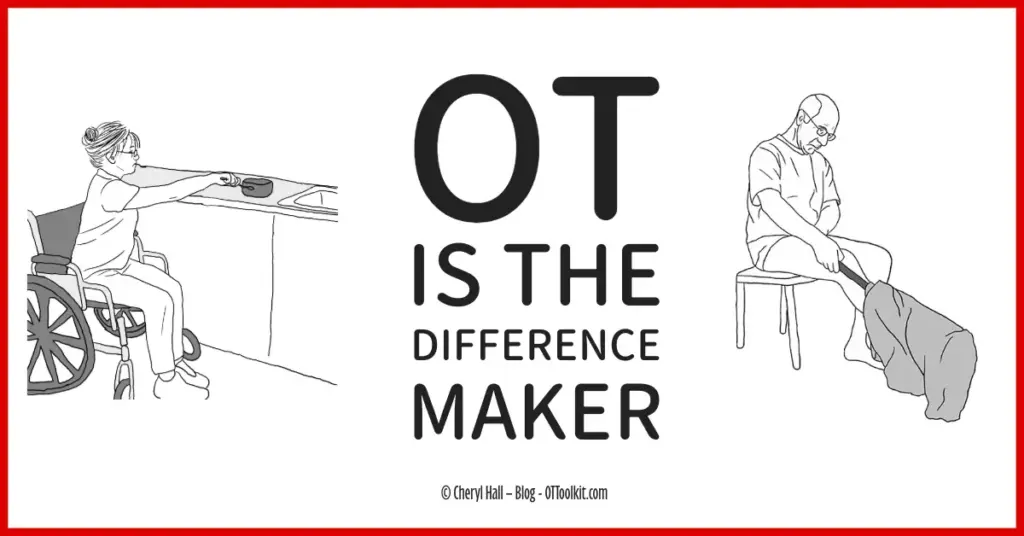
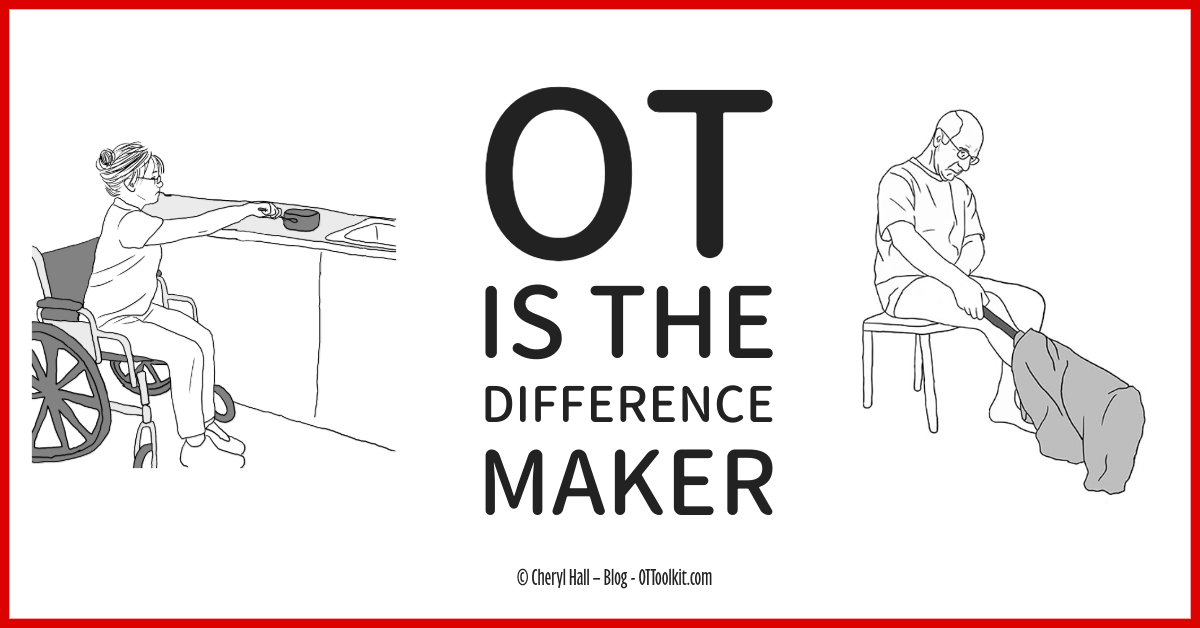
The consensus among many practitioners is that the profession must pivot its narrative. Instead of viewing OTs as simply another cog in the machine, it is time to define the Occupational Therapist as the definitive "difference maker" on the clinical team. By shifting the focus to concrete, lived experiences where an OT meets a patient exactly where they are in their health journey, it becomes possible to demonstrate how these professionals bridge the gap between medical treatment and the actual quality of a patient’s life.
In the realm of patient care, there are often moments—small, subtle, and frequently overlooked by the broader medical team—where an OT’s intervention shifts a patient’s trajectory from despair to dignity. These are not grand, life-saving surgeries, but they are transformative in the context of the patient’s day-to-day existence.
Terminal Cancer and the Power of Play
Consider the case of "Paul," a ten-year-old boy diagnosed with terminal cancer. Paul had become increasingly withdrawn and depressed, largely confined to a wheelchair as his illness progressed. In the clinical setting, his condition was viewed through the lens of decline. Despite the best efforts of the multidisciplinary team to manage his pain and symptoms, the daily hour of occupational therapy consistently ended in the same somber fashion: the weight of his illness appeared to be winning the battle, leaving Paul silent and isolated.
In an effort to break this cycle, a strategic change was made. During a session, a simple reaching grabber—a standard tool in the OT toolkit—was introduced. The intent was not clinical exercise, but a subtle shift in the environment. Paul’s mother, who had been occupied in the kitchen, left the room momentarily. The OT seized the opportunity, using the grabber to retrieve a dish towel and handing it to the boy with a whispered instruction to hide it under the table. When his mother returned, the atmosphere shifted instantly. As she began searching for the missing item, opening drawers and looking around the room, Paul’s demeanor transformed. He erupted into genuine laughter, waving the towel in the air as his mother finally realized the source of the mischief.
The grabber remained with Paul, becoming a primary tool for play and interaction with his parents and siblings during his final two weeks. When his parents reached out following his passing, their gratitude was not focused on clinical milestones, but on the fact that they had been gifted a few final moments of childhood fun and mischief. In this instance, the OT’s contribution was not "medical" in the traditional sense, but it was profoundly restorative to the human spirit.
Restoring Function Through Custom Innovation
The clinical value of an OT is perhaps most visible when a patient faces a loss of function that standard medical care cannot address. "Jack," a patient suffering from severe, uncontrolled diabetes, had recently undergone surgery that resulted in the amputation of several fingers, leaving him with only his thumbs and half of his dominant index finger.
As the occupational therapist helped Jack develop strategies to maintain his independence in activities of daily living (ADLs), he reached a point of vulnerability. He expressed profound embarrassment regarding a specific, mundane task he could no longer perform. After some gentle encouragement, Jack admitted that his most recent surgery had taken away his "nose-picking finger," a seemingly trivial but deeply personal function that contributed to his sense of self-care and autonomy.
Rather than dismissing the concern as non-essential, the OT took it seriously. After conducting a thorough assessment of sensation, skin integrity, and circulation in the residual finger—and consulting with the nursing and medical staff to ensure safety—the therapist went to work. Using Velcro and standard splinting materials, the OT constructed a custom, adaptive device. After a series of adjustments to ensure it was both effective and comfortable, the device succeeded. Jack regained the ability to perform the task independently, reclaiming a small but significant piece of his personal agency. This intervention highlights a core tenet of the profession: the ability to listen, assess, and innovate in ways that prioritize the patient’s individual goals over clinical abstractions.
Breaking the Invisible Barriers of Home
The role of the OT often extends beyond the hospital room and into the patient’s home, where environmental barriers can turn an independent adult into a "prisoner" of their own residence. "Dorothy," a 75-year-old patient suffering from severe rheumatoid arthritis, serves as a poignant example of how environmental modification can change a life.
When the therapist arrived for an initial home visit, Dorothy called out from inside that the door was unlocked, rather than opening it herself. Upon evaluation, it was revealed that in the ten years she had resided in her apartment, she had never been able to open the front door. She had lived in a state of dependency, relying on neighbors to let her in and out, and leaving the door unlocked for visitors because she lacked the physical strength to operate the mechanism.
The OT inspected the door and identified the culprit: a magnetic seal that was far too strong for someone with Dorothy’s level of arthritis to overcome. Through a simple, low-cost modification—using masking tape to cover half of the magnetic surface—the resistance was reduced to a manageable level. Dorothy was able to open her front door independently for the first time in a decade. To ensure safety, the therapist contacted the apartment management and the local fire department, both of whom confirmed that the modification did not compromise fire protection standards.
These stories underscore a reality that is often lost in high-acuity medical reporting: the "small" interventions are frequently the ones that matter most to the patient. None of these issues—the emotional isolation of a terminal child, the dignity of a patient with physical loss, or the literal entrapment of an elderly woman—would have been addressed without the specific, patient-centered lens of an occupational therapist.
As the health care landscape continues to evolve, the challenge remains for OTs to effectively communicate this value. Every therapist possesses their own library of stories where they acted as the difference maker, stepping in where others saw no path forward. These experiences are the most potent tools for advocacy. When the next discussion arises regarding the value of a multidisciplinary team, it is these narratives—these moments of genuine, life-altering impact—that should be shared to remind the broader medical community of the indispensable role occupational therapy plays in the journey of recovery and living.