








For the millions of people living with chronic low back pain, the experience is rarely limited to a simple physical sensation. It is a condition that often dictates the boundaries of a person’s life, turning routine movements into sources of anxiety and persistent discomfort. Now, researchers at the University of California San Diego School of Medicine have uncovered a startling neurological explanation for why this condition is so uniquely debilitating: chronic back pain appears to hijack the brain’s "self network," effectively weaving the experience of pain into a patient’s sense of identity.
The study, published on October 5, 2026, in the British Journal of Anaesthesia, offers a groundbreaking perspective on chronic low back pain (cLBP). According to the World Health Organization, low back pain is the leading cause of disability across the globe. By clinical definition, pain that persists for more than 12 weeks is classified as chronic. For these patients, even minor, everyday movements can provoke sudden, sharp flare-ups, transforming basic physical activity into a psychological hurdle. While the brain is known to be the central processor of all pain, scientists have long struggled to pinpoint the precise neural circuits that govern movement-triggered pain. This latest research suggests the answer lies in an unexpected activation of the brain’s Default Mode Network (DMN).
Chronic Back Pain Activates the Brain’s Sense of Self
The Default Mode Network—often colloquially referred to by neuroscientists as the "self network"—is a collection of interconnected regions spanning the frontal, parietal, and temporal lobes. Under normal circumstances, this network is most active when our attention is directed inward. It is the system that hums along when we are daydreaming, reflecting on our personal histories, considering our emotions, or contemplating our identity. Conversely, the DMN typically quietens down when we shift our focus to the external environment, such as when we engage in a complex task or react to an immediate physical threat.
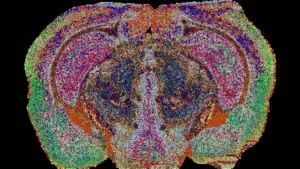
The researchers at UC San Diego found that in patients with chronic back pain, this pattern is fundamentally disrupted. When a movement-triggered pain flare occurs, the DMN does not deactivate as it should. Instead, it surges to life. This unusual response suggests that chronic pain is not merely a signal of tissue damage or mechanical dysfunction; it is a profound cognitive event that engages the brain’s core systems for self-representation.
This discovery provides a compelling, evidence-based reason for why conventional pain management strategies, which are largely designed to suppress physical symptoms, frequently provide limited relief. If the pain is being "processed" through the same neural pathways that define who a person is, then simply dulling the physical sensation may not be enough to break the cycle of suffering.
Brain Scans Reveal a Surprising Difference Between Chronic and Acute Pain
To investigate the mechanics of these pain flares, the research team recruited 114 patients diagnosed with chronic low back pain. The participants underwent a standardized clinical "leg raise test," a procedure commonly used by physical therapists and doctors to safely trigger a flare of back pain. Throughout this process, the team monitored real-time changes in brain blood flow using a sophisticated functional MRI technique known as arterial spin labeling. This non-invasive method allows for the precise mapping of neural activity without the need for injected contrast agents, providing a clean window into the brain’s reactions during moments of distress.
To ensure they were observing a unique phenomenon related to chronic pain, the team conducted a comparative analysis. They exposed the same participants to a brief, harmless heat stimulus on the calf—an acute, sharp pain similar to the sensation of touching a hot stove.
The results were starkly different. When the patients experienced the acute heat, their brains behaved in the "normal" way: the DMN deactivated as the brain shifted its full attention to the external, immediate stimulus. However, when the chronic back pain was triggered by the leg raise, the DMN became hyper-active. This difference provides concrete evidence that the brain treats a flare of chronic back pain as something fundamentally different from acute pain—it treats it as an internal, self-referential event.
Why the Brain Reacts Differently to Chronic Pain
The implications of this finding are profound. In a healthy state, acute pain serves as an evolutionary warning, forcing the brain to focus entirely on the external threat to facilitate survival. However, for those with chronic back pain, the pain is not an external threat to be managed and forgotten; it is a persistent, internal feature of their existence.
"In every pain study, when you’re experiencing pain, the DMN deactivates," explains Dr. Fadel Zeidan, the study’s corresponding author, a professor in the Department of Anesthesiology, and director of the Pain Health and Mindfulness Laboratory at UC San Diego School of Medicine. "What we show for the first time ever is that when you have a pain flare, it turns on instead. You start to identify the experience with who you are."
This fusion of pain and identity means the patient’s experience is constantly "contaminated" by the condition. It is not just the physical ache that is felt; it is the anticipatory dread of the next movement, the haunting memories of previous flares, the frustration of physical limitations, and the embarrassment of being unable to participate in daily activities. By the time a patient moves to reach for a glass or sit in a chair, their brain has already integrated the expectation of pain into their self-perception, creating a feedback loop that sustains the condition.
A New Direction for Chronic Back Pain Treatment
The realization that chronic pain is a disorder of the "self" suggests that the current medical paradigm, which relies heavily on symptomatic relief through pharmaceuticals like opiates, is missing the mark. These medications target the physical transmission of pain signals, but they do nothing to address the neural networks that encode the emotional and personal weight of that pain.
"Current pain medicine is fixated on ridding patients of their pain symptoms, but that’s not the source of chronic pain," Dr. Zeidan notes. "These data suggest that a chronic pain flare also encompasses one’s identity."
Moving forward, the researchers are focusing on therapeutic avenues that target the brain’s relationship with pain rather than just the signal itself. Dr. Zeidan’s laboratory is currently exploring the potential of mindfulness meditation and psychedelic-assisted therapies. Mindfulness, a practice rooted in non-judgmental awareness of the present moment, may help patients decouple their identity from their physical sensations. Similarly, psilocybin is being studied for its ability to "reset" the neural systems that integrate trauma and past experiences with future expectations.
The objective of these interventions is not necessarily to eliminate every ounce of physical discomfort, but rather to shift the patient’s relationship with that discomfort. By disrupting the brain’s tendency to loop pain into the "self network," it may be possible to stop the pain from defining a person’s day-to-day life.
While these clinical trials are still in their early stages, the research marks a shift in how the medical community views chronic pain. By recognizing the role of the Default Mode Network, scientists have opened a new door for potential treatments that could finally provide relief for the millions of people who have found little comfort in traditional medicine. The path forward remains complex, but for the first time, researchers are beginning to understand why the pain persists—not just in the back, but in the mind.
The study’s authors include Morgan Gianola, Jon Dean, Conan Chen, Daniel Barrows, Gabriel Reigner, and Thomas Liu. Funding was supported by the National Institutes of Health’s National Center for Complementary and Integrative Health and the UC San Diego Sanford Institute for Empathy and Compassion. The research team reported no conflicts of interest.