







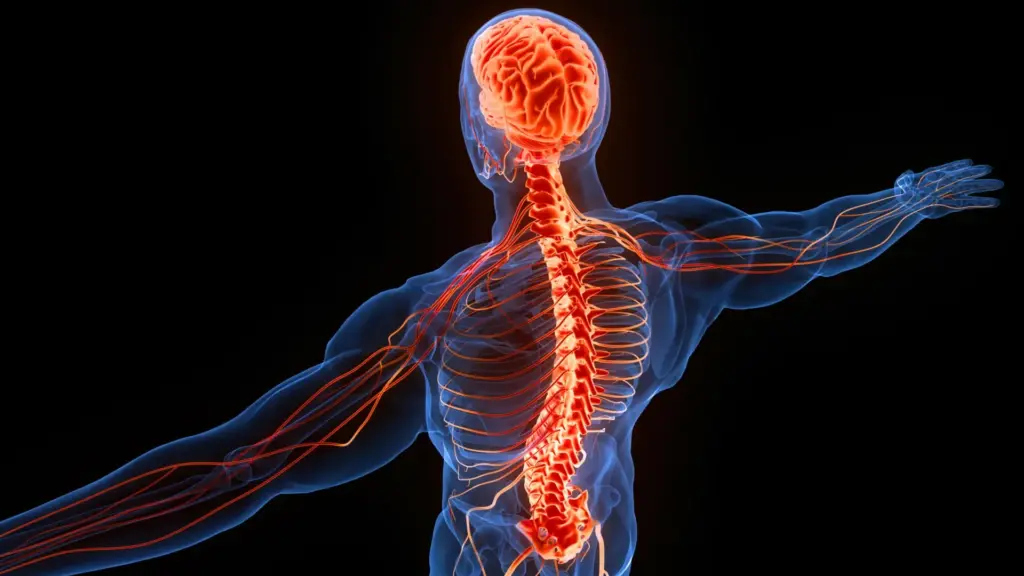
Why does the left hemisphere of your brain command the right side of your body, while your right hemisphere dictates movement on the left? This striking, counterintuitive arrangement is one of the most fundamental characteristics of the vertebrate nervous system. For centuries, this “crossed” wiring has fascinated anatomists and neuroscientists, serving as a biological riddle that defines how we interact with the world. Now, a new study offers a compelling explanation that pushes the origin of this phenomenon back hundreds of millions of years, suggesting that our current neural architecture is an evolutionary inheritance from the dawn of vertebrate life.
Dr. Martin Wessendorf, a neuroscientist and associate professor emeritus at the University of Minnesota, and his colleague Daniel Wang, a specialist in cognitive neuroscience and neurodegenerative diseases, have delved into the deep evolutionary history of these connections. Their research, published in the journal Frontiers in Neuroanatomy, argues that the cross-wired nature of our limbs and senses is not necessarily a design optimized for efficiency, but rather a structural legacy built upon an ancient visual system that emerged long before the first four-limbed creatures—tetrapods—walked the earth.
The Visual Foundation of Brain Organization
To understand why the brain is crossed, one must look at the eyes. When light enters the eye, the lens acts like a camera, projecting an image onto the retina that is physically reversed. Objects located in your right visual field fall onto the left side of your retina, and vice versa. This sensory data travels along the optic nerves to a junction known as the optic chiasm. Here, the nerve fibers are bundled in a way that ensures information from the right visual field is routed directly to the left hemisphere of the brain, while the left visual field is routed to the right.
This crossover is the gateway to a more profound neurological structure: the optic tectum, known as the superior colliculus in mammals. Located in the midbrain, the tectum is one of the most ancient structures in the vertebrate brain. It serves as a rapid-response hub, enabling an organism to react instantaneously to external stimuli—such as a flash of movement in the peripheral vision. Because the tectum exists in every vertebrate species, researchers believe its early appearance is the key to understanding why so many other neural pathways followed suit and crossed the midline of the body.
Crossing the Spinal Cord: Sensory and Motor Pathways
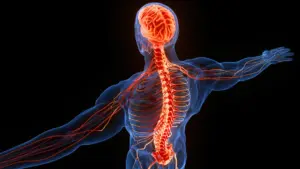
The researchers examined two critical sensory pathways that carry information from the body to the brain: the dorsal column pathway and the spinothalamic tract. Both exhibit the "contralateral" connection, where signals cross the center of the central nervous system.
The dorsal column pathway is responsible for transmitting fine-tuned sensations: gentle touch, vibrations, and proprioception, or the sense of where one’s limbs are in space. These signals travel up the spinal cord to the brainstem, where they cross to the opposite side before reaching higher brain centers. While this specific pathway is absent in fish, it is conserved across amphibians, reptiles, birds, and mammals, suggesting it became a standard feature early in the evolution of tetrapods.
Conversely, the spinothalamic tract—which handles sensations of pain, itch, and temperature—crosses over within the spinal cord itself before ascending to the thalamus. This arrangement is even more ancient, found in birds, mammals, reptiles, and even certain cartilaginous fish like sharks and rays. This suggests that the crossed-wiring motif has deep, persistent roots in the evolutionary history of vertebrates.
Beyond sensation, the researchers identified three major pathways dedicated to skeletal muscle control that also rely on this crossed architecture. The tectospinal pathway is perhaps the most illustrative of this ancient design. It is the conduit through which the optic tectum triggers rapid physical responses. If you are crossing a street and see a car approaching, you don’t think about turning your head; you do it reflexively. The tectospinal pathway translates visual or auditory "alerts" from the midbrain into rapid movement on the opposite side of the body. Because this system is present in both tetrapods and cartilaginous fish, it reinforces the idea that the brain’s "crossed" layout was an early, successful strategy for survival.
Evolution and the Refinement of Motor Control
The most complex of these pathways is the corticospinal tract, which is particularly vital for human survival and interaction. It provides the pathway for the cerebral cortex—the seat of higher cognition—to send instructions to the spinal cord. In humans, this tract is responsible for the fine motor control required for everything from playing a piano to typing a message.
However, the evolutionary path of the corticospinal tract is layered. While all vertebrates possess a telencephalon, the expansion of the six-layered cerebral cortex is a mammalian innovation. In most mammals, the corticospinal pathway primarily modulates incoming sensory information. In primates, however, this system has been adapted to reach deep into the spinal cord, directly influencing muscle movement.
Wessendorf and Wang suggest that humans did not necessarily evolve a "new" system for fine motor control. Instead, we repurposed an ancient neural circuit that was originally designed to regulate sensory input. By adapting an existing pathway rather than reinventing the architecture of the nervous system, evolution demonstrated a classic efficiency: building upon what already works.
A 500-Million-Year-Old Blueprint
The central thesis of the researchers’ study is that the crossed wiring of our nervous system is not necessarily a "better" way to control the body, but a "first" way. By the time complex neural pathways for touch and limb movement were evolving in vertebrates, the visual system had already established a dominant, crossed pattern. As subsequent sensory and motor systems evolved, they followed this pre-existing structural blueprint.
This leads to a radical conclusion: the basic organization of our brain may have been established in primitive jawless fish during the Cambrian Period, between 538 and 486 million years ago. This would mean that the fundamental "crossed" nature of your nervous system was already set in stone half a billion years before the arrival of modern humans.
This hypothesis challenges the common scientific assumption that every biological trait must offer a specific, direct survival advantage. While controlling the opposite side of the body might seem intuitive to us now, it may simply be an "evolutionary inheritance"—a consequence of the visual system’s early, rigid development. Once the optic tectum and optic chiasm set the precedent for contralateral organization, that pattern became the standard architecture for the rest of the nervous system to adopt.
The Enduring Influence of Deep Time
The implications of this research are profound for our understanding of neuroanatomy. It suggests that the brain is not a computer designed from scratch to be as efficient as possible; it is a historical document, a layered structure that reflects millions of years of incremental changes. The strange, mirrored relationship between our brain and our body is an architectural echo of the earliest vertebrate ancestors, who needed to respond to the world around them as quickly as possible.
Future research may be able to test this hypothesis by looking for physical evidence in the fossilized skulls of early jawless fish. If scientists can identify the structural precursors to the optic chiasm and tectum in the fossil record, it would solidify the timeline of this evolutionary inheritance.
Ultimately, the research by Wessendorf and Wang serves as a reminder of how deep our biological history runs. Every time we reach out to grasp an object, or turn our heads toward a sudden sound, we are utilizing neural pathways that were fundamentally mapped out in the twilight of the Cambrian Period. The crossed brain is not an accident of nature, but a testament to the enduring power of early evolutionary design, a system that has served vertebrates faithfully for over 500 million years.