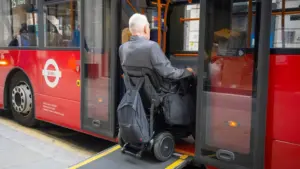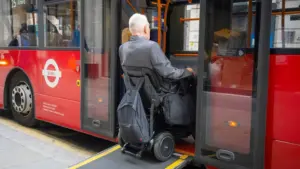

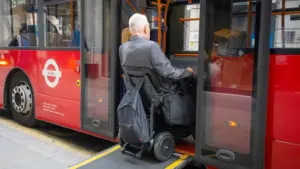







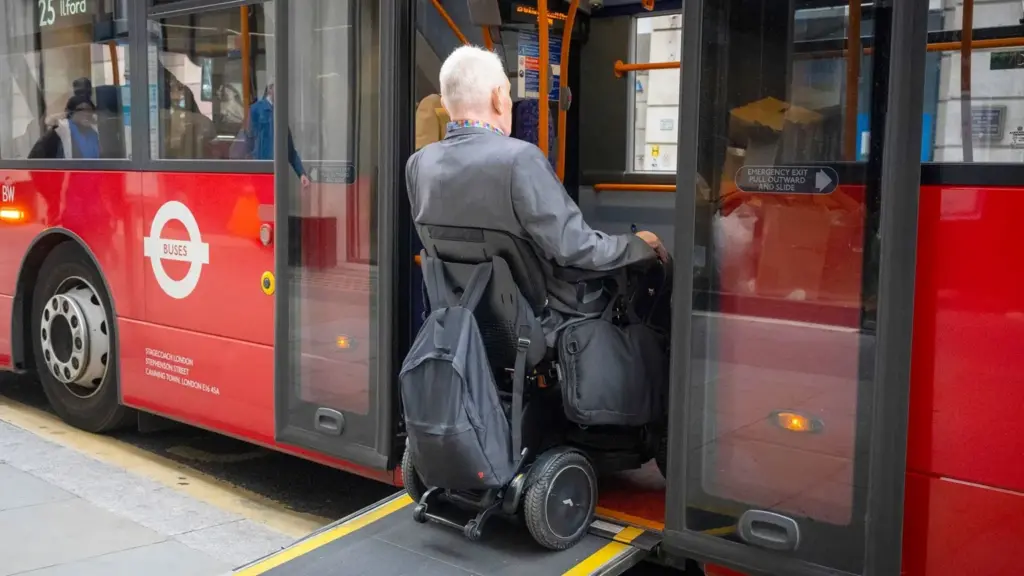
Starting April 1, disabled people across England will be able to travel by bus for free at any time of day, marking a monumental shift in the country’s public transportation accessibility. Previously, free bus passes were strictly restricted to off-peak hours on weekdays, specifically limited to the window between 09:30 and 23:00. This historical limitation created a substantial barrier for pass holders attempting to commute to standard morning jobs, arrive early for appointments, or attend late-night cultural and social events.
The removal of these restrictive time limits will directly benefit an estimated one million people nationwide, effectively transforming the national concessionary bus pass from a limited off-peak perk into a true full-time lifeline. By tearing down these scheduling walls, the policy addresses long-standing economic and social inequalities that have historically sidelined disabled citizens from the standard rhythms of daily working and social life.
The sweeping policy follows a highly successful trial period implemented within Greater Manchester’s integrated public transport network, known locally as the "Bee Network." The local success provided a tangible blueprint for national implementation, demonstrating that lifting time limits is logistically feasible and brings profound social dividends without overwhelming local transport capacities. Furthermore, the nationwide reform responds directly to years of relentless campaigning by prominent disability rights organizations, including Scope and Transport for All.
Advocates have widely celebrated the government’s move for finally eliminating an unfair "postcode lottery," a fragmented system where the validity of a travel pass depended heavily on arbitrary local council rules and regional borders. However, even as they applaud the breakthrough, disability organizations emphasize that this landmark reform is only the first major step. They note that eligibility requirements across various local authorities still require broader standardization to ensure that citizens moving between regions do not face unexpected administrative hurdles.
To guarantee that the program can become a permanent fixture of England’s social infrastructure, the £60 million scheme is being funded jointly through a collaborative effort between the Department for Transport and the Department for Work and Pensions. Government officials have framed the reform not merely as a transit upgrade, but as an essential workforce and cost-of-living initiative. This investment integrates seamlessly with existing national transit measures, such as the popular nationwide £2 single-fare cap, while finally bringing England into alignment with similar 24/7 concessionary transit programs that have been successfully operating in Scotland and Wales for years.
Global Takeaways: How Other Countries Can Make Accessible Commuting Possible
Making daily commuting accessible and affordable for disabled citizens requires a careful and deliberate combination of advanced policy design, modern digital systems, and targeted public investment. The transition in England underscores how modernizing transit policy demands more than just issuing a free pass; it requires an holistic approach to urban and rural mobility.
Why Was the UK Able to Do It?
The ability of the United Kingdom to enact this nationwide reform stems from a convergence of coordinated government funding, regional pilot successes, and sustained pressure from civil society. By pooling resources through both the Department for Transport and the Department for Work and Pensions, the central government created a financial foundation robust enough to absorb the projected operational costs across multiple municipal boundaries. The prior localized success of Greater Manchester’s transit model provided policymakers with empirical evidence that an all-hours concessionary scheme is sustainable, paving the way for political consensus and a synchronized rollout across England.
Does It Depend on Existing Infrastructure?
Yes, heavily. Free transit passes only work if the public transport network is physically and technologically accessible to begin with. The value of a 24/7 travel pass is severely diminished if the physical vehicles and roadside facilities cannot accommodate passengers with diverse mobility needs.
A truly functional accessibility model relies on foundational investments, including low-floor bus designs equipped with functioning boarding ramps, audible and visual next-stop announcement systems, and real-time digital tracking applications that allow passengers to plan journeys with confidence. Without these physical and technological layers working in tandem, expanded pass validity risks running into practical barriers at the curb.
What Is Needed to Make Commuting Affordable for People with Disabilities?
Achieving true affordability and equity in public transit requires structural reforms that go beyond simply subsidizing the fare box. First, it requires the complete elimination of regional disparities, ensuring that concessionary rules do not abruptly change or expire at municipal borders. Second, it necessitates dedicated, cross-departmental government funding that bridges social welfare and transportation policy, recognizing mobility as a fundamental economic enabler rather than an isolated transit perk. Finally, public transit authorities must maintain continuous engagement with disability advocacy groups to identify operational bottlenecks, streamline eligibility processes, and ensure that policy changes translate into tangible, everyday improvements for commuters relying on public networks.