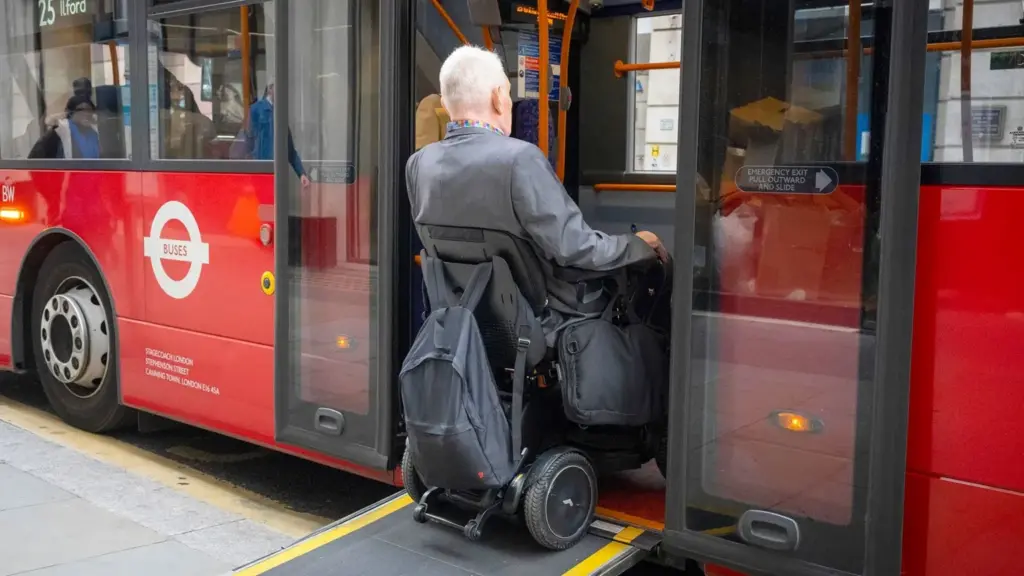
Starting April 1, disabled people across England will be able to travel by bus for free at any time of day, marking a monumental shift in public transit accessibility and economic inclusion.
Previously, free bus passes were strictly restricted to off-peak hours on weekdays, specifically valid only between 09:30 and 23:00. This historical limitation created profound logistical and financial barriers for pass holders, making it extraordinarily difficult for individuals with disabilities to commute to standard morning jobs, arrive at early professional obligations, or attend late-night cultural and social events. By completely removing these time limits, the policy change will benefit an estimated one million people nationwide, transforming the national bus network from a restricted transit option into a true full-time lifeline for everyday mobility, employment, and social participation.
The landmark policy follows a highly successful trial period within Greater Manchester’s integrated “Bee Network.” The regional pilot demonstrated that removing peak-hour restrictions did not destabilize transit operations, but instead provided immediate, tangible benefits to disabled commuters seeking flexible travel schedules. Furthermore, the nationwide rollout directly responds to years of persistent campaigning by prominent disability rights organizations, including Scope and Transport for All. Advocates have widely celebrated the government’s decision for eliminating an unfair “postcode lottery,” a fragmented system where pass validity, operating hours, and local concessions previously depended heavily on arbitrary municipal rules and regional funding variations.
Despite the widespread praise, disability organizations have emphasized that this progressive policy is only the first major step toward comprehensive transit reform. Activists note that eligibility requirements for concessionary passes across different regions still require broader standardization to ensure equity regardless of where a resident lives in the country.
To guarantee the permanence and financial stability of the program, the £60 million scheme is being funded jointly through a collaborative effort between the Department for Transport and the Department for Work and Pensions. Government officials have framed this major reform as an essential workforce and cost-of-living initiative. The investment aligns seamlessly with existing nationwide transit measures, such as the popular £2 single-fare cap, and successfully brings England in line with similar 24/7 concessionary transit programs that have long been operating successfully in Scotland and Wales.
Global Takeaways: How Other Countries Can Make Accessible Commuting Possible
Making daily commuting accessible, reliable, and affordable for disabled citizens requires a careful combination of deliberate policy design, advanced digital systems, and targeted public investment.
Why Was the UK Able to Do It?
The realization of this nationwide reform in England was made possible through a convergence of sustained political advocacy, localized testing, and coordinated central government funding. By leveraging the empirical data gathered during regional trials like Greater Manchester’s Bee Network, policymakers were able to build a robust economic and social case for national implementation. Furthermore, collaboration between major departments—namely the Department for Transport and the Department for Work and Pensions—demonstrated that expanding transit access is not merely a transportation issue, but a critical component of broader labor market participation and social welfare policy.
Does It Depend on Existing Infrastructure?
Yes, heavily. Free transit passes only work if the public transport network is physically and technologically accessible to begin with. Concessionary fare policies are fundamentally limited if the underlying infrastructure cannot support diverse mobility needs. A comprehensive transit system requires modern fleets equipped with accessible boarding ramps, audible and visual next-stop announcements, priority seating areas, and well-maintained physical hubs. Additionally, technological integration—such as smartcard systems, real-time accessibility data feeds, and barrier-free station design—plays an indispensable role in ensuring that disabled passengers can navigate complex urban and rural transport networks safely, independently, and with confidence.
What Is Needed to Make Commuting Affordable for People with Disabilities?
Achieving true affordability and accessibility across public transit networks requires a unified framework that extends far beyond simply waiving fares. Policymakers must address the multifaceted financial and structural hurdles faced by disabled commuters by ensuring consistent nationwide eligibility criteria to eliminate regional disparities. Sustained financial backing from central governments is essential to subsidize operators and maintain service levels, particularly in underserved rural or suburban areas. Ultimately, integrating fare reform with modernization initiatives ensures that public transportation serves as an equitable foundation for employment, education, and community life.