










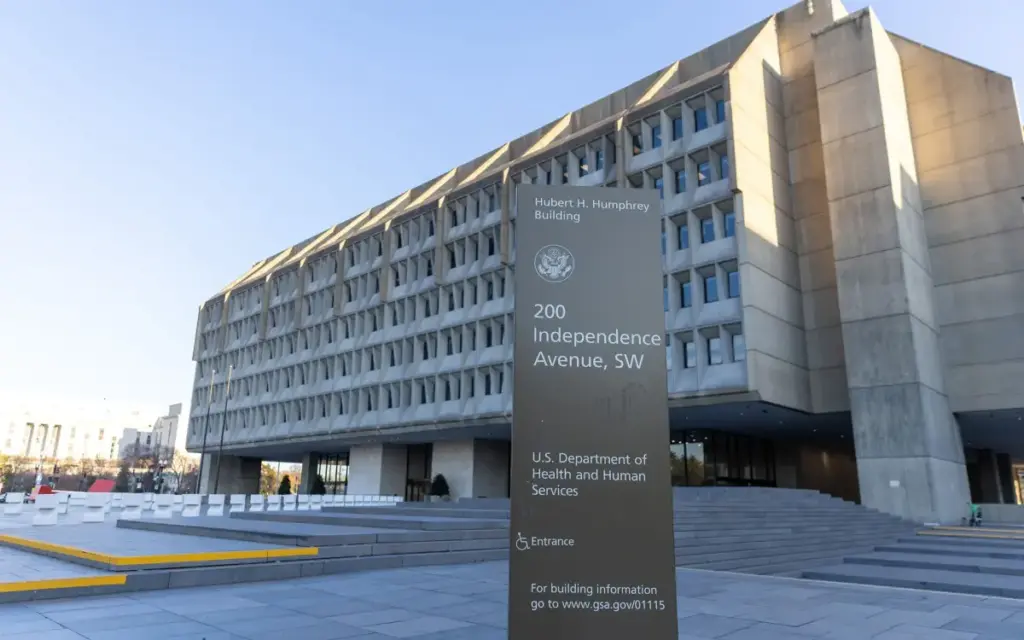
The federal government has agreed to eliminate federal regulatory requirements ensuring that individuals with disabilities are served and supported within community settings. The move, finalized through a court-approved settlement with a coalition of states, has drawn swift and sharp condemnation from disability rights advocates who warn that the decision actively undermines decades of established civil rights precedent.
U.S. District Judge James W. Hendrix approved the agreement late last week, formally ending a multi-year legal battle known as Texas v. Kennedy. Under the terms of the settlement, federal officials and the states of Texas, Alaska, Florida, Louisiana, and Montana agreed to remove explicit references to the “most integrated setting” from a 2024 update to the Department of Health and Human Services (HHS) regulations connected to Section 504 of the Rehabilitation Act.
Legal experts and civil rights defenders say the development marks a profound and alarming shift in the federal government’s posture toward the rights of people with disabilities. Rather than defending long-standing interpretations of federal law guaranteeing community living options, the federal administration altered its legal alignment and joined hands with the plaintiff states.

“The court’s order accepting the parties’ agreement is inconsistent with 50 years of law,” said Shira Wakschlag, senior executive officer for legal advocacy and general counsel at The Arc of the United States. “The federal government is abandoning its duty to enforce the right of people with disabilities to live in their own homes and communities.”
The conclusion of Texas v. Kennedy brings an end to a high-stakes lawsuit that began roughly two years ago. Initially filed by the state of Texas alongside 16 other states, the litigation was characterized by numerous procedural twists and evolving legal arguments. At the outset, the plaintiff states sought to prevent gender dysphoria from qualifying as a disability under the updated Section 504 regulations. They also petitioned the court to strike down Section 504 of the Rehabilitation Act in its entirety.
While the states later backed away from their broader objective to invalidate Section 504 completely, they continued their aggressive challenges against the updated health and care regulations. Intense pressure from disability advocacy organizations initially caused most of the participating states to drop out of the case. However, Louisiana and Montana ultimately chose to re-enter the litigation alongside Texas, keeping the pressure on federal protections.
The dynamic of the case shifted dramatically in recent weeks when the federal government formally switched sides. The administration cited a June memorandum issued by the Justice Department’s Office of Legal Counsel, which asserted that neither the Americans with Disabilities Act (ADA) nor Section 504 of the Rehabilitation Act requires states to treat individuals with mental or physical disabilities in the most integrated setting appropriate to their specific needs.
Under the resulting settlement negotiated between the participating states and Robert F. Kennedy Jr. in his official capacity as the secretary of health and human services, the overarching Section 504 regulations will technically remain intact, but vital protective provisions are being excised. Among the casualties are the specific definition of the “most integrated setting” and multiple provisions mandating that recipients of federal funds must prioritize program delivery methods that offer qualified individuals with disabilities services in the most integrated setting appropriate.
Despite the sweeping nature of the deletions, disability rights advocates emphasize that the legal framework governing disability rights extends far beyond the specific regulatory language modified in this settlement.
“The integration mandate doesn’t depend on this regulation. It comes from Section 504 itself, from the ADA, and from the Supreme Court’s decision in Olmstead v. Lois Curtis. All of those are still in place,” said Michelle Uzeta, executive director at the Disability Rights Education & Defense Fund.
Uzeta expressed deep frustration over the manner in which the case was resolved, characterizing the outcome not as a traditional judicial defeat, but as a voluntary capitulation by the executive branch.
“The most frustrating thing is that this was not a legal loss. It was a surrender,” Uzeta added. “HHS didn’t defend these rights and protections. It joined the states that sued and asked the judge to strike them.”
Because the regulatory alterations were achieved through a negotiated settlement agreement rather than a definitive ruling on the merits by the court, federal judges did not issue formal legal findings establishing a new precedent regarding the scope of the integration mandate. Nevertheless, civil rights attorneys warn that the practical fallout of the agreement could be severe and far-reaching.
Eve Hill, a civil rights attorney who served as the deputy assistant attorney general for civil rights during the Obama administration, noted that the settlement sends a dangerous message that threatens to create widespread confusion among state agencies, healthcare providers, and covered entities regarding their legal obligations.
“It demonstrates that the five state plaintiffs believe they are free to put people with disabilities into institutions,” Hill said.
She cautioned that the removal of the explicit community integration requirements from the text of the regulations could embolden institutionalization efforts and create formidable hurdles for vulnerable populations.
“Unfortunately, because the court has amended the regulations to delete the community integration requirements, some states and other covered entities—healthcare providers, etc.—will believe they can institutionalize people with disabilities,” Hill said. “This will imperil the lives of people with disabilities, who will be forced to fight unnecessary institutionalization on their own.”