








As the autumn season brings changing foliage and cooler weather into communities, educators, parents, and pediatric occupational therapists are increasingly turning to seasonal themes to support children’s developmental milestones. Rather than selecting seasonal activities purely for festive entertainment, pediatric specialists are utilizing autumn materials—such as apples, leaves, pumpkins, acorns, and farm-related items—to target specific fine motor deficits and developmental needs.
Recent professional guidelines and therapy frameworks emphasize that fall-themed crafts and play materials can be intentionally adapted to address hand strength, finger dexterity, scissor skills, visual-motor integration, and handwriting development. Because many seasonal tasks naturally overlap multiple developmental domains, practitioners are finding creative ways to modify traditional autumn activities to meet the individualized goals of children across various age groups, from toddlers to early elementary students.
Integrating Autumn Elements into Hand-Strength Development
Hand strength is a fundamental prerequisite for academic and daily living tasks, influencing a child’s ability to manipulate fasteners, hold writing utensils, and open containers. When intrinsic hand muscles are underdeveloped, children often experience fatigue during writing or drawing tasks. To combat this, therapists are integrating resistive materials like play dough and specialized tools into autumn-themed sessions.
Play dough provides both resistive feedback and tactile sensory input, making it an effective medium for developing pincer grasps, tripod grasps, wrist stability, and hand arches. Activities involving rolling, squeezing, pinching, and pressing help build finger and grip strength organically without feeling like formal work. Practitioners often embed small seasonal items, such as miniature leaves, plastic acorns, or autumn-colored beads, directly into the dough to encourage active exploration and manipulation.
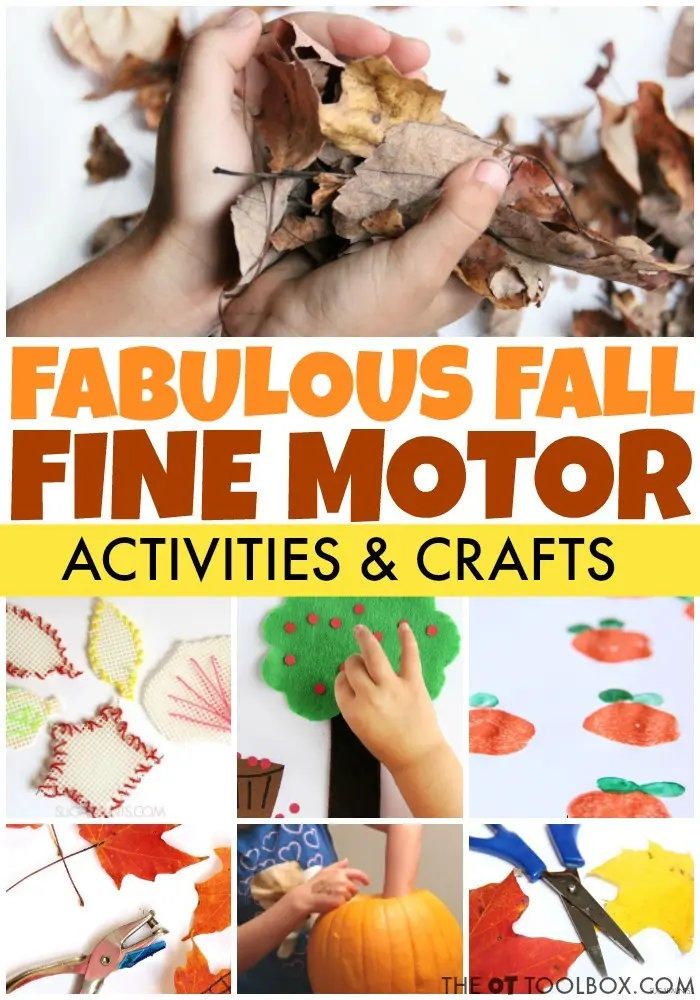
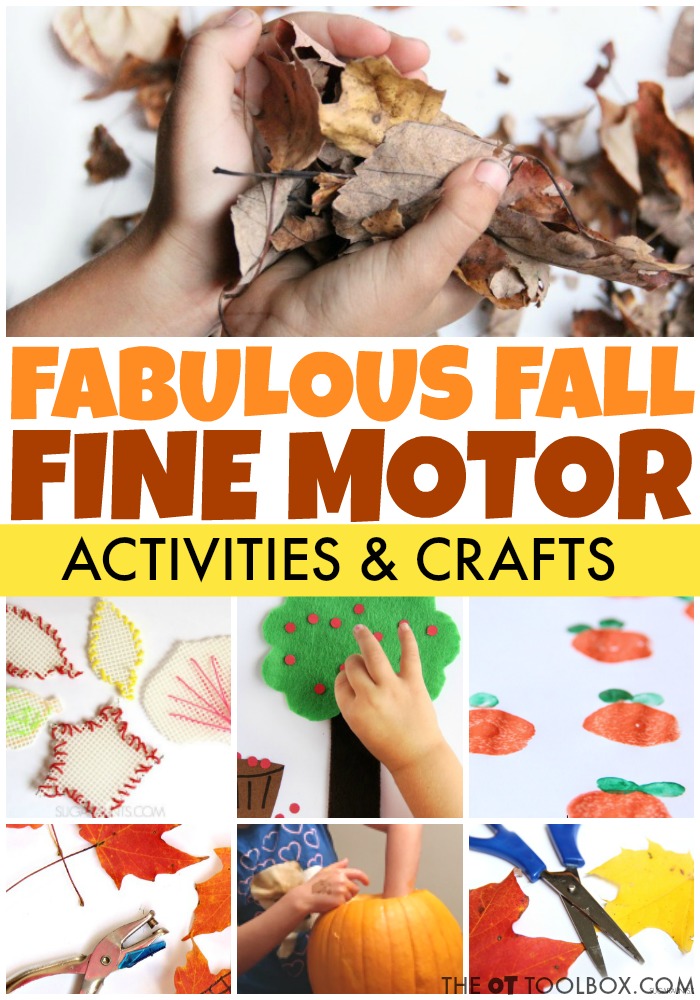
Similarly, structural tools like apple-themed geoboards and hole punches offer targeted resistance. In geoboard exercises, children stretch heavy-duty rubber bands across pegs to recreate seasonal shapes like apples or autumn trees. This motion requires controlled finger extension, bilateral coordination, and precise release mechanisms. Hole-punching activities, meanwhile, require sustained hand force while incorporating visual-motor planning as children navigate the boundaries of printed leaf or apple templates.
Enhancing Manual Dexterity Through Seasonal Manipulatives
Manual dexterity involves the efficient coordination of small, precise finger movements. When children struggle with dexterity, tasks involving buttoning, zippering, or manipulating small objects often break down. To bridge this gap, educators and therapists are utilizing fall-themed manipulatives—such as craft pom-poms, seeds, mini-erasers, paper clips, and small craft materials—to foster coordinated precision.
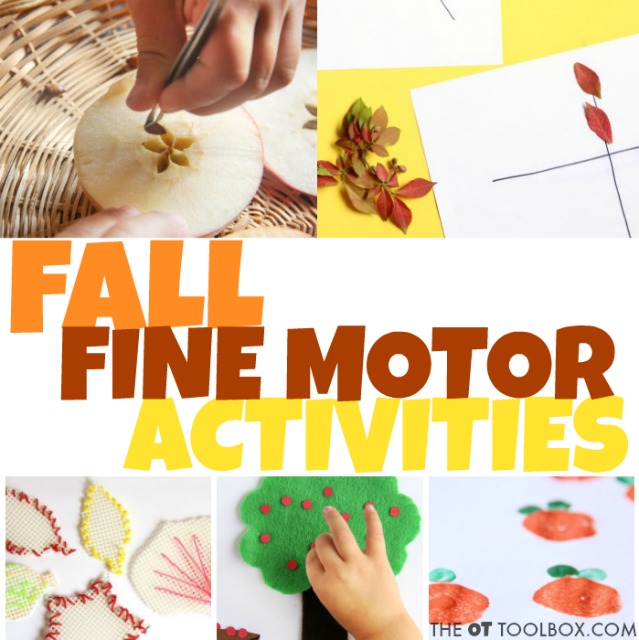
Paper clip counting activities, for instance, require children to attach specific quantities of paper clips to laminated apple or leaf cards. Opening and positioning the clips demands isolated fingertip movements and bilateral hand use, with one hand stabilizing the card while the other manipulates the tool. Additionally, transfer tasks involving tongs or tweezers to move autumn-colored pom-poms or dyed pumpkin seeds into compartmentalized trays challenge both grip strength and hand-eye coordination. These exercises actively promote the refined finger movements necessary for advanced fine motor tasks.
Scissor Skills and Cut-and-Paste Mechanics
Scissor skills remain a critical component of early childhood development, requiring the simultaneous yet independent coordination of both hands. While the dominant hand opens and closes the scissors, the non-dominant helper hand must stabilize, rotate, and guide the paper.
Autumn-themed cutting pages, featuring dotted lines and seasonal shapes, provide structured practice for children learning to control blade paths. In regions with changing foliage, children are also encouraged to collect real autumn leaves and practice snipping them into smaller pieces or cutting along pre-drawn lines. Beyond simple cutting, multi-step cut-and-paste crafts introduce executive functioning demands. Children must cut out components, visually determine their correct spatial orientation, follow an assembly sequence, and apply glue precisely. This comprehensive approach reinforces bilateral coordination, visual-spatial reasoning, and multi-step direction following.
Addressing Visual-Motor Integration and Handwriting
A child may possess adequate hand strength and finger dexterity yet still struggle when a task requires visual-motor integration—the ability to coordinate visual input with precise motor output. Seasonal directed-drawing exercises featuring pumpkins, acorns, and leaves prompt children to analyze a visual model, determine spatial relationships, and reproduce lines and shapes on paper.
Pattern block designs and "I Spy" seek-and-find activities further enhance visual discrimination, spatial awareness, and sustained visual attention. Therapists often utilize tactile and visual supports, such as physical cutout frames, to help children isolate visual targets before marking them with fine motor tools like clothespins or markers.
For writing development, seasonal writing prompts offer a meaningful context for practicing handwriting skills without relying exclusively on isolated letter drills. Depending on the child’s developmental stage, these prompts can be adapted to accommodate emerging writers practicing single words, beginning writers constructing simple sentences, or older students organizing and planning paragraphs. By focusing on specific components—such as line awareness, letter spacing, size, and formation within a seasonal framework—practitioners can support diverse student caseloads effectively.
As communities continue to embrace autumn traditions, professionals in pediatric therapy and education are finding that seasonal materials offer versatile, engaging, and clinically effective avenues for fostering essential motor skills.