






BREAKING NEWS
Neurodiversity Beyond the WEIRD Spectacle: Neurodivergence, Cultural Cancer, and the Path to Reconnecting with Gaia 5 hours ago Behavioral Health The Psychology of Taking It Personally: Why We Assume Other People’s Bad Moods Are About Us 5 hours ago Child Welfare and Advocacy Children’s Defense Fund-California to Convene Youth Leaders and Policy Experts for Child Watch 2026 in Downtown Los Angeles 5 hours ago Applied Behavior Analysis Landmark Brain Study Links Amyloid Clearance to Reduced Tau and Brain Preservation 13 hours ago Child Development New Study Reveals Distinct Developmental Patterns in How Autistic Brains Process Faces 13 hours ago Sensory Processing Occupational Therapy Practitioners Introduce Adapted Eco Map Tool to Analyze Client Support Systems and Combat Professional Burnout 13 hours ago Behavioral Health When Facing "Hell," Is Keeping Going Always the Right Choice? Rethinking Resilience and the Sunk Cost Fallacy 13 hours ago Inclusive Education Families in Idaho Face Severe Financial Strain Over a Year After State Ends Paid Caregiver Program for Disabled Relatives 13 hours ago Neurodiversity Beyond the WEIRD Spectacle: Neurodivergence, Cultural Cancer, and the Path to Reconnecting with Gaia 5 hours ago Behavioral Health The Psychology of Taking It Personally: Why We Assume Other People’s Bad Moods Are About Us 5 hours ago Child Welfare and Advocacy Children’s Defense Fund-California to Convene Youth Leaders and Policy Experts for Child Watch 2026 in Downtown Los Angeles 5 hours ago Applied Behavior Analysis Landmark Brain Study Links Amyloid Clearance to Reduced Tau and Brain Preservation 13 hours ago Child Development New Study Reveals Distinct Developmental Patterns in How Autistic Brains Process Faces 13 hours ago Sensory Processing Occupational Therapy Practitioners Introduce Adapted Eco Map Tool to Analyze Client Support Systems and Combat Professional Burnout 13 hours ago Behavioral Health When Facing "Hell," Is Keeping Going Always the Right Choice? Rethinking Resilience and the Sunk Cost Fallacy 13 hours ago Inclusive Education Families in Idaho Face Severe Financial Strain Over a Year After State Ends Paid Caregiver Program for Disabled Relatives 13 hours ago
Stories
Beyond the WEIRD Spectacle: Neurodivergence, Cultural Cancer, and the Path to Reconnecting with Gaia
The Psychology of Taking It Personally: Why We Assume Other People’s Bad Moods Are About Us
Children’s Defense Fund-California to Convene Youth Leaders and Policy Experts for Child Watch 2026 in Downtown Los Angeles
Landmark Brain Study Links Amyloid Clearance to Reduced Tau and Brain Preservation
New Study Reveals Distinct Developmental Patterns in How Autistic Brains Process Faces
Occupational Therapy Practitioners Introduce Adapted Eco Map Tool to Analyze Client Support Systems and Combat Professional Burnout
When Facing "Hell," Is Keeping Going Always the Right Choice? Rethinking Resilience and the Sunk Cost Fallacy
Families in Idaho Face Severe Financial Strain Over a Year After State Ends Paid Caregiver Program for Disabled Relatives
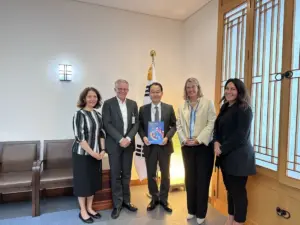
WHO and Republic of Korea Reinforce 75-Year Partnership at Second Strategic Dialogue in Seoul
CDF-Ohio, Ohio Legislative Children’s Caucus to Discuss Doula Medicaid Reimbursement Program

Tag: reveals

63 posts

Standard

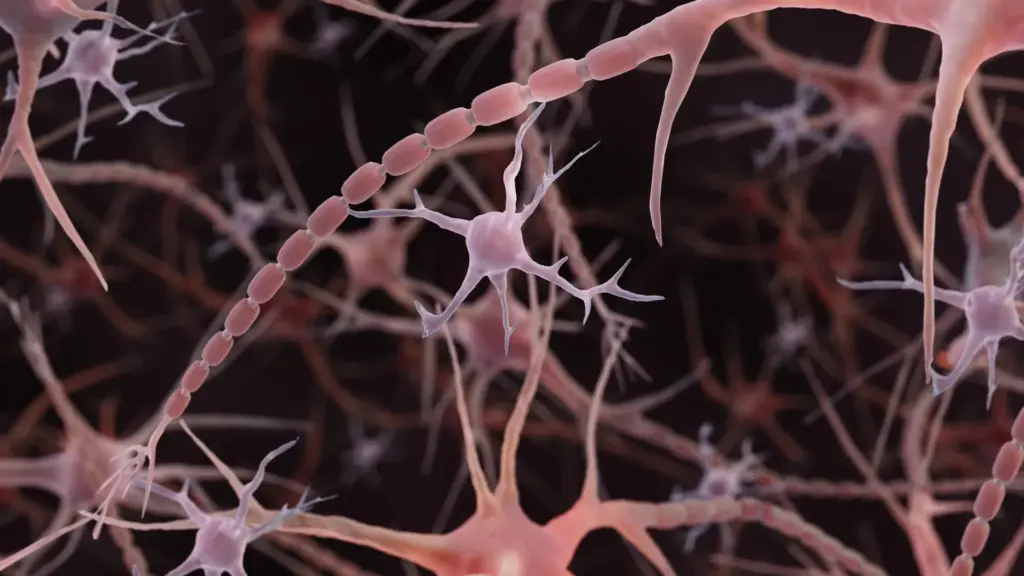
New USC Research Reveals Potential ‘Resilience Network’ in the Aging Brain

Scientists at the Mark and Mary Stevens Neuroimaging and Informatics Institute (Stevens INI) at the Keck School of Medicine of USC have uncovered compelling evidence that two distinct types of neighboring brain tissue may function in tandem to safeguard cognitive abilities well into old age. Their groundbreaking study suggests that the structural integrity of the…
Read more
Standard

Beyond the Smooth Cable: New Research Reveals Dynamic ‘Pearled’ Architecture in Brain Axons

For over a century, textbooks have taught students that axons—the long, slender extensions of neurons responsible for transmitting electrical signals—are essentially smooth, uniform tubes. This classic illustration, which depicts these vital cellular cables as narrow, consistent conduits, has served as a foundational concept in neuroscience. However, a groundbreaking study from Johns Hopkins Medicine, published in…

Read more
Standard

New Stanford Study Reveals Immune Cells from the Body Routinely Migrate into the Aging Human Brain

For decades, the prevailing dogma in neuroscience held that the human brain was an immunological fortress, a "closed system" largely insulated from the immune defenses operating throughout the rest of the body. Protected by the formidable blood-brain barrier—a specialized network of vessels that restricts the movement of substances and cells from the bloodstream into the…

Read more
Standard

New Research Reveals How APOE4 Drives Brain Damage and Offers Potential Pathways for Reversal

Mount Sinai researchers have unveiled significant new insights into the mechanisms by which APOE4—the most potent genetic risk factor for Alzheimer’s disease—triggers damage within the human brain. According to two landmark studies published in the journals Cell and Cell Stem Cell, this gene does far more than predispose individuals to neurodegeneration; it actively degrades the…

Read more
Standard

New Research Reveals How the Brain’s "Air Traffic Controller" Navigates Uncertainty

The human brain is a marvel of constant, high-speed processing, managing an overwhelming deluge of sensory input and cognitive demands every waking second. Even routine activities—such as navigating a morning commute—require the brain to execute a complex symphony of simultaneous mental tasks. A driver must maintain a spatial map of the route, recall the mechanical…

Read more
Standard

Multilingualism Linked to Younger Brain Age, New Research Reveals

People who speak more than one language may possess brains that appear significantly younger than their chronological age, according to groundbreaking research presented at the Federation of European Neuroscience Societies (FENS) Forum 2026. The findings provide compelling evidence that the cognitive effort required to navigate multiple linguistic systems may act as a protective buffer against…

Read more
Standard

New Research Reveals Distinct Patterns of Accelerated Brain Aging Across Diverse Neurological and Psychiatric Conditions

A groundbreaking study published in the open-access journal PLOS Medicine has provided new evidence that various neurological and psychiatric conditions may be linked to a phenomenon of accelerated brain aging. Led by Shile Qi of the Nanjing University of Aeronautics and Astronautics in China, the research suggests that dementia, mild cognitive impairment, alcohol addiction, and…

Read more
Standard

Breakthrough Study Reveals How APOE4 Genetic Variant Fuels Early-Stage Alzheimer’s Development

For millions of people worldwide, the APOE4 gene variant represents a significant shadow hanging over their long-term cognitive health. As the strongest known genetic risk factor for Alzheimer’s disease, APOE4 has long been a primary focus of neurological research. However, the exact mechanisms by which this genetic signature orchestrates the decline of brain function—and specifically,…

Read more
Standard

Stanford Medicine Discovery Reveals the Brain Is Built from Two Distinct Evolutionary Systems

For generations, the scientific community has operated under a foundational assumption: the brain is a single, unified organ that shares a common developmental origin. Whether considering the complex architecture of the human forebrain or the rhythmic, life-sustaining mechanisms of the hindbrain, the prevailing model suggested that all these regions traced their lineage back to a…

Read more