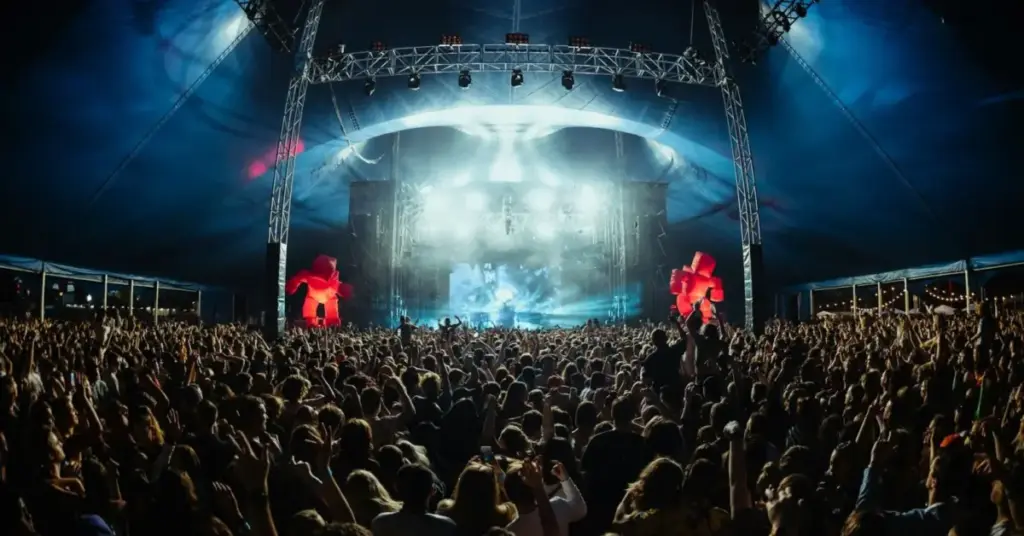
The experience of live music is defined by its intensity. It is a multisensory event where the bass rattles your ribcage and the soaring vocals fill the open air. But as we joined the swelling crowd at a recent outdoor stadium concert, that intensity manifested in a way that felt less like an artistic experience and more like a physical assault. It was our first foray into this particular outdoor venue, and we were uncertain how the acoustics of an open-air environment would interact with high-decibel amplification. As someone who lives with hearing loss, I have long operated under a simple, non-negotiable rule: no concert, regardless of the artist or the prestige of the tour, is worth further damaging the hearing I have left. We arrived prepared, with professional-grade ear protection tucked securely in our pockets.
As we navigated the perimeter of the stadium, the opening act was playing in the distance. The volume felt reasonable, a pleasant backdrop to the anticipation of the crowd. However, the situation changed abruptly the moment we rounded the corner toward our assigned seats. We were met with a wall of sound—a sudden, violent "BLAST!" that prompted an immediate, instinctive physical retreat. We ducked behind a nearby wall, not just to catch our breath, but to immediately secure our hearing protection. Once those headphones were in place, the harsh, dangerous edges of the sound were softened into something both enjoyable and sustainable. They remained snugly in place for the duration of the night, allowing us to enjoy the performance without the underlying anxiety of permanent damage.
Yet, as we looked around at the thousands of fans surrounding us, the most striking aspect of the evening was not the music or the stage production, but the silence of the crowd regarding their own safety. We didn’t see a single other person wearing hearing protection. It was a jarring observation that prompted a deeper, more uncomfortable question: in an era where the science of noise-induced hearing loss is well-documented and widely available, why do so many people continue to ignore the obvious risks to their long-term health?
The Risk Is Real and Measurable
The danger of high-volume environments is not merely a matter of subjective comfort; it is a clinical reality that can be measured with startling precision. Throughout the concert, the decibel reader on my Apple Watch consistently hovered between 90 and 100 decibels. To put that in perspective, many modern stadium concerts reach even higher levels, frequently pushing the boundaries of what the human ear can safely endure. According to the National Institute on Deafness and Other Communication Disorders (NIDCD), the threshold for concern is reached much sooner than most concertgoers realize. Their research indicates that just 14 minutes of exposure to 100 decibels is enough to initiate measurable damage to the delicate structures of the inner ear.
The permanence of this damage is what makes the casual attitude toward concert volume so tragic. Human hearing relies on delicate hair cells within the inner ear to translate sound waves into the electrical signals our brains recognize as music or speech. Once these cells are destroyed by excessive acoustic trauma, they do not regenerate. Science has yet to develop a reliable method for repairing or replacing these sensory structures once they are lost. The damage is cumulative and irreversible, a quiet erosion of one’s ability to perceive the world that often goes unnoticed until the decline is significant.
The good news, however, is that prevention is highly effective. Data from a randomized trial conducted at a major Amsterdam music festival underscores just how protective simple measures can be. In an environment where the average sound pressure reached 100 dBA, researchers observed that 42 percent of attendees with unprotected ears suffered from temporary hearing loss following the event. In stark contrast, only 8 percent of those who utilized earplugs reported similar issues. Furthermore, the prevalence of tinnitus—the persistent, often agonizing ringing in the ears that frequently follows loud exposure—was significantly lower among those who chose to protect their hearing. The evidence is clear: the equipment exists, it is affordable, and it works.
Why We Skip the Earplugs
Given the availability of effective protection and the well-publicized risks of noise-induced damage, the pervasive refusal to wear earplugs suggests that the problem is not a lack of information. Instead, the barriers to hearing safety are deeply psychological and social.
One of the most significant factors is a pervasive sense of denial. For younger concertgoers in particular, the prospect of hearing loss feels like a distant, abstract concern—a problem for an older version of themselves. If the music sounds crisp and there is no immediate, acute pain, it is easy to adopt a "nothing bad is happening" mindset. Because the damage caused by loud music is often insidious, the consequences do not manifest as a sudden injury but as a gradual, years-long decline in clarity. By the time a person realizes their hearing has been compromised, the damage is already done.
Social pressure also plays a silent, powerful role in shaping behavior. We live in a culture where social norms dictate much of our public appearance. When an individual looks around an arena and sees that no one else is wearing hearing protection, the act of putting on earplugs can feel like a social outlier behavior. It is far easier to conform to the crowd, even when that conformity carries a biological cost. There is a fear of being perceived as overly cautious or "different," which prevents many from taking the simple, proactive step of protecting their ears.
Furthermore, there is a persistent, largely unfounded fear that earplugs will ruin the auditory experience. Many concertgoers assume that wearing protection will simply muffle the music, turning a high-fidelity performance into a muddy, indistinct wall of sound. While low-quality foam plugs can sometimes dampen higher frequencies, modern high-fidelity earplugs are designed to lower the volume uniformly, preserving the clarity and nuance of the music while keeping the decibel level within a safe range. Unfortunately, the stigma remains: many believe that to truly "experience" a concert, one must be fully exposed to the raw, unfiltered, and potentially damaging volume of the speakers.
How to Make Hearing Protection the Norm
The challenge of changing this culture lies in shifting the perception of what it means to be a fan of live music. At a massive, sold-out stadium show, it is rarely practical to simply move further from the speakers or ask the sound engineer to lower the volume. The environment is fixed, which places the entirety of the responsibility for hearing health on the individual.
The transition from knowing that hearing protection is necessary to actually utilizing it requires a normalization of the practice. It requires us to stop viewing earplugs as an "accessory for the vulnerable" and start viewing them as an essential tool for the serious music enthusiast. Just as we use sunglasses to protect our eyes from the sun or sunscreen to protect our skin, hearing protection should be a standard component of our concert-going kit.
Live music is, without question, one of the great joys of human experience. It brings people together, defines our cultural moments, and provides a visceral connection to the art we love. Protecting your hearing is not an act of turning away from that experience; it is an act of preserving your ability to keep enjoying it for decades to come. If you find yourself in a crowd where no one else is wearing ear protection, consider the possibility that you might be the one to break the cycle. By normalizing the use of earplugs, you not only protect yourself but also provide a silent, powerful permission for those around you to do the same. True appreciation for the power of music begins with the wisdom to ensure you can still hear the melody long after the final encore has faded away.