





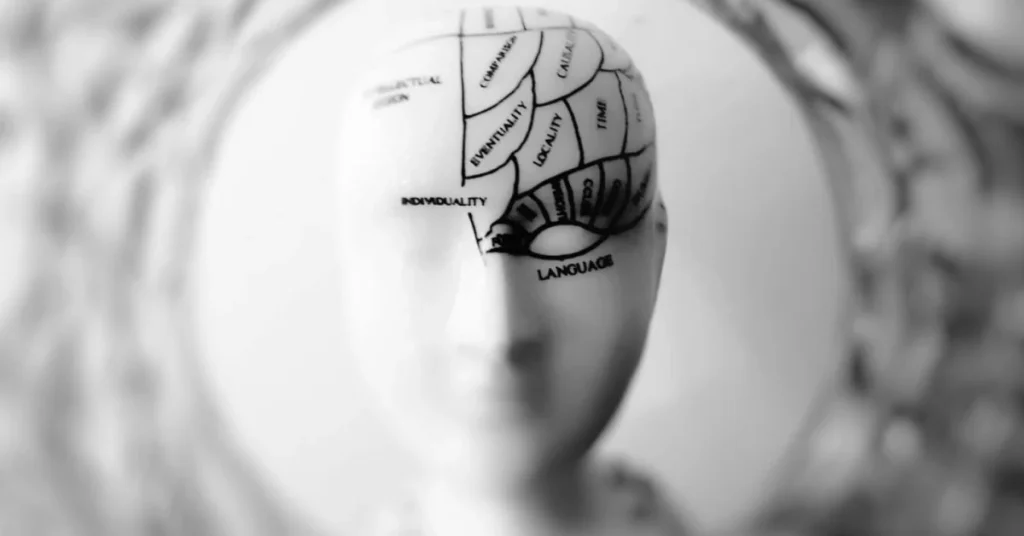
We live in constant, intimate contact with our brains. We could almost touch them, were it not for the protective barrier of the skull and the dura mater. We sense them at work every moment of the day, helping us to think, feel, move, digest, and breathe. Yet, how exactly these vital organs accomplish any of this remains a profound mystery to most of us. Some individuals may catch glimpses of functional magnetic resonance imaging or positron emission tomography scans, but those colorful readouts are merely pictures. They are not the actual fats and proteins, nor are they the delicate glial cells or firing neurons that make human consciousness possible.
To bridge this gap between everyday self-awareness and complex biology, neuroscientist Eric H. Chudler has introduced Neuropedia, a compact mini-encyclopedia dedicated to all things related to the brain. Spanning just 150 pages and brought to life through illustrations by Kelly Chudler, this small volume elucidates intricate brain structures, biological functions, and medical conditions. It also features concise entries dedicated to the luminaries of neuroscience, all written in a style that is both clear and accessible to the general public.
As Chudler explains of his core philosophy behind the project, he has carefully curated entries designed to stimulate curiosity, help readers become familiar with the foundational terminology of neuroscience, and motivate them to pursue deeper learning about the mind. The overarching aim is to introduce lay readers to crucial concepts with scientific accuracy while retaining a healthy dash of intellectual fun.

Of course, the author is quick to point out that the book does not attempt to provide a comprehensive, exhaustive account of the entire field. Instead, as Chudler notes, his intention is simply to open a window to the ongoing process of discovery that occurs within research laboratories around the world every single day.
The book’s visual components range from the strictly instructive to the wonderfully fanciful, inviting readers to combine their natural curiosity with the profound wonder that arises when contemplating those elusive three pounds of biological tissue. It is this organic mass, after all, that does so much to animate human existence and enable individuals to live, navigate, and function effectively in the complex world around them.
Explaining the Corpus Callosum and Redundancy in the Brain
To understand how the book translates heavy scientific concepts into digestible ideas, one can look at how Chudler describes the corpus callosum. He characterizes it as a large collection of axons that connect the left and right hemispheres of the brain. This vital structure contains roughly 200 million axons crossing from side to side, working constantly to help coordinate sensory processes and higher cognitive functions across the entire organ.
Observations about human anatomy like this one, however, can quickly turn philosophical. Statistics show that about one in every 4,000 people is born without a corpus callosum. Intriguingly, some individuals born without this structure experience no noticeable symptoms at all, while others encounter significant difficulties involving vision, language, or motor coordination.
This clinical reality leads directly to an exploration of redundancy within the brain. If a person whose neural architecture lacks what Chudler terms a "neural superhighway" can go through life entirely without symptoms, there must inherently be other, generally redundant pathways performing similar functions.
This remarkable adaptability is the case with many different brain structures, and it stands as the primary reason why individuals who suffer brain damage are often able to recover lost functions over time. Healthy areas and alternative structures can adapt to perform the duties of damaged ones. Yet this biological flexibility inevitably sparks a deeper philosophical question: What is the true relationship between physiological matter and subjective human experience? Modern neuroscience is only just beginning to hazard some answers to this age-old query, and those provisional answers inevitably lead to even more complex philosophical questions.
This intersection of hard science and philosophy is precisely where external educational resources, such as the Stanford Encyclopedia of Philosophy, prove particularly useful. In a detailed entry dedicated to the phenomenon of split brains, the reference explains that corpus callosotomies—surgical procedures generally conducted to treat the debilitating symptoms of severe seizure disorders—can result in a literal splitting of human consciousness, sometimes without the patient even realizing it.
To illustrate this strange reality, the Stanford entry asks readers to imagine presenting the word "TAXABLE" on a screen directly in front of a split-brain patient in such a way that the syllable "TAX" appears exclusively to their left visual field, while the syllable "ABLE" appears only to the right. When the patient is asked to verbalize aloud what word is being shown, their verbal response is typically controlled by the dominant left hemisphere, leading them to say "ABLE." However, if that same patient is instructed to write down what they see using their left hand, which is predominantly controlled by the right hemisphere, they will typically write the word "TAX."
This striking disconnect raises profound implications for the personal identity of any individual whose consciousness has been partitioned in such a distinct physiological manner.
Comparing Neuropedia and Online Educational Resources
While Neuropedia provides the essential baseline of information, naturally curious readers may wish to follow up on complex neurological and philosophical questions using specialized academic sites like Stanford’s philosophy repository or platforms like Neuropedia.net. The latter describes itself as an open-access educational platform designed to deliver scientific content through a structured curriculum.
Yet, digital resources of this nature can occasionally feel overwhelming to the casual learner, given their sheer wealth of information spread across disparate, hyper-linked topics. In contrast, the analog, physical nature of Chudler’s book makes for an entirely different kind of learning experience. The information it provides is contained, quite literally, safely between its physical covers.
While the book may spark immediate curiosity and offer brief, clear explanations, it serves as a steady anchor. If a reader wishes to explore a topic further, the book helps focus and direct any subsequent internet searches rather than leaving the reader adrift in a sea of search results.
Nonetheless, the book’s lively prose and elegant illustrations make for an analog experience all its own, functioning as a welcome antidote to the modern exhaustion of endless clicking and scrolling through the vast and often unreliable expanse of the internet. This is a publication that consciously invites its readers to focus, pause, and reflect rather than dart passively from link to link.
At a time when rapid advances in neuroscience are frequently reported in the news and finding their way into a wide array of popular movies and television shows, contemporary audiences are increasingly surrounded by the specialized language of brain science. Yet, amidst this pop-culture saturation, the central question remains: What does it all mean?
Chudler’s spare, thoughtful compendium serves as a uniquely useful guide to understanding that specialized vocabulary. For those seeking clarity amidst the noise, the book will almost certainly prove more accurate, grounded, and conducive to genuine understanding than most of the pop-culture representations of the brain found in modern media.