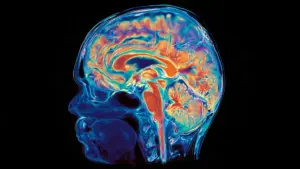









Researchers at the Washington University School of Medicine in St. Louis have uncovered a groundbreaking architectural feature of the human body: previously unknown, lymph node-like immune structures nestled within the bone marrow of the skull. This discovery, published in the journal Nature, fundamentally alters the scientific understanding of how the brain interacts with the body’s defense systems. The findings suggest that these localized immune hubs act as "first responders" to brain cancer, mobilizing an immune defense long before more distant lymph nodes in the body even register a threat.
For decades, the prevailing dogma in neuroscience was that the brain existed in a state of "immune privilege," largely isolated from the body’s systemic defenses by the blood-brain barrier. This view held that the central nervous system was a protected, sequestered organ, largely removed from the constant surveillance of immune cells. However, this perspective has been dismantled in recent years by a series of discoveries, many led by teams at Washington University. The latest findings not only confirm that the brain is in constant communication with the immune system but also suggest that it possesses specialized, highly localized "security stations" positioned strategically within the skull itself.
"This study reveals that the skull bone marrow is far more than just a structural framework; it harbors previously unrecognized hubs for brain-specific immune responses," said senior author Jonathan Kipnis, PhD, the Alan A. and Edith L. Wolff Distinguished Professor of Pathology & Immunology and a BJC Investigator at WashU Medicine. "Uncovering this localized immune niche changes how we view neuroimmune interactions and opens exciting new avenues for treating brain tumors and other neurological diseases."

A Local Immune Defense for the Brain
The path to this discovery began with earlier work from the Kipnis laboratory, which helped overturn the long-standing belief that the brain was entirely separated from the immune system. Years ago, the team discovered the presence of lymphatic vessels within the dura mater—the tough, protective outer membrane that encases the brain just beneath the skull. This was a critical first step in proving that the brain had a drainage system for waste and immune cell transit.
More recently, the researchers identified tiny, microscopic physical channels that act as bridges between the skull, the dura mater, and the brain tissue itself. These channels serve as a direct, high-speed route through which immune cells and cellular waste can travel between the brain and the bone marrow housed within the skull. By tracking proteins as they moved out of the brain, through these newly mapped channels, and into the skull bone marrow, the researchers were able to visualize an organized, previously hidden network.
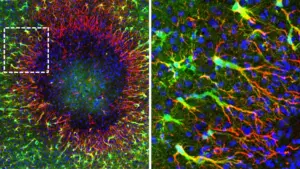
Within this marrow, the team discovered immune structures that closely resemble the architecture of lymph nodes. In a typical lymph node, T follicular helper cells work in concert with B cells to orchestrate the production of large quantities of antibodies, which are essential for neutralizing pathogens and fighting off disease. Finding these complex, organized structures in healthy bone marrow—a location not traditionally associated with the formation of such lymph-node-like environments—was entirely unexpected.
"We have never seen such structures in healthy bone marrow before," noted Jang Hyun Park, PhD, the study’s first author and a postdoctoral research fellow in the Kipnis lab who is transitioning to lead his own laboratory at the Korea Advanced Institute of Science and Technology. "It is an exciting discovery that points out that a complex brain requires its own specialized immune structures to defend it."
Skull Immune Hubs Respond to Brain Cancer
To determine the functional significance of these immune hubs, the researchers turned to a mouse model of glioblastoma, an aggressive and notoriously difficult-to-treat form of brain cancer. The goal was to see if these skull-based immune centers actually played a role in protecting the brain from the malignancy.
The team utilized a drug to interfere with the function of the skull immune hubs and observed the subsequent progression of the cancer. The results were telling: tumors grew significantly more rapidly in mice whose skull immune hubs had been disrupted compared to the control group, where the hubs remained intact. Furthermore, the mice with impaired skull immune defenses experienced shorter survival times. This evidence provided a strong indication that these local immune structures are not merely dormant bystanders; they are active, crucial participants in the body’s response to brain cancer.
The research also extended to human subjects, as the team found evidence of similar immune cells within human skull bone marrow. While the initial discovery was made in mice, the presence of analogous cells in human tissue suggests that this localized defense system is not an evolutionary quirk limited to rodents, but likely a conserved feature of the mammalian immune system.
Boosting the Skull’s Immune Response
Once the function of these hubs was established, the researchers investigated whether they could be therapeutically strengthened. If the skull bone marrow serves as a front-line defense, then bolstering that defense could theoretically lead to better patient outcomes.
The team developed a targeted treatment designed to increase antibody production specifically within the skull bone marrow. They formulated a gel containing three distinct immune-boosting proteins and applied it directly beneath the scalp, in proximity to the skull bone. The effect was immediate and pronounced. The treatment triggered a significant surge of immune activity against the brain tumors. Crucially, the researchers noted that this immune response appeared first in the specialized hubs within the skull bone marrow, with activity in more distant lymph nodes appearing only later.
This suggests that the skull marrow acts as a localized, rapid-response unit. Mice that received the protein-loaded gel showed a much higher rate of tumor rejection and survived longer than those in the control groups. The ability to trigger an immune response locally—at the very site of the problem—could be a game-changer in oncology.
A New Route for Treating Neurological Disease
The implications of this discovery reach far beyond glioblastoma. Because these immune hubs sit in such close physical proximity to the brain, researchers believe they could provide a unique pathway to influence immune activity in various neurological diseases without the need to trigger a systemic immune response that could affect the rest of the body.
The potential list of conditions that could be addressed through this new knowledge is vast. According to Dr. Kipnis, the finding fundamentally shifts the current paradigm of neuroimmunology. By recognizing that the brain relies on "first responders" in the surrounding skull for its immediate defense, clinicians may eventually be able to develop therapies that target these hubs directly through the skull. Such an approach could avoid the severe, widespread side effects often associated with systemic immunotherapies.
As the scientific community begins to grapple with the implications, the list of potential targets for this research includes Alzheimer’s disease, Parkinson’s disease, schizophrenia, and even long COVID—conditions that have been increasingly identified as having an immune-mediated component. By tapping into the body’s own local defense network, researchers may be entering a new era of neurological treatment, one where the skull is viewed not just as a barrier, but as a gateway to healing the brain.