




When we think of modern robotics, we typically picture rigid, heavy-duty machines operating within the strictly controlled confines of a factory floor. These conventional systems require exhaustive, painstaking programming, massive datasets compiled over years, and meticulously maintained environments to function properly. If even a single variable is shifted slightly out of place, the machine often fails entirely, unable to improvise or adjust to unexpected real-world conditions.
But a fundamental paradigm shift may be underway. What if robots could learn about the physical world the same way living creatures do—through active exploration, trial, and biological-inspired adaptation?
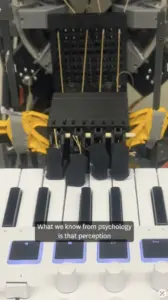
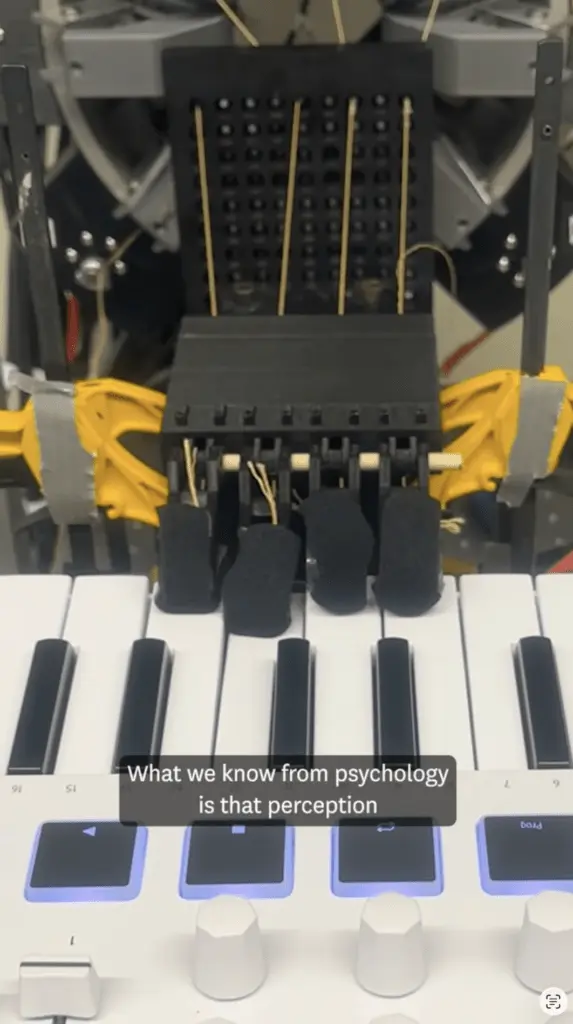
In a recent breakthrough emerging from the laboratories at the USC Viterbi School of Engineering, researchers have engineered a novel robotic system known as the "Musician Hand." This remarkably streamlined, tendon-driven prototype has achieved something once thought nearly impossible for such a simple device: after hearing a 30-note musical melody just once, it successfully processed the information and played the tune back flawlessly on a standard piano on its very first attempt.
Crucially, this achievement required no weeks of grueling machine-learning training cycles, no massive server farms processing petabytes of data, and no complex pre-programmed sheet music translation. Instead, the mechanism relied on roughly two minutes of self-directed, autonomous practice to master its physical form before executing the complex task.
While watching a robotic hand play a musical instrument might initially read like an impressive technical novelty or a sophisticated parlor trick, the broader implications for the future of assistive technology are profound. This research offers empirical proof that artificial systems can successfully learn from brief, spontaneous real-world experiences and dynamically adapt to unpredictable environments. In doing so, it opens a compelling pathway toward highly personalized, intuitive assistive devices that can seamlessly integrate into human lives.
How the Musician Hand Works: The Perception-Action Loop
The core innovation driving the Musician Hand is rooted in a fundamental biological principle known as the "perception-action loop." Rather than being painstakingly hardcoded by engineers to depress specific keys at exact intervals for a pre-determined song, the robot was designed to first teach itself how its own physical body functions.
Through rapid, self-guided movements—akin to a human infant exploring its hands or a musician warming up before a performance—the robotic system continuously monitored the relationship between its internal commands and the physical feedback it received from its environment. This closed-loop system allowed the device to rapidly construct an internal understanding of its own dexterity, tension limits, and spatial positioning without requiring human intervention.
Traditional artificial intelligence systems often demand immense computational power, frequently requiring megawatts of electricity and vast archives of training data to operate sophisticated applications like autonomous vehicles or advanced industrial robotics. In stark contrast, the Musician Hand achieved its remarkable feats using exceptionally efficient, low-power computing hardware—specifically, a standard laptop computer.
By demonstrating that complex physical dexterity can be achieved without heavy computational overhead, this research points toward a more sustainable and accessible future for robotic design. The efficiency of this perceptual robotics model means that future devices could operate independently in everyday settings without relying on constant cloud connectivity or power-hungry processors.
Revolutionizing Physical Assistive Tech
Because this new model of perceptual robotics is characterized by its high efficiency, low power consumption, and capacity for rapid adaptation, it holds immense potential for transforming the landscape of physical assistive technology.
Individuals with mobility impairments, limb differences, or neurological conditions often rely on assistive devices that require extensive, frustrating calibration periods. Traditional prosthetics and orthotics must frequently be adjusted by specialists over multiple appointments to match a user’s unique biomechanics, and even then, they often struggle to adapt when the user’s fatigue levels or environmental conditions change.
A technology capable of learning and adapting through brief, real-world interactions could fundamentally change this dynamic. Assistive hardware powered by similar perceptual learning loops could dynamically calibrate themselves to a user’s unique range of motion, muscle strength, and daily habits in a matter of minutes. Rather than forcing a person to undergo rigorous training to operate a rigid assistive device, the device itself would rapidly learn the user’s distinct physical patterns, offering a level of personalized responsiveness that current technology struggles to achieve.
Furthermore, this adaptability could extend to adaptive tools for daily living, robotic wheelchair interfaces, and smart home actuators designed to assist individuals with severe motor limitations. By reducing the need for exhaustive manual programming, such systems could become significantly more accessible and affordable for a broader population of users who depend on assistive hardware to navigate their daily lives.
Beyond the Physical: Abstract and Cognitive Applications
The significance of this engineering milestone extends far beyond physical mobility aids and robotic manipulation. The underlying theoretical framework—utilizing efficient, real-time perception to instantly adapt to a user’s changing needs—carries profound implications for how engineers and designers approach software architecture, specialized educational tools, and cognitive assistance systems.
In the realm of cognitive and sensory assistive technology, interfaces often struggle to keep pace with the cognitive load or unique learning paces of individual users. Standard software and digital learning aids are typically built around generalized user profiles, leaving individuals with cognitive differences, neurodivergence, or sensory processing challenges to struggle with interfaces that do not suit their cognitive workflows.
By applying principles of rapid perceptual adaptation, future cognitive tools could dynamically adjust their pacing, complexity, and presentation style based on immediate feedback from the user. Just as the Musician Hand learned the layout and response of the piano keyboard through active engagement, advanced assistive software could learn the interaction patterns and cognitive rhythms of a user in real time, streamlining everything from communication aids to digital navigation tools for individuals with visual or cognitive impairments.
This approach hints at a broader philosophical shift in how humans interact with technology. For decades, the prevailing methodology in computing and robotics has required humans to adapt to the limitations, rigid structures, and precise syntax of machines.
The successful demonstration of the Musician Hand suggests that we are standing at the threshold of a new era—one where machines possess the capability to quickly, efficiently, and intuitively adapt to human behavior. By transitioning away from brittle, hardcoded programming and toward dynamic perceptual learning, the next generation of assistive technology is poised to evolve beyond simple tools that people must struggle to operate. Instead, they are set to become intelligent, responsive systems that possess a fundamental understanding of how people move, learn, and live in an unpredictable world.