







Researchers at Northwestern University have achieved a significant breakthrough in neurobiology, identifying for the first time a specific population of neurons that appears to drive the anxiety often triggered by cannabinoid drugs. The study, which sheds new light on the complex relationship between cannabis consumption and psychological distress, suggests that these brain cells act as a biological trigger point, particularly when exposure to the drug coincides with stressful environmental conditions.
The findings, published on October 2 in the journal Nature Communications, provide a potential physiological explanation for why the subjective experience of cannabis—frequently described by users as relaxing—can abruptly shift into a state of intense panic or paranoia. As the use of cannabis products continues to rise across the United States and globally, understanding the neurological underpinnings of these adverse reactions has become an increasing priority for public health and psychiatric research.
Investigating the Neural Basis of Fear
To isolate the mechanism behind these anxiety-related behaviors, the research team, led by Dr. Sachin Patel, chair of psychiatry and behavioral sciences at the Northwestern University Feinberg School of Medicine, employed a controlled laboratory model using mice. The researchers sought to observe how cannabinoids modulate the brain’s response to a perceived threat.

In the experiment, mice were exposed to a distinct, evolutionary stressor: the scent of fox urine, which serves as a natural predator signal. Before encountering this odor, the subjects were administered either a placebo or a synthetic cannabinoid. The results were stark. The mice that had been given the cannabinoid demonstrated a marked increase in anxiety-related behaviors compared to the placebo group. Specifically, the cannabinoid-treated mice froze more frequently—a classic defensive reaction to fear—and exhibited a significant reduction in their natural tendency to explore the environment surrounding the predator scent.
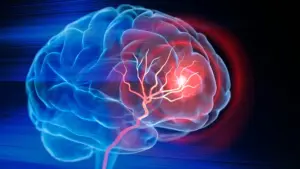
By utilizing advanced imaging techniques, including the implantation of miniature microscopes into the brains of the mice, the team was able to monitor neural activity in real-time. They successfully traced these heightened fear behaviors to a specific population of cells known as somatostatin neurons. These neurons are located in the central amygdala, a region of the brain widely recognized as a critical hub for processing fear, stress, and emotional responses.
Unlocking the "Brake" on Anxiety
The researchers did not stop at identifying the neurons; they sought to determine the causal role these cells play in the anxiety response. Through genetic manipulation, the team silenced the somatostatin neurons in the central amygdala. The result was a dramatic shift in behavior: when these specific neurons were inhibited, the mice that had received the cannabinoid were significantly less likely to exhibit avoidant behaviors when faced with the predator odor. This confirmed that the somatostatin neurons were not merely active during the experience of anxiety but were instrumental in generating the anxious response itself.
To understand how the cannabinoids were activating these neurons, the team analyzed brain tissue to observe changes in communication between cells. Their findings revealed a sophisticated but troubling interaction. Under normal conditions, the brain employs a natural mechanism that acts as a chemical "brake" on somatostatin neurons, keeping their activity levels in check. The research showed that cannabinoids weaken this inhibitory mechanism. With that restraint removed, the somatostatin neurons become hyperactive, firing rapidly and flooding the central amygdala with signals that manifest as excessive fear and anxiety.
"Higher doses of cannabinoids and environmental stress worked together to synergistically release the ‘brake’ on the central amygdala, which in turn drove excessive anxiety," Dr. Patel explained. This synergy may explain why individuals who are already in a stressful or uncomfortable environment are more prone to a "bad trip" when consuming cannabis, as the drug appears to lower the threshold for a fear response that might otherwise be contained.
The Broader Implications of the Research
The rise of cannabis use in the United States, coupled with an increase in emergency department visits related to adverse drug reactions, has made this research particularly timely. As the potency of available cannabis products fluctuates and public use becomes more common, the medical community is increasingly focused on the long-term mental health implications of regular consumption. Previous studies have long suggested an association between chronic cannabis use and an increased risk of developing anxiety and mood disorders, but the specific biological pathways involved have remained elusive.
The Northwestern study offers a new perspective on how exogenous substances, such as THC—the primary psychoactive component in cannabis—interact with the brain’s endogenous circuitry. By pinpointing the role of somatostatin neurons, the researchers have identified a specific biological target that could potentially be leveraged for future clinical interventions.
Dr. Patel emphasized that the relevance of these findings extends beyond the scope of cannabis-induced side effects. "Understanding how cannabis affects brain function to generate its psychoactive effects could ultimately reveal new ways to counteract negative consequences should they arise in some people," he said. Furthermore, he noted that because these neurons are centrally involved in the brain’s fear-processing network, they could represent a broader therapeutic target for managing anxiety disorders in a variety of contexts, independent of drug use.
"Suppressing the activity of somatostatin neurons in the central amygdala could represent a final pathway for reducing anxiety symptoms, not just in the context of cannabis side effects," Patel added. By identifying this "final pathway," the team has provided a blueprint that other researchers may follow to develop pharmacological or therapeutic strategies aimed at mitigating the physiological symptoms of panic and severe anxiety.
Future Directions and Research Team
The study, titled "Cannabinoid Modulation of Central Amygdala Population Dynamics During Threat Investigation," represents a collaborative effort by a multidisciplinary team at Northwestern. In addition to Dr. Patel, the research involved significant contributions from co-authors Farhana Yasmin, Saptarnab Naskar, Danyal Zaidi, Isaac Kandil, Michelle Kwon, and Dr. Luis Rosas-Vidal.
The research was supported by funding from the National Institutes of Health (grants MH100785 and K08 MH126166) and the Brain & Behavior Research Foundation’s Young Investigator Awards. As the scientific community continues to explore the neurobiology of fear, the work performed at the Feinberg School of Medicine underscores the importance of basic research in understanding the fundamental biological systems that govern human emotional health.
As researchers look ahead, the goal will be to determine how these findings can be translated into human clinical applications. While the mouse models have provided a clear look at the neural circuitry of anxiety, the complexity of the human brain will require further investigation to determine if similar mechanisms can be safely targeted to help those suffering from debilitating anxiety. For now, the study provides a critical piece of the puzzle, explaining the "why" behind the unpredictable and often distressing nature of cannabis-induced anxiety, and offering a promising direction for future mental health treatments.