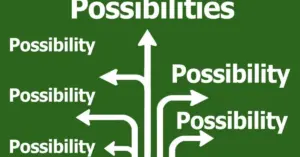











"In the desert, every thorn is a rose," goes an ancient cultural proverb, suggesting that in times of scarcity, we learn to cherish the beauty of what is present. In our modern era, however, we are faced with the opposite condition: romantic abundance. With the rise of global connectivity and digital dating platforms, the sheer volume of potential partners appears to have reached an all-time high. On the surface, this suggests that our chances of finding a compatible mate—and thus experiencing the happiness that comes with being loved—have never been better. Yet, beneath this veneer of limitless choice, a troubling question emerges: does this state of romantic abundance actually enhance our prospects for love, or does it fundamentally undermine our ability to sustain it?
Measuring Romantic Value
George Sand once famously remarked, "There is only one happiness in this life, to love and be loved." While the sentiment remains a universal ideal, the mechanism of achieving it has grown increasingly complex. Assessing a person’s romantic value today involves navigating two distinct dimensions. The first is the nonrelational dimension, which encompasses intrinsic traits—humor, intelligence, wealth, or wisdom—that are widely recognized as desirable across the board. This dimension is relatively straightforward; we generally agree on what constitutes an attractive or valuable set of personal qualities.
The second dimension, however, is relational. This concerns suitability, the unique, often unpredictable chemistry that emerges between two specific individuals. While the nonrelational dimension is easy to quantify, suitability is far more nuanced. It depends on personal history, situational context, and the subtle interplay of two different personalities. A person may possess an abundance of "high-value" traits, but if the relational fit is absent, the connection will struggle to take root.

Consider the role of intelligence. While widely regarded as a desirable trait, a significant intellectual gap between partners can actually diminish its value within the relationship, creating friction rather than harmony. Similarly, wealth is often viewed as a positive attribute, yet it can introduce complications, such as increased access to outside alternatives, which may test the stability of a partnership. Ultimately, even when two people possess an array of admirable qualities, their relationship may fail if they do not effectively bring out the best in one another. These two dimensions define our primary romantic tasks: finding a partner and sustaining a relationship. While modern abundance makes the search easier, it often makes the maintenance of a long-term bond more difficult.
The Challenges of Decision-Making in an Era of Abundance
Robert A. Heinlein once noted, "Sex without love is merely healthy exercise," highlighting the distinction between casual connection and the profound investment required for long-term commitment. In an age of romantic abundance, our decision-making processes are frequently compromised by several psychological traps. Among the most prevalent are the tendency to hunt for a "perfect" partner, the constant distraction of the "road not taken," the reliance on backup strategies, and a general decline in the willingness to invest in a singular relationship.
The distinction between a "maximizer" and a "satisficer" is crucial here. Romantic maximizers are driven to find the perfect partner, often spending an inordinate amount of time comparing their current companion to past flames or hypothetical alternatives. This mindset is fueled by the illusion of infinite choice. In contrast, satisficers focus on finding someone who meets their criteria for compatibility and is capable of building a healthy life together. When alternatives feel endless, the urge to maximize—to keep searching for someone slightly better—becomes a persistent itch. This leads to increased regret and the frequent use of counterfactual thinking, where one constantly wonders how life might have been different with someone else.
This leads directly to the temptation of the "road not taken." When the digital marketplace suggests that new, exciting options are always just a swipe away, staying committed to one person can start to feel like a loss of opportunity. Many modern lovers struggle to find peace not because their current partner is lacking, but because the mere existence of other possibilities creates a sense of restlessness. Fantasies about what might be "out there" often act as a poor substitute for the reality of a tangible relationship, serving to destabilize connections that might otherwise have flourished with more dedication.
Furthermore, the "backup strategy"—keeping potential replacements on standby—has become an unintended feature of the modern dating landscape. As Mae West wryly put it, one might "save a boyfriend for a rainy day—and another, in case it doesn’t rain." This behavior is facilitated by platforms that offer a steady stream of prospective partners. When we view disappointment as a signal to search for a replacement rather than an opportunity to deepen our engagement, we lose the incentive to resolve conflict. This creates a cycle where the availability of options actively discourages the development of deep, vulnerable intimacy. As researcher Aaron Ben-Ze’ev has observed, this is a clear manifestation of the principle that, in romance, more can actually become less.
The Role of Commitment
The impact of this abundance on commitment is significant. Commitment theory posits that our devotion to a partner is influenced by three main factors: how satisfied we are in the relationship, the perceived costs of leaving, and the availability of attractive alternatives. While it is true that a high volume of alternatives can weaken commitment, research by Benjamin and Agnew (2003) indicates that relationship satisfaction remains a much stronger predictor of stability than the presence of outside options. This offers a glimmer of hope: abundance does not automatically doom a relationship. When partners are truly satisfied, the allure of alternatives naturally fades. However, the danger arises when satisfaction dips; in those moments, the presence of numerous alternatives makes the exit door appear much more inviting.
Coping with the Paradox of Plenty
Coping with this landscape requires a shift in mindset, specifically the cultivation of psychological flexibility. This trait—the ability to adapt to changing circumstances while maintaining core values—is strongly linked to emotional well-being and the health of our personal relationships. As noted by researchers Kashdan and Rottenberg, those who are psychologically flexible are better equipped to balance the competing demands of life and love.
However, it is essential to distinguish between flexibility and instability. True, profound love requires a foundation of stability. The goal is to remain flexible enough to grow with a partner through life’s inevitable changes, without becoming so fickle that the act of commitment loses its meaning. The struggle here is to move past the "more is less" trap, where the constant comparison of options leads to loneliness and frustration. Instead, we might embrace the principle that "less is more"—that by limiting our focus and investing deeply in a single, well-chosen connection, we find the depth and meaning that the constant, shallow search for alternatives can never provide.
As Aristotle suggested, the key to a good life is not simply the quantity of our experiences, but their appropriateness. The challenge of modern romance is not to remove the abundance of the current era, but to exercise the wisdom to navigate it. We find ourselves in what Charles Dickens might call the best and worst of times for lovers. Relationships are indeed more fragile and susceptible to the distractions of the modern age, yet love itself has never been more central to the human experience. It has become the primary standard by which we judge the quality of our lives.
The paradox remains: our modern tools give us unprecedented access to one another, but they simultaneously make it more difficult to stay. True connection requires us to resist the urge to keep our options open. It demands that we choose one person and invest the time and energy necessary to discover the true potential of that choice. For all our technological progress, the path to enduring love still requires the same old-fashioned commitment: the decision to stop looking, and instead, to begin seeing.