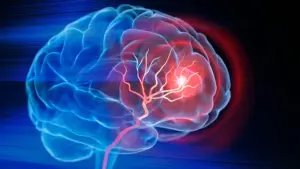








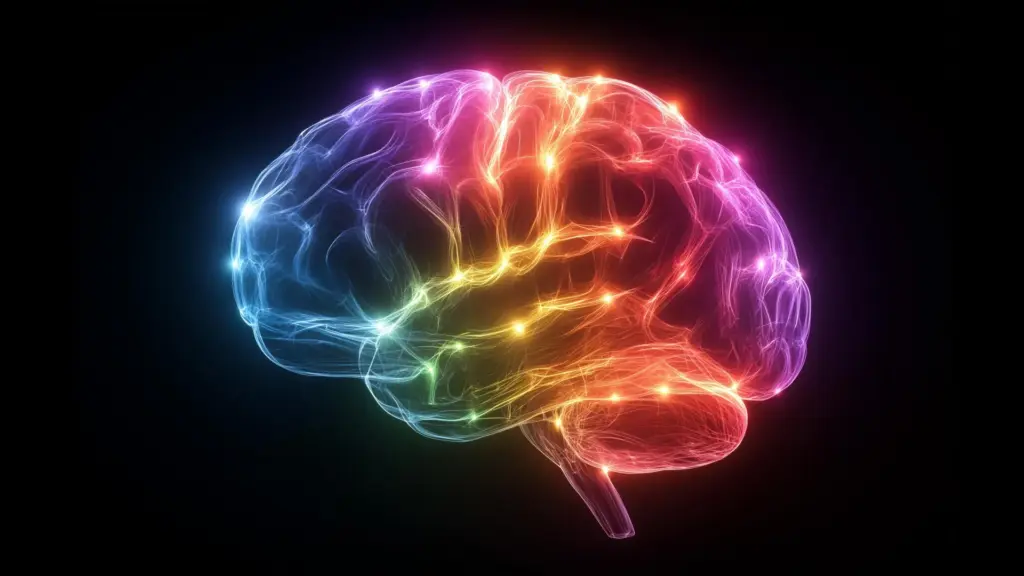
Stress is often dismissed as a purely physiological nuisance—a state of being that leaves us feeling frayed, anxious, or overwhelmed. However, recent breakthroughs in neuroscience suggest that stress serves a much more sophisticated purpose, acting as a biological filter that dictates which of our daily experiences are archived in the long-term memory and which are discarded. New research from Yale University has finally illuminated the mechanics of this process, revealing how the stress hormone cortisol physically alters the communication between brain networks to prioritize emotionally charged information.
The study, recently published in the journal Science Advances, marks a significant milestone in our understanding of cognition. By peering into the brain as it processes stimuli, researchers have uncovered that cortisol does not merely influence how we feel in the moment; it fundamentally reconfigures the functional connectivity of the brain, ensuring that emotionally intense or personally meaningful events are etched into our consciousness with greater clarity than mundane occurrences.
Unlocking the Brain’s Stress Response
For years, scientists have understood that there is a symbiotic, albeit complex, relationship between stress and memory. Studies involving both human subjects and animal models have consistently demonstrated that stress and its primary hormonal mediator, cortisol, can significantly enhance memory for emotional events. At the heart of this process lies the amygdala, a brain region widely recognized as the command center for emotional processing. The amygdala acts as a sentinel, identifying experiences that carry potential significance—whether they are threats, rewards, or moments of intense personal meaning.

Despite this foundational knowledge, the exact "how" has remained elusive. A primary obstacle for neuroscientists has been the multifunctional nature of the brain. Many regions involved in memory are also deeply embedded in the regulation of emotional responses, making it difficult for researchers to isolate whether cortisol is acting upon the initial perception of an experience, the subsequent encoding of that memory, or both simultaneously.
"Forming memories for emotional experiences involves different processes in the brain: first, perceiving an experience as emotional or intense, and second, encoding that experience into long-term memory," explained Elizabeth Goldfarb, an assistant professor of psychiatry at Yale School of Medicine and the corresponding author of the study. Goldfarb, who is also a member of Yale’s interdisciplinary Wu Tsai Institute, noted that untangling these dual processes was essential to understanding how the brain discerns what is worth remembering.
A New Methodology for Mapping Memory
To bridge this knowledge gap, the Yale research team designed a rigorous, double-blind experiment. Participants were administered either hydrocortisone—a pharmaceutical form of cortisol—or an inactive placebo. Following this, they were asked to view a series of images while undergoing functional magnetic resonance imaging (fMRI). This imaging technology provides a window into brain activity by measuring fluctuations in blood flow and oxygen levels, allowing researchers to pinpoint which neural regions are firing during specific tasks.
As participants viewed the images, they were prompted to provide real-time feedback on their emotional reactions to each one. To gauge the efficacy of these memories, the researchers returned the following day to test the participants’ retention of the images. By having each participant complete the experiment twice—once with the hormone and once with the placebo—the researchers were able to create a highly accurate, controlled comparison of how an individual’s brain function shifted in the presence of elevated cortisol levels.
Perhaps the most innovative aspect of the study was the team’s approach to data analysis. Traditionally, functional connectivity—the study of how different brain regions synchronize their activity—requires several minutes of data to achieve statistical significance. The Yale team, however, pioneered a method to analyze these connectivity patterns during individual trials lasting only about five seconds. These brief "snapshots" allowed the researchers to predict two distinct outcomes: how emotionally intense the participant found a specific image and whether that image would be successfully encoded into memory 24 hours later. By separating these signals, the team successfully traced the influence of cortisol through the complex web of brain networks.
Cortisol’s Targeted Influence on Neural Networks
The results of the Yale study provide a comprehensive view of how stress alters the brain’s "memory prioritization" system. The findings confirmed the long-held hypothesis that cortisol boosts memory for emotional experiences, but they also revealed the sophisticated mechanism behind that boost.
Cortisol appears to operate through a two-pronged influence on the brain. First, within the networks dedicated to emotion, the hormone produced more consistent and robust patterns of activity. This effectively "turned up the volume" on the brain’s emotional processing centers, ensuring a more reliable response to significant stimuli. Second, within the memory-encoding networks, cortisol fostered a higher level of specialization. The brain became better at tuning its resources toward emotional information, essentially narrowing its focus to ensure that the "emotional weight" of the information was properly logged.
Most significantly, the study found that cortisol increased the coordination between these two distinct networks. By facilitating better communication between the brain’s emotional centers and its memory-storage systems, the hormone ensures that when an experience is perceived as intense, the memory apparatus is already primed to store it. This demonstrates that the strengthening of emotional memory is not the result of a single brain region working harder, but rather the result of a coordinated, systemic shift in how multiple networks interact.
The Adaptive Nature of Stress
These findings offer a fresh perspective on the biological purpose of stress. While modern society often treats stress as an inherently negative state to be minimized, these results suggest that, from an evolutionary standpoint, the stress response is a highly adaptive mechanism. It allows the brain to distinguish between the noise of daily life and events that hold genuine survival value or emotional weight.
"Stress responses are fundamentally adaptive and can help you form strong memories—but this is specific to experiences that you find to be emotionally intense or meaningful," Goldfarb noted. "This is in part related to your brain increasing engagement of networks that track emotional intensity."
The researchers suggest that this understanding could have practical applications for how we approach learning and memory retention in high-pressure environments. If the brain is naturally predisposed to remember information that it perceives as emotionally significant, then intentionally connecting new information to personal interests, excitement, or strong feelings may be an effective strategy for learning, even—and perhaps especially—when one is feeling stressed.
By moving beyond the idea that stress merely disrupts cognitive function, the Yale study highlights the brain’s remarkable ability to adapt. Instead of causing a universal decline in memory, stress acts as a selective agent, curating our life experiences and highlighting those that demand our future attention.
The study involved a significant cross-disciplinary effort at Yale, with contributions from Rajita Sinha, the Foundations Fund Endowed Professor in Psychiatry and professor in the Child Study Center and of neuroscience at the Yale School of Medicine, and Todd Constable, the Elizabeth Mears and House Jameson Professor of Radiology and Biomedical Imaging and professor of neurosurgery. The research was supported by grants from the National Institutes of Health, providing the resources necessary to map these intricate neural pathways. As researchers continue to explore these mechanisms, the findings stand as a testament to the complex, purposeful, and highly specialized nature of the human brain’s response to the pressures of the world.