








Federal regulators have cleared a new technological tool designed to assist healthcare professionals in identifying autism in young children, offering a fresh resource for clinicians navigating complex diagnostic assessments.
The Food and Drug Administration cleared Neurora this month to help inform diagnostic decisions for children ranging from 18 months to 12 years old. Developed by Argus Cognitive, Inc., the innovative system relies on more than 100 biometrics to evaluate behavioral patterns associated with autism spectrum disorder.
The clearance comes at a critical time for families and healthcare systems across the country. According to recent estimates from the Centers for Disease Control and Prevention, autism now affects approximately 1 in 31 children. Despite growing awareness and screening efforts, many families continue to face prolonged wait times to secure comprehensive evaluations for their children. Federal data indicates that the median age of an autism diagnosis hovers at just under 4 years old, a timeline that advocates and medical professionals continually strive to shorten to ensure children receive early, impactful interventions.

How the Neurora System Works
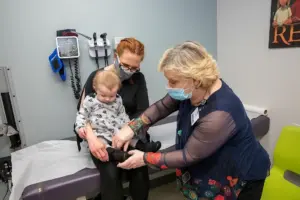
Under the operational framework established by Argus Cognitive, clinicians utilize Neurora by uploading video and audio recordings captured during standard, routine behavioral assessments. The software is designed to function seamlessly within existing clinical workflows, eliminating the need for specialized proprietary hardware or cumbersome protocol changes.
Once the media is uploaded to the secure Neurora portal, the tool analyzes a comprehensive suite of behavioral markers. These include facial expressions, vocal patterns, and eye gaze tendencies, among other biometric indicators. By processing these elements, the system evaluates how an individual child’s behavior aligns with established datasets featuring children both with and without autism.
Company leadership emphasizes that the technology is intended strictly as a supportive aid rather than a standalone diagnostic instrument. The automated results are meant to be reviewed by qualified professionals alongside traditional clinical observations, historical background information, and other relevant findings.
"We built Neurora to support clinicians evaluating children for autism," said Dr. Attila Meretei, CEO and co-founder of Argus Cognitive. "Neurora works inside the assessment clinicians already use, without protocol changes or proprietary hardware, and is fully automated. Our goal is to reinforce every diagnosis with robust, quantitative evidence."
Research Foundation and Regulatory Landscape
The development of Neurora was supported by a grant from the National Institutes of Health specifically targeted at entrepreneurs and innovative medical technologies. The rigorous clinical research backing the tool was further underscored by a study published earlier this year in the journal Frontiers in Psychiatry. According to findings detailed in the study, the tool successfully distinguished between children with and without autism in nearly 78% of evaluated cases, providing a quantifiable layer of evidence to support clinical decision-making.
Neurora joins a small, growing segment of FDA-cleared diagnostic support tools now available to pediatricians, psychologists, and specialized diagnosticians. Over recent years, federal regulators have cleared a select group of auxiliary technologies aimed at addressing bottlenecks in the diagnostic process.
Among these is the EarliPoint Evaluation for ASD, which utilizes specialized eye-tracking technology to meticulously analyze a child’s visual behavior during social interactions. Additionally, the FDA previously cleared Canvas Dx, an algorithmic tool that processes data gathered from parental questionnaires, healthcare provider observations, and video submissions to assist clinicians in determining whether a young child meets the criteria for an autism diagnosis.
As these technological aids enter clinical practice, medical communities continue to emphasize the irreplaceable value of expert clinical judgment. While biometric analysis and algorithmic tools offer valuable quantitative insights to reduce ambiguity and support timely identification, they remain integrated within a broader, comprehensive evaluation framework overseen by trained specialists dedicated to supporting children and their families.