







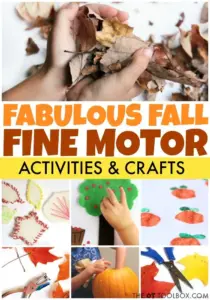
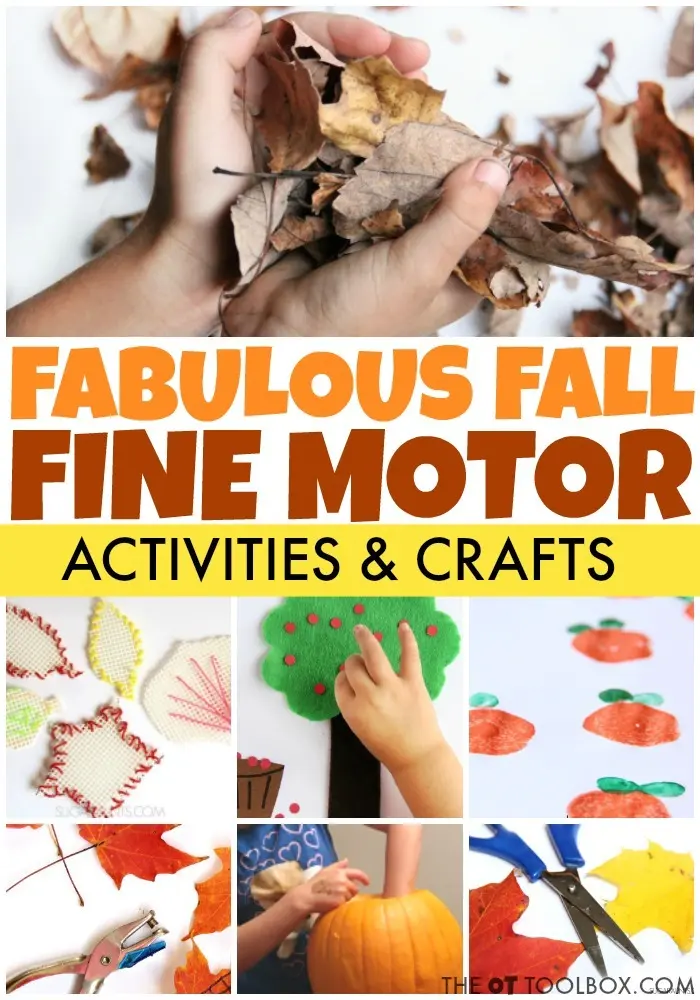
As the crisp autumn air settles in and landscapes transform with vibrant shades of red, orange, and gold, pediatric occupational therapists and educators are leaning into seasonal changes to support childhood development. Rather than choosing seasonal projects purely for festive entertainment, professionals are increasingly utilizing autumn-themed materials—ranging from apples and leaves to pumpkins, acorns, and farm elements—to target specific fine motor, visual-motor, and sensory processing needs in children.
Across classrooms and therapy clinics, seasonal elements are being deployed to address foundational developmental requirements, including hand strength, finger dexterity, scissor proficiency, visual-motor integration, and handwriting mechanics. Because many of these activities naturally overlap several developmental domains, therapists often adapt a single seasonal exercise to meet multiple clinical goals for toddlers, preschoolers, and early elementary students alike.
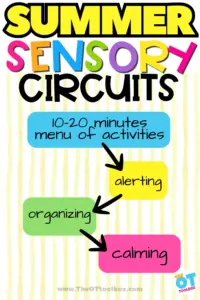
The shift toward nature-based and seasonal occupational therapy is supported by resources like specialized seasonal sensory activity guides, which encourage both fine and gross motor movement through immersive sensory experiences. As families and educators look for ways to incorporate purposeful play into daily routines, autumn-themed strategies provide a practical framework for supporting critical physical milestones.
Fall Hand Strength Activities
Building hand strength is a fundamental prerequisite for many daily tasks, including buttoning clothing, opening containers, and manipulating writing utensils. Seasonal materials offer natural opportunities to introduce resistance and tactile feedback without making exercises feel like clinical work.
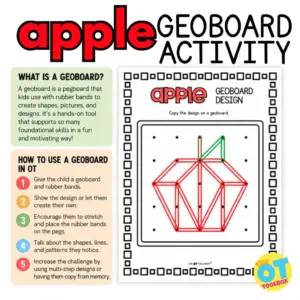
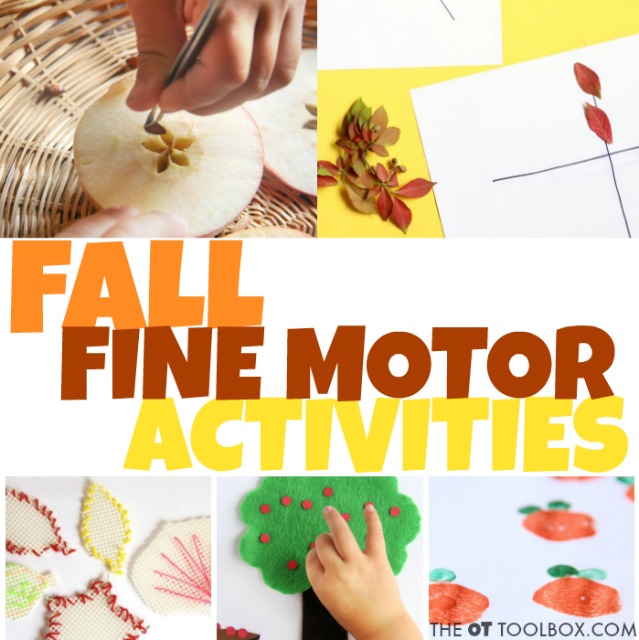
Apple-themed geoboards, for instance, require children to stretch rubber bands across pegs to recreate specific fruit designs. This action provides measured resistance to the small muscles of the fingers and hands while demanding precision and controlled release. Therapists can modify the challenge by adjusting the thickness of the bands or altering the complexity of the visual design depending on a child’s developmental stage.
Similarly, traditional play dough remains a staple of pediatric therapy regardless of the season. When combined with autumnal scents, miniature leaves, decorative erasers, or themed beads, play dough exercises encourage rolling, squeezing, pinching, and pressing. These movements foster intrinsic muscle development, arch formation, wrist stability, and pincer or tripod grasp patterns while delivering proprioceptive sensory feedback.
Another effective tool for hand strengthening involves hole-punching activities centered around autumn shapes. Operating a hand-held hole punch requires sustained muscular force, while accurately positioning the tool along the margins of a printed apple or leaf adds an essential visual-motor component.
Enhancing Manual Dexterity
Manual dexterity involves the efficient coordination of the fingers to execute small, precise movements. When fine motor skills break down, it can often be traced back to challenges involving speed, precision, visual-motor integration, or finger strength. Seasonal manipulatives—such as craft pom-poms, seeds, paper clips, and small craft items—frequently transform basic sorting tasks into advanced dexterity exercises.
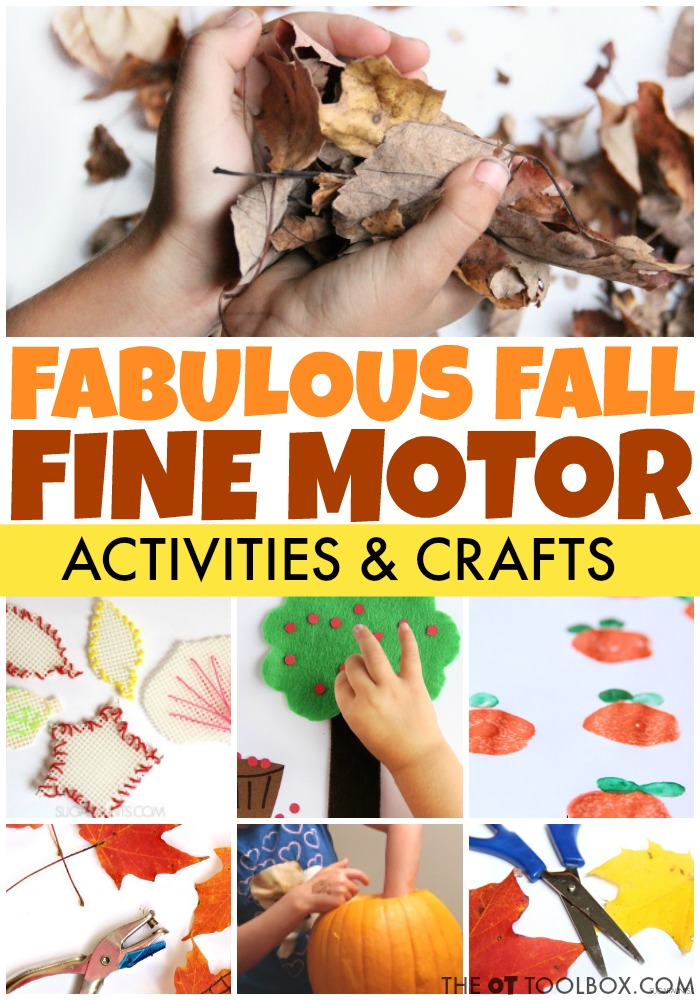
Fall tree geoboards encourage children to manipulate rubber bands around individual pegs, requiring them to use their fingertips rather than grasping with the entire hand. This pincer-focused approach helps refine the precise movements needed for advanced tool use.
In a similar fashion, paper clip counting activities utilize laminated seasonal cards where children attach the appropriate number of metal clips to complete a math or counting task. Opening and positioning paper clips demands refined fingertip control and bilateral hand coordination, as one hand must stabilize the card while the other manipulates the fastener.
Craft pom-poms transferred via tongs, tweezers, or clothespins into compartmentalized containers provide yet another method for targeting manual dexterity. By varying the size of the pom-poms or changing the grabbing tool, practitioners can easily grade the activity up or down to match a child’s current capability.
Scissor Skills and Cut-and-Paste Crafts
Scissor use is a complex bilateral task that requires both hands to perform entirely different jobs simultaneously. While the dominant hand opens and closes the scissors, the non-dominant supporting hand must stabilize, rotate, and guide the paper along a designated visual path.
Specialized cutting practice pages featuring apple outlines or geometric shapes allow children to practice line awareness and blade control. Beyond printed worksheets, gathering actual fallen leaves offers a sensory-rich alternative. Allowing children to snip real leaves into small pieces or cut along drawn lines helps bridge environmental exploration with foundational motor skill development.
Farm-themed and autumn cut-and-paste crafts elevate these physical demands further by introducing executive functioning elements. Children must cut out individual components, visually determine their proper spatial orientation, follow an assembly sequence, and apply glue precisely. This multi-step process successfully addresses scissor proficiency alongside bilateral coordination, visual-spatial awareness, and sequential planning.
Visual-Motor Integration and Drawing
Adequate hand strength and dexterity alone are not always sufficient for academic success; children must also be able to coordinate what they see with how their hands move. Visual-motor challenges often surface when a student attempts to copy a design, follow a linear path, locate a specific target, or reproduce spatial relationships.
Fall-themed directed drawing pages—featuring acorns, leaves, apples, and pumpkins—require children to observe a visual model, plan their pencil movements, and reproduce lines with proper spatial orientation. Pattern block designs serve a similar purpose, combining tactile fine motor manipulation with visual discrimination as children select, orient, and position colored blocks to match a template.
Seek-and-find or "I Spy" activities featuring autumn and back-to-school items provide additional support for visual scanning, figure-ground perception, and sustained visual attention. Therapists often enhance these activities by introducing a physical framing tool to reduce visual clutter, followed by a fine motor response such as circling the object, covering it with a small manipulative, or clipping it with a clothespin.
Meaningful Handwriting Practices
Rather than relying entirely on isolated drill-and-practice worksheets for letter formation, educators and therapists frequently utilize seasonal writing prompts to embed handwriting into meaningful contexts. Fall-themed writing prompts allow professionals to tailor a single set of cards to accommodate an entire group of varying skill levels.
Emerging writers may focus simply on producing a single autumn-related vocabulary word, while beginning writers construct a complete sentence. More advanced students can be challenged to respond to short seasonal prompts or plan and write coherent multi-sentence paragraphs. This structured approach allows instructors to target specific mechanics—such as baseline adherence, letter sizing, spacing, and writing endurance—within an engaging seasonal theme.
No-Prep and Environmental Activities
Many effective fine motor interventions require little to no preparation and utilize everyday natural materials found outdoors or around the home. Natural leaves can be torn, crumpled, hole-punched, cut, sorted, or strung onto yarn. Acorns and seeds can be gathered, counted, sorted, and transferred using tongs or fingers to build pincer strength.
Common household items also serve as practical therapeutic tools. Clothespins can be clipped onto cardboard trees to represent falling foliage, while plastic bread ties from grocery items offer unique resistance for bending, twisting, and strengthening small finger muscles.
As pediatric occupational therapy resources continue to expand, professionals and parents have access to a wide array of ready-to-use materials designed to make developmental support both accessible and enjoyable. By integrating seasonal themes into structured play and daily routines, educators and therapists can effectively target essential physical foundations while celebrating the changing seasons.