




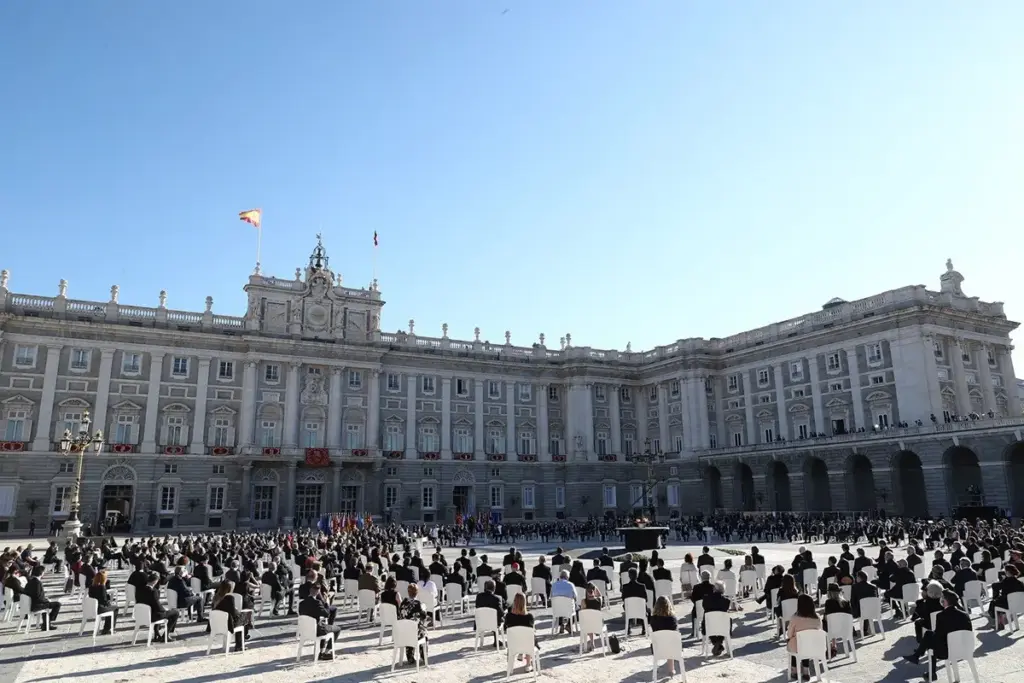
World Health Organization (WHO) Director-General Dr. Tedros Adhanom Ghebreyesus traveled to Madrid today to stand alongside the leadership of Spain, offering a solemn tribute to the thousands of lives lost to the COVID-19 pandemic. During his visit, Dr. Tedros not only acknowledged the profound human cost of the virus within the nation but also offered high praise for the heroic dedication of Spain’s healthcare workers and the resolute, science-driven strategies implemented by the Spanish government to break the chain of viral transmission.
The visit served as a moment of reflection and recognition for a country that, at the height of the global health crisis, stood at the very epicenter of the pandemic in Europe. During his formal remarks, Dr. Tedros emphasized the gravity of the occasion, expressing his deepest sympathies to those grieving. "It is with great respect that I join the King of Spain, the Prime Minister, and the entire government of the country to pay tribute to the people who have fallen victim to COVID-19," Dr. Tedros stated. "I extend my deepest condolences to the families of all people who have lost their lives due to this virus in Spain, and around the world."
The Director-General’s presence in Madrid was intended to underscore a broader message: that the trajectory of a pandemic is not inevitable, but is instead shaped by the decisions of leadership and the cooperation of the public. At the peak of the outbreak in Spain, the nation faced an overwhelming surge of infections, with daily case reports reaching approximately 10,000. The situation was dire, placing an immense strain on hospitals, intensive care units, and the healthcare professionals tasked with managing a rapidly escalating crisis.

However, in the months that followed that initial surge, Spain underwent a dramatic transformation in its public health outcomes. Dr. Tedros attributed this turnaround to a multi-faceted and aggressive strategy that prioritized core public health interventions. This included the deployment of robust surveillance systems to monitor the virus, a massive scaling up of testing capacity, comprehensive contact tracing efforts to identify and isolate transmission chains, and the implementation of rigorous treatment and isolation protocols for those affected.
The success of these efforts was not merely technical; it was also social. Dr. Tedros highlighted the critical role played by the Spanish public, whose resolve to adhere to strict—and at times, deeply challenging—lockdown measures and physical distancing guidelines proved to be the bedrock of the country’s recovery. By collectively observing these protocols, the citizens of Spain allowed their healthcare system the breathing room necessary to stabilize and eventually suppress the spread of the virus. These combined efforts succeeded in fundamentally altering the course of the outbreak, moving the country from a state of crisis to one of controlled stability.
"Spain has shown that with political leadership and action, backed by community support, that COVID-19 can be controlled, no matter at what stage virus transmission is at in a country," Dr. Tedros observed. "From being greatly challenged, Spain has reversed the trajectory of the outbreak."
The Director-General’s assessment serves as a significant case study for the international community. Throughout the pandemic, the WHO has consistently emphasized that there is no "magic bullet" for COVID-19; rather, the virus is best countered through a combination of traditional public health tools applied with consistency and intensity. Spain’s experience, according to the WHO, serves as an empirical demonstration that when the government provides clear, science-based guidance and the public acts in solidarity, even the most aggressive viral surges can be brought under control.
Despite the success of these measures, Dr. Tedros was careful to avoid complacency. The nature of COVID-19 remains volatile, and as countries around the world continue to grapple with the risk of secondary waves or persistent low-level transmission, vigilance remains the most important tool in the public health arsenal. During his meetings with Spanish authorities, Dr. Tedros expressed his full support for the government’s ongoing commitment to maintain these heightened levels of preparedness.
"While we have witnessed the suppression of the virus across Spain, I support the commitment by Spanish authorities to remain vigilant in the face of the persistent threat that COVID-19 poses," the Director-General added. This message of caution is reflective of the WHO’s broader global stance: that the end of an acute crisis phase does not equate to the end of the pandemic. The risk of resurgence persists as long as the virus continues to circulate in the population, necessitating that surveillance and testing infrastructures remain fully operational and ready to respond to any new clusters of infection.
The visit by the WHO leadership also served to highlight the personal sacrifices made by those on the front lines. Throughout the crisis, Spain’s healthcare workers faced extreme conditions, dealing with high patient volumes and the psychological burden of caring for the critically ill. Dr. Tedros’s salute to these professionals was a acknowledgment of the courage required to continue working in an environment of high risk, often while separated from their own families to prevent further spread. The WHO has repeatedly called for the protection and support of the global health workforce, noting that they are the most vital resource in any pandemic response.
As Spain looks toward the future, the lessons learned during the peak of the outbreak are being integrated into the country’s long-term health planning. The government’s ability to pivot from a state of emergency to a phase of controlled management is being viewed by international health observers as a model for how nations can navigate the complexities of managing a pandemic while gradually restoring social and economic activity.
The collaboration between the WHO and national governments, as demonstrated by this visit, remains a cornerstone of the global response. By sharing data, best practices, and lessons learned, the international community aims to build a more resilient global health architecture. Spain’s journey—from the brink of a healthcare catastrophe to a successful suppression of the virus—stands as a testament to the power of a unified national response.
The presence of Dr. Tedros in Spain was not only a gesture of international solidarity but also a formal recognition of the hard-won progress achieved by the Spanish people. As the world continues to navigate the complexities of the COVID-19 era, the example of Spain remains a poignant reminder that while the virus is a formidable opponent, it is not invincible when confronted with the strength of political will, scientific evidence, and the resilience of a dedicated public. The path forward remains one of caution, but the successes achieved in Spain provide a vital blueprint for other nations working to overcome the persistent challenges posed by the pandemic.