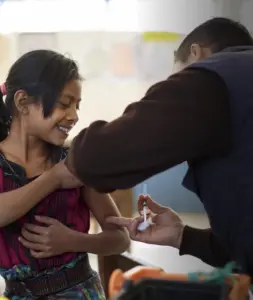







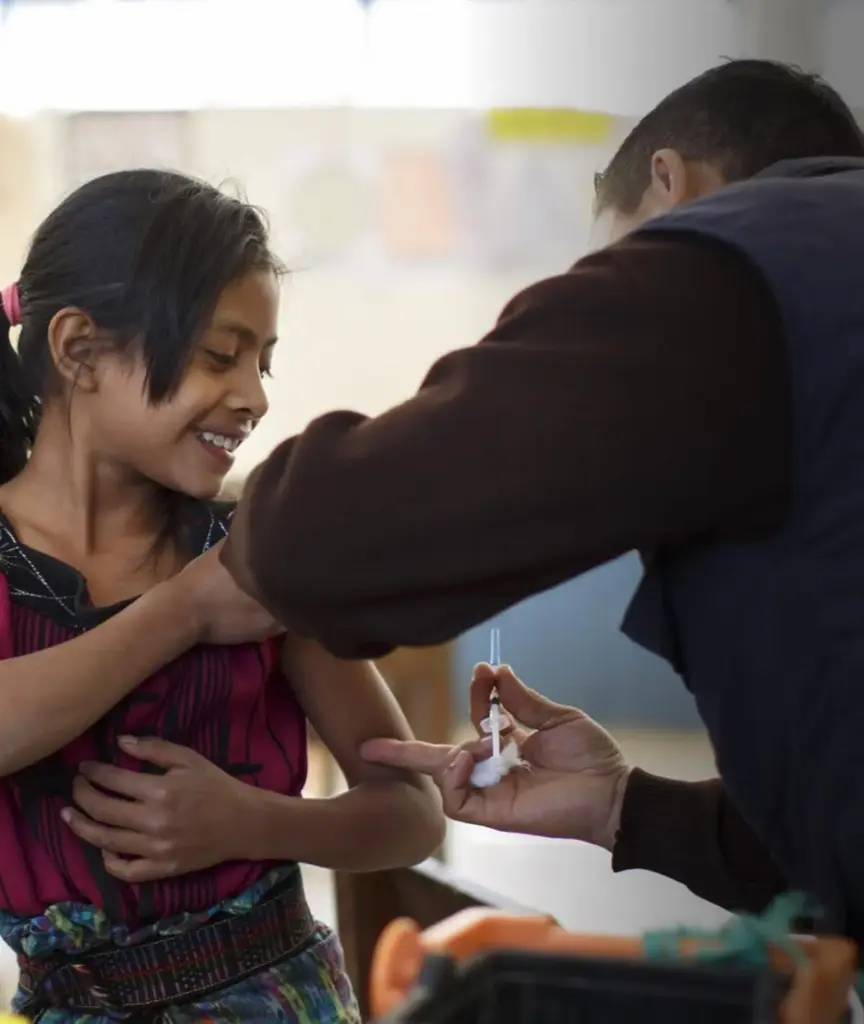
GENEVA/NEW YORK, 15 July 2020 — The World Health Organization (WHO) and UNICEF issued a stark warning today regarding a precipitous and alarming decline in the number of children receiving life-saving vaccinations worldwide. This decline, a direct consequence of the global disruptions to immunization services caused by the COVID-19 pandemic, threatens to unravel decades of hard-won progress in public health. According to newly released data from the two organizations, the global community is facing a potential reversal in the effort to reach children and adolescents with essential vaccines—a struggle that was already facing significant headwinds due to a decade of stagnating coverage rates.
The latest estimates for 2019 indicate that major public health improvements, such as the successful expansion of the HPV vaccine to 106 countries and the increased protection of millions of children against a host of preventable diseases, are now at risk of being lost. Perhaps most concerning is the preliminary data gathered from the first four months of 2020, which highlights a substantial drop in the number of children completing the three-dose regimen for the diphtheria, tetanus, and pertussis (DTP3) vaccine. This particular metric, which serves as a global marker for the strength and reach of immunization services, has not seen a reduction in 28 years. If current trends persist, the world could witness its first sustained decline in DTP3 coverage in nearly three decades.
The Pandemic’s Toll on Essential Services
"Vaccines are one of the most powerful tools in the history of public health, and more children are now being immunized than ever before," said Dr. Tedros Adhanom Ghebreyesus, WHO Director-General. "But the pandemic has put those gains at risk. The avoidable suffering and death caused by children missing out on routine immunizations could be far greater than COVID-19 itself. But it doesn’t have to be that way. Vaccines can be delivered safely even during the pandemic, and we are calling on countries to ensure these essential life-saving programs continue."

The disruption is not merely theoretical; it is manifesting in the cancellation of critical outreach. At least 30 measles vaccination campaigns were either cancelled or remain at high risk of cancellation due to the pandemic, creating a dangerous void that could lead to widespread outbreaks later in 2020 and beyond. A collaborative pulse survey conducted by UNICEF, the WHO, and Gavi—in partnership with the U.S. Centers for Disease Control (CDC), the Sabin Vaccine Institute, and the Johns Hopkins Bloomberg School of Public Health—revealed the depth of the crisis. As of May 2020, three-quarters of the 82 responding countries reported significant COVID-19-related disruptions to their immunization programs.
The causes for these interruptions are multifaceted. Even in regions where health services remain nominally operational, families are often unable to access them. Economic hardships, strict movement restrictions, and severe interruptions to public transportation have created massive barriers to care. Furthermore, a pervasive fear of being exposed to COVID-19 at medical facilities has kept parents away from clinics. The supply side of the equation is equally strained; many health workers are unavailable due to travel restrictions, the diversion of resources to emergency COVID-19 response efforts, or a critical lack of personal protective equipment (PPE) required to operate safely.
Henrietta Fore, UNICEF Executive Director, emphasized the urgency of the situation, stating, "COVID-19 has made previously routine vaccination a daunting challenge. We must prevent a further deterioration in vaccine coverage and urgently resume vaccination programs before children’s lives are threatened by other diseases. We cannot trade one health crisis for another."
A Stagnating Foundation Pre-Pandemic
The vulnerability of the global immunization infrastructure was evident even before the arrival of COVID-19. For several years, global coverage rates for DTP3 and measles had plateaued at approximately 85 percent. Statistical projections indicate that a child born today has a less than 20 percent probability of receiving all globally recommended vaccines by the time they reach their fifth birthday.
In 2019 alone, nearly 14 million children missed out on life-saving vaccines, including measles and DTP3. A significant majority of these children reside in Africa, where they often face systemic barriers to accessing even basic health services. The burden is heavily concentrated; two-thirds of these children live in just 10 middle- and low-income countries: Angola, Brazil, the Democratic Republic of the Congo, Ethiopia, India, Indonesia, Mexico, Nigeria, Pakistan, and the Philippines. Notably, children in middle-income countries represent an increasingly large share of this underserved population, highlighting that the challenge of immunization is not limited to the world’s poorest nations.
Regional Variations in Progress and Risk
The global landscape of immunization is uneven, marked by both past successes and new, looming dangers. Over the last decade, South Asia made commendable strides, with regional coverage for the third dose of DTP increasing by 12 percentage points, largely driven by improvements in India, Nepal, and Pakistan. However, health officials fear that these gains are fragile. Countries that had recently achieved significant milestones, such as Ethiopia and Pakistan, are now at risk of rapid backsliding if their immunization services are not fully restored in the immediate future.
The situation is particularly alarming in Latin America and the Caribbean. Historically a region with high vaccination coverage, the area has seen a consistent decline over the last ten years. Since 2010, immunization coverage in countries such as Brazil, Bolivia, Haiti, and Venezuela has plummeted by at least 14 percentage points. These nations are now facing the dual challenge of declining historical coverage and moderate-to-severe COVID-19-related service disruptions, creating a "perfect storm" for potential health crises.
Data Collection and Moving Forward
The WHO and UNICEF continue to produce annual immunization coverage estimates for 195 countries, a process that provides a vital, evidence-based assessment of global health performance. The 2019 data set is part of a comprehensive 39-year historical series that enables experts to track progress from 1980 to the present day. These figures are calculated using population data provided by the United Nations and serve as the standard by which the global health community measures its success in protecting the world’s children.
The "Immunization Pulse Survey" conducted in June 2020 offered further insight into the rapid nature of these service disruptions. The survey included input from 260 immunization experts across 82 countries, including health ministry representatives and academic researchers. A previous poll conducted in April had already sounded the alarm, with 64 percent of participating countries indicating that their routine immunization programs had been either disrupted or entirely suspended.
As the international health community attempts to recover the lost ground caused by the pandemic, the WHO and UNICEF are working closely with national governments to "reimagine" immunization delivery. This involves implementing innovative strategies to ensure that vaccines reach children in even the most difficult environments, utilizing protective measures for health workers, and maintaining the supply chain despite the ongoing global health emergency.
The challenge ahead is immense, but the core objective remains clear: to ensure that the progress of the last three decades is not abandoned. The task for health authorities is now to bridge the gap between emergency pandemic management and the maintenance of essential, life-saving services that protect the health of future generations. As global leaders and health organizations look toward the remainder of the year, the focus remains on restoring access, addressing parental concerns, and ensuring that the most vulnerable children are not left behind in the shadow of the COVID-19 crisis.