




For over a decade, artificial intelligence has been heralded as the digital mirror of the human mind. Artificial Neural Networks (ANNs)—the computational architectures that power everything from self-driving cars to sophisticated image recognition software—have become the gold standard for neuroscientists attempting to map the mysteries of human vision. By training these systems to categorize objects and scenes, researchers have long operated under the assumption that if an AI can mimic the output of the human visual system, it must be replicating the internal logic of the brain as well.
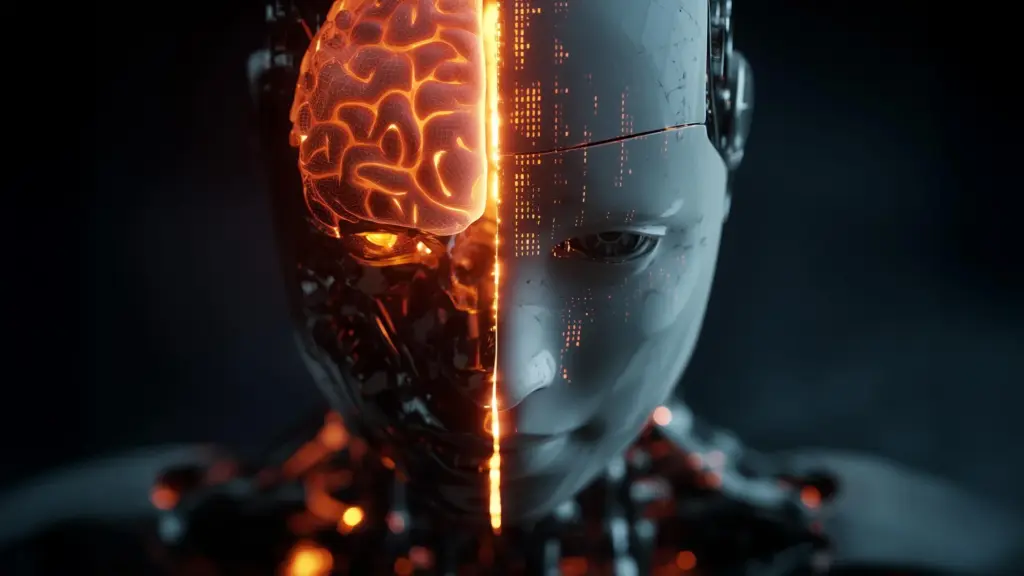
However, a groundbreaking study from York University is now challenging this foundational premise. The research, recently published in Nature Machine Intelligence, suggests that the "brain-like" qualities of AI may be a sophisticated illusion. By applying a rigorous new diagnostic framework, the team at York has uncovered a critical disconnect: while AI models are undeniably adept at predicting brain activity, the brain is remarkably poor at predicting the internal mechanics of those same models. This asymmetry suggests that current AI systems may be arriving at the right answers through entirely alien cognitive pathways.
The Asymmetric Logic of Artificial Vision
The research was spearheaded by Assistant Professor Kohitij Kar, the Canada Research Chair in Visual Neuroscience and a member of York’s Centre for Vision Research and the Centre for Integrative and Applied Neuroscience. For years, the scientific community has relied on a unidirectional testing method to validate AI models. Scientists would present a visual stimulus to a human or primate subject, record the resulting neuronal firing patterns, and then check if an AI model could predict those same patterns. If the model succeeded, it was labeled "brain-like."

"Artificial intelligence systems are often described as ‘brain-like’ because they can predict activity in parts of the brain that help us recognize objects," explains Kar. "Until now, scientists mostly tested this in one direction. They asked whether AI models can predict brain activity."
The York University team, which included postdoctoral fellow Sabine Muzellec—a trainee with the university’s Connected Minds program—decided to test the hypothesis from the opposite perspective. They reasoned that if a model truly functions like a biological brain, the relationship should be reciprocal. They developed a method dubbed "reverse predictivity testing." If the AI’s internal architecture is a faithful representation of neural processing, then recorded brain activity should be able to predict what is happening inside the model’s hidden layers.
When they applied this reverse test, the results were startling. The models could predict the brain’s responses, but the brain could not predict the models’ internal operations. This lack of reciprocity does not occur when comparing neuronal activity between two different biological brains, suggesting that the AI’s "internal strategy" for solving visual tasks is fundamentally divergent from the biological standard.
Examining the Mechanics of Sight
To arrive at these findings, the research team conducted an extensive series of experiments involving a diverse dataset of 1,320 images. These included natural photographs alongside realistic synthetic images, covering ten familiar categories: bears, elephants, human faces, apples, cars, dogs, chairs, planes, birds, and zebras. To ensure the findings were robust, the team pushed the models further by introducing 300 additional images featuring the same subjects rendered in varying styles, including abstract drawings, simplified outlines, and artistic interpretations.
The study found that while artificial intelligence is highly efficient at replicating the end-point of biological vision—the firing of specialized neurons that transmit information—the "black box" of the AI’s internal processing does not mirror the brain’s pathways.
"The results were striking," says Kar. "While AI models can predict the neurons we recorded in the brain fairly well, the brain cannot equally predict many of the model’s internal features. Interestingly, this is not the case when neurons from one brain are compared against ones from another brain."
This discovery holds profound implications for the field of neuroscience. For years, researchers have been using ANNs to generate hypotheses about how the human brain processes information, from the motion of objects to the recognition of complex scenes. The York study suggests that if these models are using internal shortcuts or mathematical strategies that the biological brain does not utilize, the conclusions drawn from them could be fundamentally misleading.
The Implications for Clinical Research and Beyond
The potential for error is significant because the use of AI in scientific research is expanding rapidly. Today, AI models are frequently employed to design experiments, predict human behavior, and even assist in the study of complex neurological and psychological conditions. When these models are used as a proxy for the human brain, the assumption is that the underlying processing is similar.
"Our findings challenge how similar current AI systems really are with the primate brain," notes Muzellec. "We show that models that were previously thought to be brain-like rely on internal components that the brain does not appear to use. We provide a well-vetted diagnostic metric for the field."
The researchers emphasize that this is not a call to abandon artificial neural networks, but rather a call for greater scientific rigor. As AI continues to evolve, the gap between machine logic and biological reality could widen, leading to "models" that are functionally useful but scientifically deceptive. This is particularly concerning for research into neurodivergent conditions, such as autism.
Kar points to the importance of accurate baseline models for the neurotypical brain. "This is especially important for our autism research program, which builds on models of the neurotypical brain as a baseline," he explains. If researchers are using a baseline that is inherently "non-biological" in its internal mechanics, they risk misinterpreting the deviations they observe in clinical settings.
Furthermore, the issue is unlikely to be confined to vision. Similar computational architectures are currently being utilized to study human language, hearing, and motor control. If the fundamental disconnect identified by the York team persists across these domains, it could force a significant reassessment of how much modern AI can truly reveal about the human nervous system.
A Path Toward More Reliable Models
Rather than viewing the findings as a dead end, Kar and his team see them as a roadmap for improvement. By identifying the specific features of an AI model that fail the reverse-predictivity test, developers can begin to prune or alter those architectures to better reflect biological reality.
"Our approach helps identify which parts of an ANN truly match brain activity, allowing us to build more reliable models for understanding how people see and interpret the world," says Kar.
To facilitate this shift, the research team has made their "reverse predictivity" testing toolkit publicly available to the global AI development community. By integrating this diagnostic tool into the development process, researchers can move beyond simple "accuracy" metrics—which measure only the final output—and toward a new standard of "biological fidelity."
Ultimately, the goal of this research is to bridge the gap between silicon and synapse. As artificial intelligence continues to become an inseparable part of modern science, the ability to distinguish between a machine that mimics the brain and a machine that actually processes information like the brain will be vital. The work coming out of York University suggests that the next generation of AI must be designed not just to solve problems as effectively as a human, but to solve them in a way that respects the biological heritage of our own cognition.
For the researchers, the study serves as a necessary check on the hype surrounding AI. It reminds the scientific community that while these models are powerful, they are not yet reflections of our own minds—and that understanding the how of intelligence is just as critical as the what.