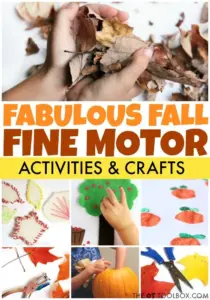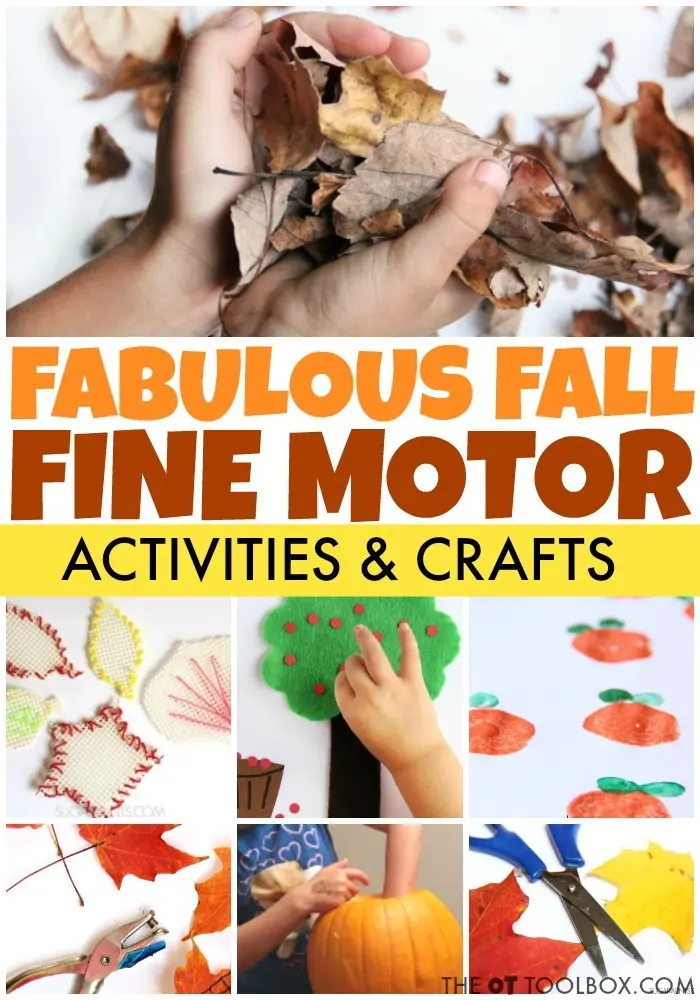
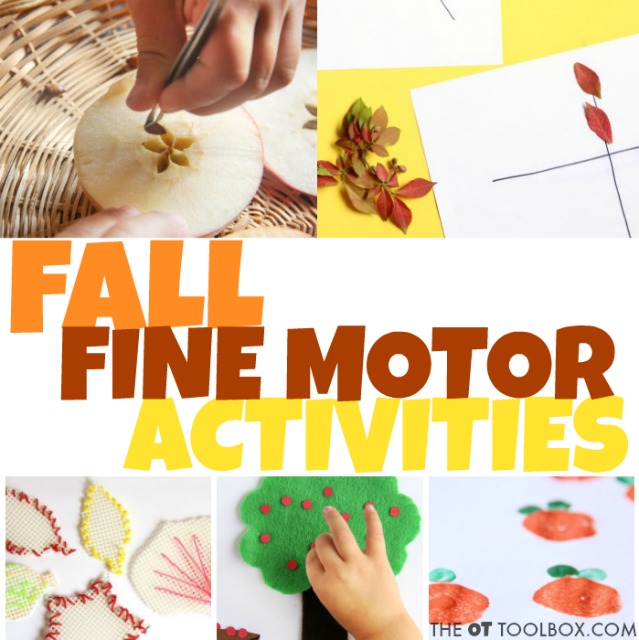
As the crisp autumn air arrives, bringing changing leaves, pumpkin spice, and seasonal festivities, pediatric occupational therapists, educators, and parents are finding innovative ways to weave seasonal themes into therapeutic play. Rather than choosing fall activities purely for their aesthetic charm, professionals are utilizing apples, leaves, pumpkins, acorns, and farm themes to deliberately target specific fine motor milestones in children.
This comprehensive seasonal approach helps address foundational needs such as hand strength, finger dexterity, scissor skills, visual-motor integration, and handwriting development. Because many seasonal crafts and sensory tasks naturally overlap multiple developmental domains, practitioners can easily adapt activities to match an individual child’s specific therapy goals, whether working with toddlers, preschoolers, or older students.
The changing season offers an abundance of natural and tactile materials that transform routine exercises into play-based learning. From the sensory feedback of crisp autumn leaves to the resistive qualities of play dough and autumn-themed manipulatives, children can build the precise muscle control and coordination required for everyday academic and self-care tasks.
Fall Hand Strength Activities
Building hand strength is a fundamental prerequisite for many daily tasks, including writing, managing clothing fasteners, and opening containers. When children experience weak hand strength, therapists often look for resistive activities that build intrinsic muscle endurance without causing fatigue or frustration.
Apple-themed geoboards provide an effective way to introduce resistance. By stretching rubber bands across the pegs of a geoboard to recreate apple designs, children encounter resistance in their fingers and hands while simultaneously exercising precision and controlled release. Therapists can easily adjust the difficulty of this exercise by utilizing thicker or more resistant bands, or by simplifying the visual-motor design requirements if the task becomes overly complex.
Play dough remains a year-round therapeutic staple, but autumn-themed adaptations offer fresh engagement. Rolling, squeezing, pinching, and pressing dough provides varying levels of resistance for the small muscles of the hands while delivering proprioceptive sensory feedback. Incorporating items like mini leaves, fall-themed erasers, or colored beads into the dough encourages children to employ a pincer grasp, develop wrist stability, and support the hand arches.
Hole-punching activities represent another powerful method for building hand strength. Drawing or printing an apple outline and encouraging a child to punch holes around its perimeter requires sustained hand force. Simultaneously, the visual-motor component of positioning the punch along the edge challenges eye-hand coordination.
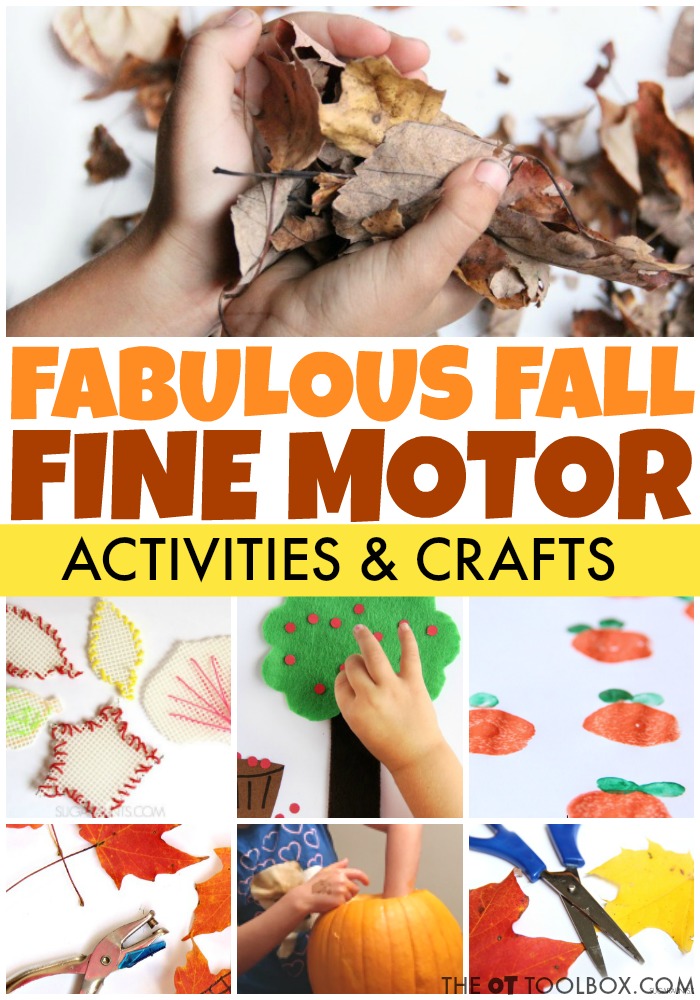
Fall Dexterity Activities
Manual dexterity relies on the efficient, coordinated movement of the fingers to execute small, precise actions. When a child struggles with dexterity, the breakdown often involves a combination of speed, precision, visual-motor integration, and strength. Fall-themed manipulatives such as pom-poms, seeds, mini erasers, paper clips, and small craft supplies easily turn simple seasonal tasks into opportunities for refined finger manipulation.
Fall tree geoboards, for example, require children to use their fingertips rather than their whole hands to grasp, stretch, reposition, and release rubber bands around individual pegs. This targeted movement fosters both strength and intricate fingertip control.
Similarly, paper clip counting activities utilize print-and-go templates where children attach a specific number of paper clips to themed cards. Opening and positioning paper clips demands precise fingertip movements and bilateral hand coordination, as one hand must stabilize the card while the other manipulates the clip.
Pom-pom transfers offer another versatile dexterity exercise. By utilizing tongs or tweezers to move autumn-colored pom-poms into ice cube trays or muffin tins, children practice precision grip and control. Practitioners can modify the required precision simply by altering the size of the pom-poms or changing the transfer tools.
Fall Scissor Skills and Cut-and-Paste Crafts
Scissor skills require complex bilateral integration, with the dominant hand opening and closing the scissors while the non-dominant helper hand stabilizes, turns, and guides the paper. Apple cutting practice pages provide structured visual paths for children to follow, allowing therapists to assess how well a child coordinates both hands during cutting tasks.
Natural fall foliage offers an organic medium for scissor practice. Children can snip colorful leaves into small pieces or cut around their natural edges, combining sensory exploration with cutting practice. For regions without changing foliage, paper leaves serve as an accessible alternative.
Cut-and-paste farm crafts elevate scissor tasks by incorporating executive functioning and visual-spatial skills. After cutting out the necessary components, children must visually determine where each piece belongs, orient them correctly, follow an assembly sequence, and glue them into position, thereby addressing multiple developmental goals simultaneously.
Visual-Motor and Writing Integration
Adequate hand strength and dexterity are only part of the equation; children must also coordinate what they see with how their hands move. Visual-motor challenges often surface when a child attempts to copy a design, follow a line, or locate a specific target.
Fall-themed directed drawing encourages children to observe model shapes such as acorns, leaves, apples, and pumpkins, and then reproduce their spatial relationships on paper. Pattern blocks combine fine motor manipulation with visual discrimination and spatial awareness as children identify correct pieces, determine their orientation, and position them relative to one another.
Seek-and-find activities, commonly known as "I Spy" pages, foster visual scanning, figure-ground perception, and sustained visual attention. Therapists often enhance these activities by adding a fine motor component, asking children to circle found items, cover them with small manipulatives, or mark them using clothespins.
Writing prompts integrated into seasonal themes allow children to practice handwriting within a meaningful context rather than drilling isolated letters. Educators and therapists can adapt a single set of writing prompts across an entire caseload, challenging emerging writers to form a single fall word, beginning writers to compose a sentence, developing writers to answer a short prompt, and older students to plan and write an entire paragraph.
No-Prep and Sensory-Rich Therapeutic Play
Many effective fine motor interventions require little to no preparation, relying on everyday objects and natural seasonal items found around the home or yard. Leaves can be torn, crumpled, punched, cut, sorted, or strung onto yarn. Acorns and pumpkin seeds can be picked up with tongs, counted, sorted, or dyed with liquid watercolors for color-sorting exercises.
Clothespins attached to cardboard trees help build lateral pinch strength, while saving and manipulating plastic bread ties offers a unique challenge for finger strength and coordination. Sensory-rich tasks, such as crunching autumn leaves or pressing natural elements into scented play dough, provide auditory and tactile input while promoting arch development and grasp strength.
As professionals and families prepare for the autumn season, utilizing these ready-to-use strategies provides an effective way to support children’s developmental needs through engaging, play-based experiences.