






TAMPA, Fla. — For 25-year-old Billy Eckert, social interaction has always been a complex landscape to navigate. He possesses a vibrant, talkative nature, yet he frequently grapples with the subtle, often unspoken cues that dictate the rhythm of conversation. He might find himself unsure of when to cede the floor to a listener or when to press forward, and he occasionally exhibits physical fidgeting, such as crossing and recrossing his legs, as a way to process his environment.
The weight of these social hurdles was brought home to him during his first experience on a mainstream dating app. When he attempted to put himself out there, he was met with cruelty: a woman responded to his profile by using a derogatory slur directed at individuals with intellectual disabilities. It was a harsh introduction to a world that often struggles to understand or accommodate those who communicate differently.
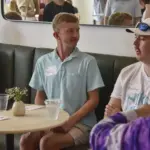
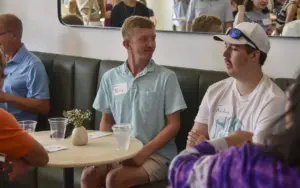
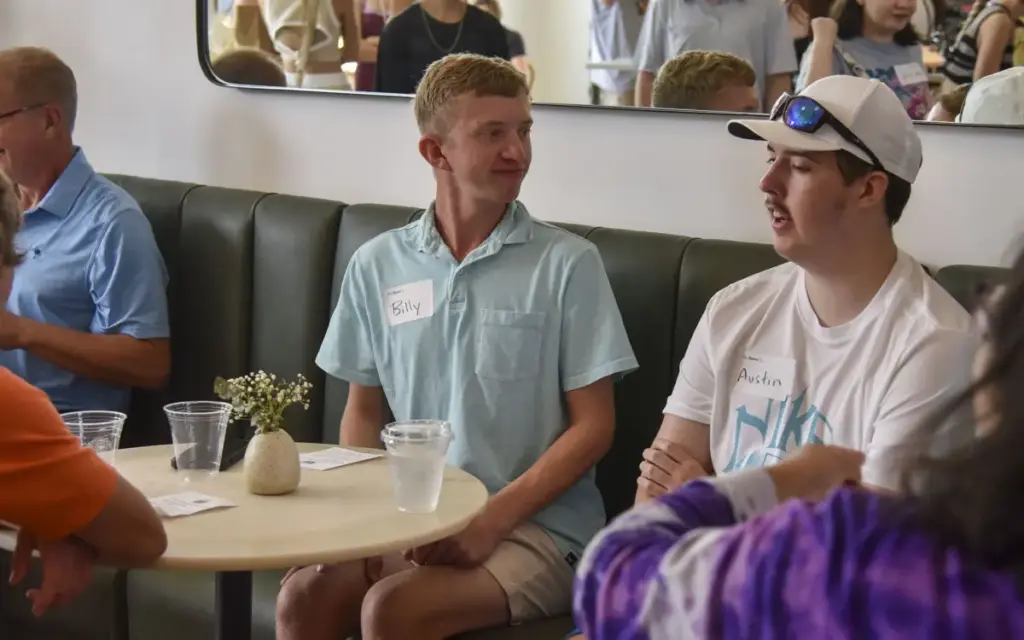
But on a recent humid Saturday in downtown St. Petersburg, that painful memory felt worlds away. Inside the cool, inviting atmosphere of Intermezzo, a trendy coffee shop, Billy was surrounded by a group of his peers—other 20-somethings who were simply enjoying the company and the reprieve from the blistering Florida summer sun.

They laughed and sipped iced coffees, deep in conversation about the subjects that truly matter to them: the latest developments in the NFL, the nuances of their favorite video games, and the best local spots to grab a bite or hang out across the Tampa Bay area. These young adults, who might otherwise feel isolated in a neurotypical world, had been brought together by a shared, defining trait: they are all on the autism spectrum.
Since May, Billy and his father, Bill Eckert, have been hosting “Fun on the Spectrum St. Pete.” The initiative serves as a dedicated social club for adults between the ages of 20 and 29 who are neurodivergent or have autism. What began as a simple, heartfelt idea between a father and his son has rapidly evolved into a vital social lifeline for young adults across Florida, proving that with the right environment, the barriers to connection can be dismantled.
There’s Power in a Good Hang
As the Saturday event began, the coffee shop filled with a quiet energy. Attendees arrived and were greeted by Bill Eckert, who serves as the club’s co-organizer. Bill moved through the room with a practiced warmth, trading introductions and casual conversation with both the attendees and their parents. Each newcomer was asked to fill out a small card detailing their favorite places to go and the activities they enjoy in their spare time.
For many of the parents in the room, the experience brought a mixture of relief and visible nerves. Years spent advocating for their children—often in a society that lacks the infrastructure or patience to accommodate their specific needs—can naturally foster a sense of overprotectiveness. It is a defensive posture born of necessity. However, a few moments of conversation and a reassuring smile from Bill were often enough to set them at ease. Bill, as a father to an adult son on the spectrum, understands those anxieties intimately. He has walked the same path, fighting the same battles, and that shared understanding creates an immediate, unspoken bond of trust.
Once the last card was completed, Bill gathered the group of 10 attendees. He guided them outside for a structured but informal icebreaker. They lined up in pairs, face-to-face, tasked with sharing the information on their cards with the person standing opposite them.
The exercise proved to be an effective catalyst for conversation. Parker Shirey, 28, spoke enthusiastically about his favorite haunt: The Dog Bar. With a grin, he clarified his motivation for visiting. “I don’t drink alcohol. It’s the funniest thing,” Shirey explained. “I go there to pet the dogs.”
Nearby, 23-year-old Andrew Inabinet discussed his interest in the local run club, mirroring the active, social habits of many other young adults in the Tampa Bay area. Further down the line, Melody Englmann, 24, engaged her partner in the conversation by pointing to the sweltering heat. “I can see why you want ice cream this time of year,” she said, fanning her face with a playful gesture. “It’s so hot!”
Watching the group interact, Bill Eckert reflected on the beauty of the scene. “They’re like snowflakes,” he remarked with a small, proud smile. “All special in their own way.”
‘It Makes You More Confident’
The transition from adolescence to adulthood is a milestone-heavy period for anyone. It is defined by the pursuit of a career, the navigation of first dates, and the push for independence in one’s own apartment. For young adults on the autism spectrum, however, these benchmarks are often obscured by significant structural and social hurdles.
Recent research underscores the depth of these challenges. Statistics indicate that just over half of adults with autism have ever held a paying job, and only about half have experienced a romantic partnership. Perhaps most striking is the statistic regarding independent living, with fewer than 2 in 10 adults on the spectrum living on their own.
Despite these hurdles, the landscape of autism is changing. Awareness is growing, and with it, the recognition of the wide spectrum of neurodivergence. According to 2022 data, there has been a 450% increase in autism diagnoses over the last decade, reflecting a broader societal shift toward acknowledging different forms of autism rather than clinging to outdated, narrow definitions.
For parents, supporting a child into adulthood remains an intensive, hands-on journey. Bill and his wife, Diane, have been central figures in Billy’s life, helping him navigate these transitions. Billy has long maintained a clear goal: he wants to live independently and eventually build a family of his own. In pursuit of that, he and two other young men on the spectrum were hired by Angels in Action Pinellas, a nonprofit founded by his parents. The organization operates a commercial cleaning company, providing meaningful, paid employment for adults with autism.
“Fun on the Spectrum” grew directly out of Billy’s personal desire to expand his social circle. Previous attempts to meet people—such as visiting sports bars or attending standard social outings—had not yielded the deep, lasting connections he was looking for. Inspired by the hit reality series Love on the Spectrum, which highlights the dating and social experiences of young adults with autism, Bill realized that a dedicated space was the missing link. He decided to create a community specifically designed to foster friendships among people who share similar life experiences.
Crucially, the events have fostered a secondary, unplanned community: the parents themselves. During the coffee shop gathering, Jeanette Kooser and Laura Englmann greeted each other with the warmth of old friends. The club has provided them with a rare, therapeutic opportunity to share their experiences in a judgment-free zone.
“It’s been really therapeutic for the parents,” Englmann noted. Kooser agreed, emphasizing the value of being understood. “We’re not alone in this, you know? Knowing that really does help.”
As the afternoon concluded, the attendees filtered out of the café, pausing for a group photo to commemorate the day. By all objective measures, the event was a triumph. Billy spent the final minutes collecting phone numbers to facilitate a group chat, ensuring the connections made during the afternoon would not end at the coffee shop door.
For the parents, it was a moment of profound observation. They watched as their children, who might have arrived feeling shy or hesitant, left having engaged in enthusiastic, sustained conversations with peers who truly understood them. The impact on the young adults was palpable.
“My social skills, I think they’ve gotten better,” Melody Englmann said as the group prepared to head home. “Being around people that are loving, it makes you more confident.”
In the simple act of a Saturday hang, a group of young adults found something that had been missing: a place where they did not have to mask their traits or apologize for their presence—a place where they could simply be themselves.