

BREAKING NEWS
Applied Behavior Analysis Landmark Brain Study Links Amyloid Clearance to Reduced Tau and Brain Preservation 7 hours ago Child Development New Study Reveals Distinct Developmental Patterns in How Autistic Brains Process Faces 7 hours ago Sensory Processing Occupational Therapy Practitioners Introduce Adapted Eco Map Tool to Analyze Client Support Systems and Combat Professional Burnout 7 hours ago Behavioral Health When Facing "Hell," Is Keeping Going Always the Right Choice? Rethinking Resilience and the Sunk Cost Fallacy 7 hours ago Inclusive Education Families in Idaho Face Severe Financial Strain Over a Year After State Ends Paid Caregiver Program for Disabled Relatives 7 hours ago Pediatric Research WHO and Republic of Korea Reinforce 75-Year Partnership at Second Strategic Dialogue in Seoul 7 hours ago Child Welfare and Advocacy CDF-Ohio, Ohio Legislative Children’s Caucus to Discuss Doula Medicaid Reimbursement Program 7 hours ago Applied Behavior Analysis Unlocking the Mystery of Cognitive Resilience: Could Immature Neurons Protect the Aging Brain from Alzheimer’s? 15 hours ago Applied Behavior Analysis Landmark Brain Study Links Amyloid Clearance to Reduced Tau and Brain Preservation 7 hours ago Child Development New Study Reveals Distinct Developmental Patterns in How Autistic Brains Process Faces 7 hours ago Sensory Processing Occupational Therapy Practitioners Introduce Adapted Eco Map Tool to Analyze Client Support Systems and Combat Professional Burnout 7 hours ago Behavioral Health When Facing "Hell," Is Keeping Going Always the Right Choice? Rethinking Resilience and the Sunk Cost Fallacy 7 hours ago Inclusive Education Families in Idaho Face Severe Financial Strain Over a Year After State Ends Paid Caregiver Program for Disabled Relatives 7 hours ago Pediatric Research WHO and Republic of Korea Reinforce 75-Year Partnership at Second Strategic Dialogue in Seoul 7 hours ago Child Welfare and Advocacy CDF-Ohio, Ohio Legislative Children’s Caucus to Discuss Doula Medicaid Reimbursement Program 7 hours ago Applied Behavior Analysis Unlocking the Mystery of Cognitive Resilience: Could Immature Neurons Protect the Aging Brain from Alzheimer’s? 15 hours ago
Stories
Landmark Brain Study Links Amyloid Clearance to Reduced Tau and Brain Preservation
New Study Reveals Distinct Developmental Patterns in How Autistic Brains Process Faces
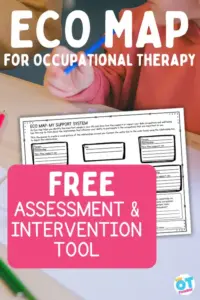
Occupational Therapy Practitioners Introduce Adapted Eco Map Tool to Analyze Client Support Systems and Combat Professional Burnout
When Facing "Hell," Is Keeping Going Always the Right Choice? Rethinking Resilience and the Sunk Cost Fallacy
Families in Idaho Face Severe Financial Strain Over a Year After State Ends Paid Caregiver Program for Disabled Relatives
WHO and Republic of Korea Reinforce 75-Year Partnership at Second Strategic Dialogue in Seoul
CDF-Ohio, Ohio Legislative Children’s Caucus to Discuss Doula Medicaid Reimbursement Program
Unlocking the Mystery of Cognitive Resilience: Could Immature Neurons Protect the Aging Brain from Alzheimer’s?
Healthy Habits May Boost Mental Resilience by Strengthening Psychological Flexibility, Study Finds
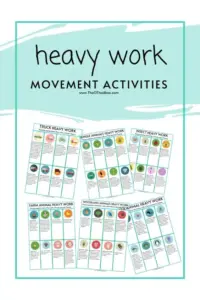
Understanding Heavy Work: How Proprioceptive Input Supports Childhood Regulation and Learning

Category: Neurodiversity

80 posts

Standard

Beyond Neuronormativity: How Autistic Culture is Pioneering a New Era of Relational Health and Ecologies of Care

Autistic culture represents a world of infinite diversity that exists far beyond the confines of the neuronormative imagination. Every autistic relationship is entirely unique, yet a significant number of individuals within this community carry the heavy burden of trauma. Addressing this reality requires appropriate tools to invest in the deep, mutual understanding of one another.…

Read more
Standard

Rethinking Life, Mind, and Culture: How Relational Ecologies Offer an Alternative to Industrial Growth

By Jorn Bettin Core ideas embedded within ancient spiritual traditions such as Buddhism and Daoism share profound commonalities with the frameworks found across human-scale indigenous cultures. A compassionate understanding of love—framed as vulnerable, mutual knowing—proves entirely compatible with a panpsychic relational philosophy. Across society, people want their lived experiences to be taken seriously. As embodied…

Read more
Standard

Navigating the Modern Cult of Normalcy: New Participatory Research Exposes Widespread Psychological Unsafety for Neurodivergent Individuals

Our individually unique nervous systems and sensitivities develop and evolve continuously over the course of our lives. Yet, recent participatory research reveals a profound societal disconnect: 85 percent of neurodivergent adults report that they often or always feel overwhelmed and misunderstood, while more than 60 percent frequently or always feel disrespected and unsafe. According to…

Read more
Standard

Beyond the Mono-Cult: How Neurodiversity Activists and Systems Thinkers Are Reimagining Biology, Culture, and Human Distress

Many scientists do not acknowledge the extent to which their disciplinary paradigms remain deeply influenced by the cultural frames of the colonial era. According to neurodiversity and disability activists, the modern mental health crisis is not merely a biological failing of individuals, but a symptomatic outcome of a terminally diseased institutional landscape. For decades, the…

Read more
Standard

Beyond the Bias: Rethinking Tribalism, Human Scale, and the Toxic Culture of Modernity

In contemporary discourse, the concept of tribalism is almost universally burdened with negative connotations. It is frequently conflated with unreasoned bias, exclusionary politics, and an undesirable evolutionary leftover that modern societies must outgrow. However, a deeper and more critical examination of this assumption reveals that our modern aversion to tribalism stems largely from flawed foundational…

Read more
Standard

Beyond the Competitive Myth: How Human Collaboration and Ecologies of Care Offer a Path to Societal Healing

The fundamental human capacity for language was never designed to give us an adaptive edge through ruthless competition. Instead, evolutionary anthropologists and cultural historians argue that human speech developed to improve mutual understanding, build deep trust, and foster collaboration. This perspective stands in direct contradiction to traditional capitalist interpretations of human evolution, which have long…

Read more
Standard

Navigating Life in "Hard Mode": The Omission of Autistic Culture and the Push for Rights-Centric Education

In the current Aotearoa New Zealand Autism Guideline, the existence of Autistic culture is not mentioned with a single word. Understanding Autistic people and Autistic culture remains a secondary concern within modern institutional frameworks, prompting international civil society activists and child rights defenders to mobilize. These advocates are joining forces across borders to establish the…

Read more
Standard

Beyond the WEIRD Spectacle: Navigating the Cracks in Modern Cultural Indoctrination

In the Western, Educated, Industrialized, Rich, and Democratic (WEIRD) world, daily life increasingly mirrors what philosopher Guy Debord once attempted to describe as "The Society of the Spectacle." The reality presented to the public through mainstream media and social networks has been meticulously engineered to fit the exacting standards of Homo Economicus®. Citizens born into…

Read more
Standard

Beyond Hierarchies: How Autistic Culture and Relational Thinking Offer an Antidote to Modern Social Structures

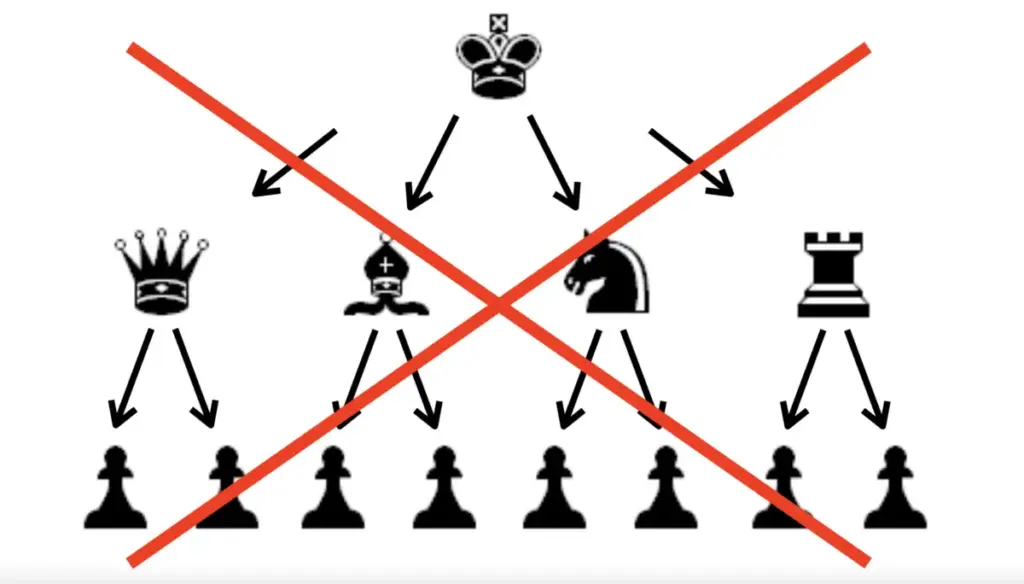
Many autistic people experience profound difficulties thinking of the world in hierarchical ways. Evolutionary anthropologists note that this cognitive trait reflects innate human collaborative cultural capabilities combined with a significantly reduced capacity for maintaining ongoing cognitive dissonance. This profile often falls well outside the bell curve of hypernormativity, shaping a distinct perspective on how societies…

Read more
Standard

Beyond Homo Economicus: Rebuilding Ecologies of Care, Intersectional Solidarity, and Human-Scale Commitments

Underneath the surface of internalised ableism, a quiet truth persists: no one truly wants to be seen and heard by the masses. Instead, people prefer to be understood and loved deeply by a few, while naturally harbouring the desire to love and help others. According to cultural commentators and neurodivergent advocates, this fundamental yearning is…

Read more