




In the current Aotearoa New Zealand Autism Guideline, the existence of Autistic culture is not mentioned with a single word. Understanding Autistic people and Autistic culture remains a secondary concern within modern institutional frameworks, prompting international civil society activists and child rights defenders to mobilize. These advocates are joining forces across borders to establish the Rights-Centric Education network, challenging systems that leave many comparing Autistic life in a hypernormative culture to living life in "Hard Mode." Observers note that society still has a long way to go before Autistic culture achieves the same level of mainstream acceptance currently enjoyed by gay and lesbian communities.
A critical examination of the latest edition of the Aotearoa New Zealand Autism Guideline reveals a striking gap in institutional recognition. While the official document acknowledges the importance of ethnic minority cultures, the existence of an intersectional Autistic culture—comparable to the distinct cultures thriving within LGBTQIA+ communities—is entirely omitted. Although notable improvements have been made since advocates launched campaigns targeting a comprehensive ban on Applied Behaviour Analysis (ABA) and related forms of conversion therapy, the primary focus of official guidelines remains heavily centered on so-called "behaviours of concern."
This prevailing approach places the entirety of the social burden squarely on the shoulders of the individual, requiring either an artificial alteration of Autistic behaviour or a constant shifting of the local micro-environment at home, in educational settings, and in workplaces. These measures remain woefully inadequate when it comes to preventing hypersensitive Autistic individuals from becoming overwhelmed, depressed, and deeply disillusioned with life in a hyper-normative, hyper-busy industrialized society. Modern societies offer only a severely restricted range of socially acceptable life paths for Autistic people, and the few healthy routes that might prove viable are largely inaccessible due to economic barriers facing the vast majority of the population.

Within the extensive text of the Aotearoa New Zealand Autism Guideline, specific passages underscore the persistence of a pathology paradigm. The document notes that Autistic children and young people need to be taught the unwritten rules of school life, such as appropriate actions for specific times, places, and company. It observes that these rules shift constantly and that Autistic students struggle to generalize this knowledge across different situations, often failing to grasp intuitively what others take for granted. Critics argue that this framing attributes systemic societal issues entirely to Autistic deficits.

Society lacks a consistent, universal set of unwritten rules for school life. Instead, these guidelines are not only context-specific, but the appropriate context is typically dictated by established authorities who retain the power to alter rules arbitrarily to protect their own social dominance. Lived experience over decades suggests a stark contrast between standard industrial expectations and Autistic approaches to existence. While mainstream socialization teaches anthropocentric progress—defined as creative collaboration driven by competition and unconstrained by human or ecological limits—Autistic philosophy often gravitates toward collaborative niche construction. This alternative model emphasizes creative collaboration committed to nurturing life, minimizing suffering beyond the human sphere, and remaining consciously constrained by human emotional limits alongside the biophysical boundaries of the Living Earth.
The dominant parenting, educational, and institutional systems frequently pathologize behaviors that emerge from natural human variation, actively traumatizing and breaking the spirit of many Autistic individuals. This dynamic fosters internalised ableism, leading modern structures to blame victims for behaviors born of systemic distress. The psychological trauma inflicted by unacknowledged hidden rules finds no mention in standard mental health guidelines or diagnostic manuals. The latest New Zealand guideline exemplifies how positive language and behavior-centric methodologies can be deployed to skirt around fundamental political and social problems, even as it begins to recognize basic rights to self-determination and motivation among Autistic individuals.
Despite the profound internal diversity of Autistic ways of being, advocates emphasize that distinct Autistic cultures and thriving communities undeniably exist. Embedding Autistic individuals within healthy cultural environments is recognized as vital for their well-being. The cognitive dissonance inflicted by powered-up, hierarchical civilizations carries severe human costs, directly reflected in alarming suicide and mental health statistics. Recent reports from organizations such as the Independent Commission Against Restraint and Seclusion in the United Kingdom, alongside data gathered by Australian Autistic activists, reveal widespread reliance on restraints and seclusion in educational settings. These findings align closely with global participatory research into the cultural and psychological safety of neurodivergent children.
In response to these systemic failures, child rights defenders and civil society activists worldwide are collaborating to form the Rights-Centric Education network. This coalition seeks to implement an unfulfilled United Nations proposal establishing a rights-based quality assurance system for schools. The initiative begins with a formal declaration calling for a complete overhaul of educational practices to ensure that child rights are fully respected, protected, and fulfilled across state, private, and home-schooling environments.
Founding members of the network—representing organizations across Sri Lanka, Slovenia, South Africa, Canada, the United Kingdom, and Aotearoa New Zealand—highlight that compulsory education emerged in the 1700s when children were viewed as property. While public perceptions have evolved through stages of charity and rights-based recognition, society has largely focused on the right to education while ignoring rights within education. Consequently, routine human rights violations persist unchecked inside mainstream educational institutions.

Advocates point out that the struggle for Autistic acceptance mirrors the historic battles fought by other marginalized groups, noting that replacing the terms "Autistic" and "autism" with "gay and lesbian" in contemporary health guidelines would spark immediate public outrage. The ongoing fight for recognition faces obstacles similar to those encountered by trans communities, though Autistic cultural acceptance remains further behind.
At the root of many interpersonal communication barriers is the Double Empathy Problem, a concept documented by Autistic scholar Damian Milton. Within transactional societies dominated by mutual mistrust, the naive attempts of Autistic individuals to offer genuine compassion and assistance frequently backfire under the competitive logic of modern economics. True communication requires psychological safety and a shared foundation of lived experience, rather than superficial verbal and non-verbal mirroring designed merely to signal polite attention. Isolated and traumatized individuals who lack supportive neurodivergent ecologies of care often face severe isolation, influencing their behavioral responses in ways shared by other heavily traumatized populations.
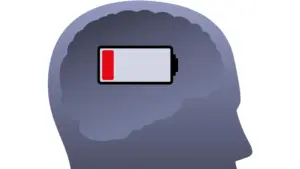
Because of daily encounters with the Double Empathy Problem, Autistic people frequently reject mainstream cultural narratives. Many who find supportive communities transition into passionate advocates for environmental and social change. Others experience debilitating burnout driven by the continuous cognitive dissonance enforced by hypernormative societal expectations. Rather than buying into toxic economic frameworks or competitive evolutionary paradigms, neurodiversity activists champion collaborative niche construction, drawing inspiration from Eastern philosophies, indigenous worldviews, and ancient traditions that view the planet as an interconnected regenerative system.
The growing network of Autistic collaboration continues to expand organically at human scale, fostering local ecologies of care, mutual aid, and intersectional solidarity. As communities prepare for upcoming international solidarity events, advocates emphasize that building trusted relationships and nurturing life-affirming environments remain essential steps toward reducing suffering and validating diverse human experiences.