



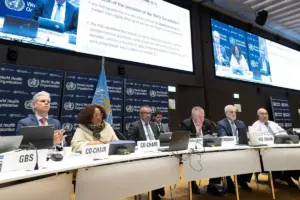



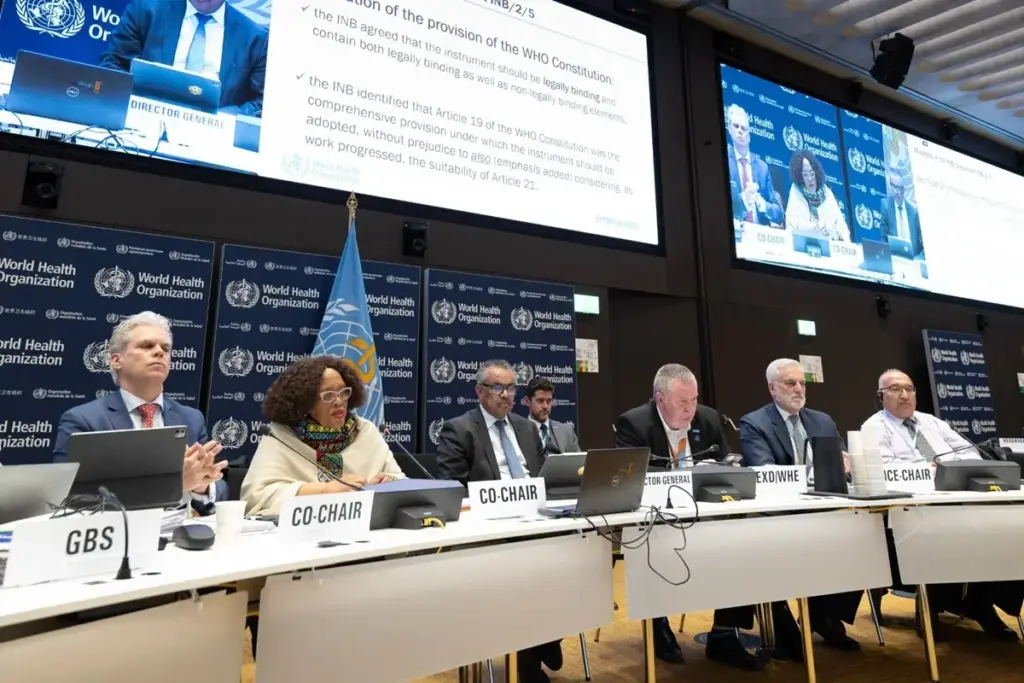
GENEVA — Governments from around the world reached a consensus today to continue working on a proposed international pandemic agreement, committing to further refine the draft text ahead of the upcoming Seventy-seventh World Health Assembly, which is scheduled to commence on May 27, 2024.
Delegates meeting at the World Health Organization (WHO) headquarters in Geneva agreed to resume a demanding schedule of hybrid and in-person discussions over the coming weeks. The objective of these continued talks is to advance critical, highly complex issues that remain central to the treaty. These key areas include the establishment of a proposed new global system for pathogen access and benefit-sharing—which addresses vital medical countermeasures such as life-saving vaccines, treatments, and diagnostics—alongside provisions for pandemic prevention, the "One Health" approach, and the financial coordination required to scale up national capacities worldwide so that countries are better equipped to prepare for and respond to future global health emergencies.
The ongoing diplomatic push comes after more than two years of rigorous negotiations. Reflecting on the resilience of the international delegates, Dr Tedros Adhanom Ghebreyesus, the WHO Director-General, praised the steadfast dedication shown by member states throughout the process.
"During more than two years of intensive negotiations, WHO’s Member States have shown unwavering commitment to forging a generational agreement to protect the world from a repeat of the horrors caused by the COVID-19 pandemic," said Dr Tedros. "I welcome the determination that all countries have shown to continue their work and fulfill the mission on which they embarked."
The effort to draft this international instrument is spearheaded by the Member State-led Intergovernmental Negotiating Body (INB), which was formally established over two years ago to take the initiative forward. Guidance for the process is provided by the INB Bureau, which will ultimately submit the final outcome of these deliberations for formal consideration at the upcoming World Health Assembly.
Dr Precious Matsoso of South Africa, Co-Chair of the INB Bureau, noted that tangible progress had been achieved during the latest round of discussions, covering a wide range of complex policy issues currently contained within the draft agreement.
"We are witnessing history play out before our eyes during this process, with the coming together of all countries to decide a binding pact to protect all citizens of the world," said Ms Matsoso. "This is not a simple exercise. This is the first ever process to develop a proposed agreement on pandemic prevention, preparedness and response. Getting this done means getting it right, and the INB Bureau is committed to help finalize a meaningful, lasting agreement."
Fellow INB Bureau Co-Chair Roland Driece of the Netherlands emphasized that when sovereign states initially launched the process two years ago to develop a comprehensive pandemic agreement, they did so fully aware that they had set an ambitious timeline to achieve an equally ambitious goal.
"This unprecedented effort by all WHO Member States was launched in response to an unprecedented global emergency—the COVID-19 pandemic," said Mr Driece. "These sovereign states did so recognizing that great collaboration and coordination were needed in the face of pandemics. While negotiations have been challenging at times, all countries agree that the world must be better prepared for the next pandemic. It is not a matter of if a pandemic will happen again; it is a matter of when. We cannot afford to miss this historic opportunity to make the world safer from the next pandemic threat."
The journey toward a legally binding international instrument on pandemic preparedness has deep roots in the global response to the COVID-19 crisis. In March 2021, heads of state and government representing two dozen countries issued a joint statement of commitment, sounding an early alarm and calling for enhanced international collaboration to better prevent, prepare for, and respond to future health crises. Building on that political momentum, WHO Member States formally decided in December 2021 to launch a comprehensive global process aimed at drafting and negotiating a legally binding convention, agreement, or other international instrument tailored to fundamentally strengthen global architecture for pandemic prevention, preparedness, and response.
As the countdown to the Seventy-seventh World Health Assembly continues, delegates face the challenge of bridging remaining gaps during the upcoming hybrid and in-person sessions, keeping their sights set on delivering a historic pact designed to safeguard populations worldwide from future biological threats.