








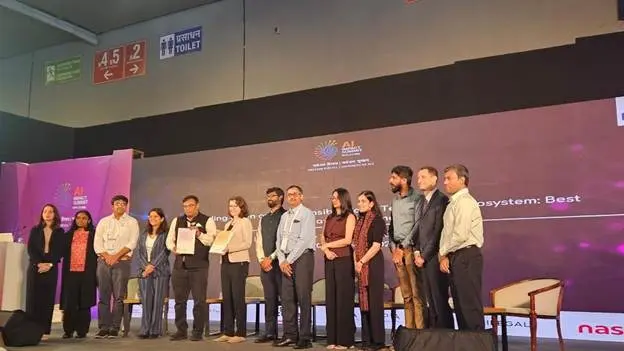
In a landmark development for the global assistive technology community, India’s Ministry of Electronics and Information Technology recently unveiled a comprehensive and ambitious strategy aimed at transforming the nation from a text-heavy digital landscape into an inclusive, voice-first ecosystem. Officially launched at the India AI Summit Expo, this strategic initiative represents a pivotal turning point in how digital services are conceptualized, built, and delivered to populations that have historically been left behind by rapid technological advancements.
The comprehensive roadmap is anchored by two monumental documents released concurrently: a detailed policy report focusing on the architecture required to build open and responsible voice technology ecosystems, and a practical developers’ toolkit designed to translate high-level policy into real-world technological solutions. For professionals working within the accessibility and assistive technology space, this initiative signifies far more than a mere technical upgrade. Instead, it represents a fundamental paradigm shift in how millions of individuals—particularly those living with limited literacy, visual impairments, or physical disabilities—will interact with the modern world, digital services, and government infrastructure.
For over a billion people around the globe, the digital divide extends far beyond a simple lack of internet connectivity; it is fundamentally about a profound lack of quality of use. Traditional digital interfaces, applications, and web platforms have historically been designed with the literate, English-speaking user in mind. This design bias effectively creates an invisible yet insurmountable wall for citizens who navigate the world through spoken language rather than written text. India’s new roadmap aims to dismantle this barrier by formally treating voice technology not as an auxiliary feature, but as vital Digital Public Infrastructure. By repositioning voice as a primary mode of digital interaction, the initiative seeks to ensure that technological progress parallels social equity, allowing individuals regardless of their educational background to harness the full benefits of the digital economy.


The accompanying developers’ toolkit provides the practical, hands-on methodology required for creators, engineers, and technologists to build genuinely inclusive platforms. Moving ethical and accessibility considerations from an afterthought to a foundational requirement, the toolkit outlines clear standards for developers. It emphasizes the importance of regional language nuances, dialect variations, and natural speech patterns, ensuring that technology adapts to the user rather than forcing the user to adapt to rigid technological constraints. By embedding accessibility deep into the development lifecycle, the initiative aims to foster an environment where inclusive design is second nature to the next generation of software engineers and product managers.
However, the initiative is candid about the massive hurdles that lie ahead, noting that transforming a nation of immense linguistic diversity into a voice-first ecosystem is an extraordinarily complex undertaking. The policy report addresses the elephant in the room head-on: the critical need for long-term financial stamina and sustainable funding models. Building an inclusive, robust voice ecosystem requires sustained investment that goes far beyond initial grants or short-term pilot projects. It demands continuous data collection, model training, infrastructure maintenance, and ongoing community engagement to ensure that marginalized populations are accurately represented and effectively served. Securing this long-term financial commitment remains one of the defining challenges for policymakers and stakeholders as the roadmap moves from vision to implementation.
Beyond India’s borders, the challenges addressed in these new frameworks are by no means unique. Numerous nations across Africa, Southeast Asia, and Latin America face remarkably similar hurdles regarding profound linguistic diversity and varying levels of digital literacy. Countries with rich multilingual tapestries, such as Nigeria with its more than five hundred languages including Hausa, Yoruba, and Igbo, South Africa with its eleven official languages, as well as Ethiopia and Kenya, stand to benefit immensely from the frameworks established through India’s pioneering initiative. The strategies detailed in the policy report and developers’ toolkit offer a scalable template for how multilingual nations can harness artificial intelligence to bridge internal divides rather than widen them.
The launch of these comprehensive reports marks a watershed moment for the international technology sector. India is demonstrating to the global community that advanced voice technology is not merely a matter of convenience or consumer luxury, but an essential human right in an increasingly digital age. By confronting the difficult questions surrounding sustainable funding, robust legal frameworks, and rigorous technical standards, this initiative provides a viable blueprint for global digital inclusion. As policymakers and developers worldwide observe these developments, the overarching message remains clear: if voice artificial intelligence can be successfully mastered within the complex, highly diverse linguistic landscape of India, the foundational principles can be adapted and applied anywhere. This landmark roadmap serves as a compelling call to action for the global tech community to ensure that the future of the internet is one that listens to every voice, regardless of language, literacy, or physical ability.