









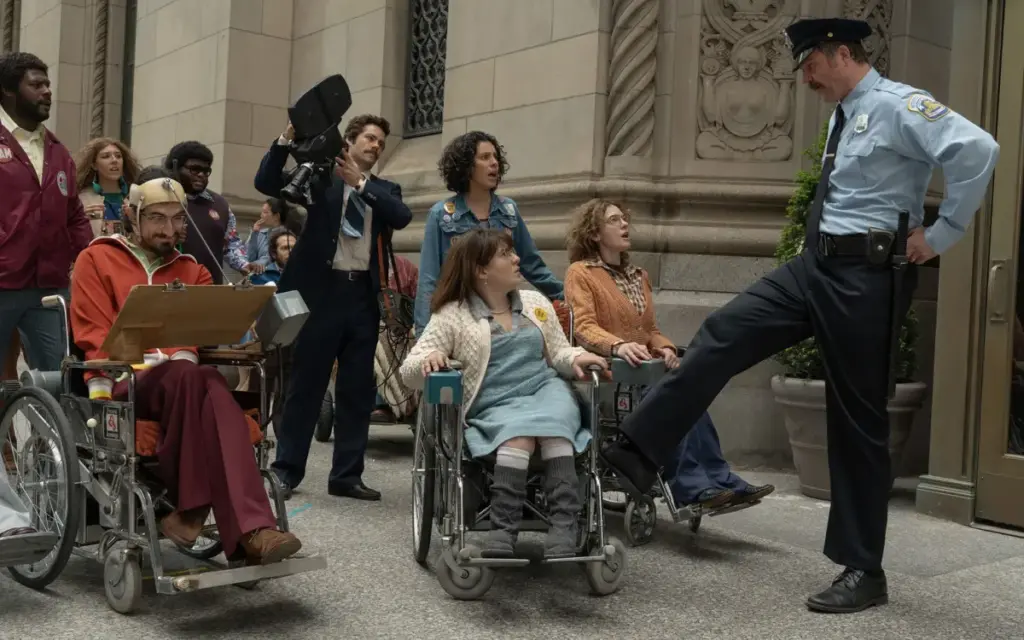
A major motion picture chronicling one of the most defining chapters in the history of American civil rights is arriving in theaters this week, bringing the legacy of Judy Heumann—the woman widely recognized as the “mother of the disability rights movement”—to the forefront of public discourse. The film, titled Being Heumann, dramatizes the relentless advocacy that led to the enforcement of Section 504 of the Rehabilitation Act, a milestone in the struggle for accessibility and equality.
To commemorate the historical significance of Section 504, Apple Original Films has teamed up with Regal Cinemas to offer a unique promotional event. Between November 9 and 11, more than 100 Regal locations across the United States will host special open-captioned screenings of the film with tickets priced at exactly $5.04. This symbolic gesture serves to highlight the specific legislative victory that transformed the landscape of public access in the United States, ensuring that federal spaces and programs could no longer discriminate against people with disabilities.
Being Heumann stars Ruth Madeley, an acclaimed actress who has spina bifida, in the title role. Madeley’s portrayal captures the fierce spirit and strategic brilliance of Heumann, who navigated decades of systemic exclusion to become a national icon for justice. The film, which is based on Heumann’s own memoir, focuses heavily on the dramatic 1977 sit-in at the San Francisco Federal Building. This protest, which lasted for nearly a month, remains the longest occupation of a federal building in U.S. history and served as a critical turning point in forcing the government to sign and enforce the regulations for Section 504.

The production of Being Heumann brings together a powerhouse team of filmmakers and talent. The film is directed by Siân Heder, the Academy Award-winning visionary behind CODA. Heder’s previous success with CODA—which made history as the first film with a predominantly deaf cast to win the Oscar for Best Picture—established her as a director with a profound commitment to authentic representation and nuanced storytelling. Her involvement in Being Heumann ensures that the film approaches its subject matter with both technical precision and deep empathy for the lived experiences of the disability community.
In addition to Madeley, the film features an ensemble cast including Mark Ruffalo, Dylan O’Brien, and Madeline Delp. The inclusion of such prominent actors underscores the significance of the narrative, framing the story of the 504 Sit-in not merely as a niche historical event, but as a fundamental pillar of the American civil rights story that resonates with contemporary audiences.
The film made its highly anticipated debut in September, serving as the opening night selection at the prestigious Toronto International Film Festival. The reception there served as a precursor to the film’s wider release, generating significant buzz for its portrayal of a movement that is often underrepresented in mainstream historical accounts. By focusing on the logistical and emotional hurdles faced by Heumann and her fellow activists—who spent 28 days living, sleeping, and organizing inside the San Francisco Federal Building—the film humanizes the legislative process. It depicts the daily grit of protestors who relied on each other’s support to maintain their occupation in the face of dwindling supplies and government pressure.
The legislative struggle at the heart of the film is Section 504 of the Rehabilitation Act of 1973. Although the law was passed in 1973, it languished for years without the necessary regulations to put it into effect. The sit-in, organized by Heumann and a coalition of diverse activists, was a desperate, strategic gamble to force the Carter administration to finalize the rules. When the regulations were finally signed, it marked the first time that federal law recognized disability rights as a matter of civil rights, setting the stage for the eventual passage of the Americans with Disabilities Act (ADA) in 1990.
For those unable to attend the limited theatrical run, Being Heumann will arrive on streaming platforms shortly after its cinema release. The film is scheduled to be available on Apple TV starting November 13, allowing the story to reach a global audience. The strategic rollout of the film—from the high-profile festival premiere to the targeted theatrical engagement—reflects an effort to honor the legacy of activists like Heumann while engaging new generations with the ongoing work of ensuring equity.
The partnership with Regal Cinemas for the $5.04 ticket promotion is particularly notable for its commitment to accessibility. By prioritizing open-captioned showtimes, the theater chain and the production studio are acknowledging that the film about disability rights must itself be accessible to the community it depicts. This alignment between the content of the movie and the logistics of its distribution has been praised by advocates who have long argued that the stories of marginalized groups are best told when they are accessible to everyone, including those who are deaf or hard of hearing.
As audiences prepare to see Being Heumann, the conversation surrounding the film has already begun to shift toward the broader impact of Heumann’s life. Throughout her career, she served in the Department of Education under the Clinton administration and as a Special Advisor on International Disability Rights at the U.S. Department of State under the Obama administration. Her influence extended far beyond the walls of the San Francisco Federal Building, shaping policies and mentoring activists across the globe.
The film’s focus on the 1977 sit-in provides a window into a time when the disability community was forced to define itself as a political force. Through Madeley’s performance, viewers are invited to see the humanity, frustration, and eventual triumph of a movement that refused to be ignored. The portrayal does not shy away from the internal conflicts and external resistance that the activists faced, providing a grounded look at the reality of grassroots organizing.
As Being Heumann opens in select theaters this Friday, it stands as a testament to the power of collective action. By bringing the story of the Section 504 sit-in to the screen, the filmmakers have provided a vital service, documenting the origins of modern accessibility. The film serves as both a historical record and a call to action, reminding viewers that the rights taken for granted today were won through the courage of individuals who were willing to occupy, organize, and demand change.
With its blend of high-caliber acting, expert direction, and a story that fundamentally changed the fabric of American law, Being Heumann is poised to be one of the most significant releases of the year. Whether in a local cinema or on a streaming device, the film offers an essential look at the birth of a movement that continues to advocate for a more inclusive world. The $5.04 ticket initiative serves as a fitting reminder of the cost of that progress and the enduring value of the legislation that made it possible. As the film moves into the public consciousness, the legacy of Judy Heumann—a fierce, unapologetic, and transformative figure—is set to inspire a new generation of activists, storytellers, and citizens to continue the work of building a society that recognizes the dignity and potential of every individual.