









By Shaun Heasley | November 6, 2026
In a significant push toward greater inclusivity within the interactive entertainment industry, some of the biggest names in video games are taking concerted steps to better accommodate the diverse needs of players with disabilities. A half dozen major video game companies have officially begun assigning specialized tags to their products, denoting clearly which types of accessibility features each specific game offers to consumers before they make a purchase or download a title.
The descriptive tags, which form the cornerstone of the broader Accessible Games Initiative, span an extensive catalog of 24 distinct features. These range from crucial visual adjustments, such as large and clear subtitles for hard-of-hearing players, to complex auditory and mechanical accommodations, including fully narrated menus and comprehensive button remapping. By establishing a standardized framework across multiple platforms and publishers, the initiative aims to demystify what assistive capabilities are built directly into modern video games.

Microsoft’s Xbox ecosystem was the first to incorporate the tags last year, setting an industry precedent for transparency. Now, that initial momentum has grown significantly as Electronic Arts, Nintendo of America, Riot Games, Ubisoft, and Google’s YouTube Playables have all officially begun to adopt the tagging system across their respective platforms.
According to representatives from the Accessible Games Initiative, these crucial tags can now be found prominently displayed across participating companies’ product pages, digital storefronts, dedicated accessibility pages, and digital catalogues. This widespread integration ensures that players do not have to hunt through obscure menus, external forums, or third-party websites just to determine whether a game is playable for them.
First announced in 2025, the tags were created as part of an unprecedented collaborative effort from the Entertainment Software Association, a prominent trade group representing the United States video game industry. The development of the standardized tags involved key representatives from major publishers, including Electronic Arts, Google, Microsoft, Nintendo of America, and Ubisoft. Crucially, the framework was not built in a corporate vacuum; rather, it was shaped through direct contributions from players with disabilities, specialized accessibility advocacy groups, and dedicated game development teams who understand the technical and practical hurdles disabled gamers face on a daily basis.
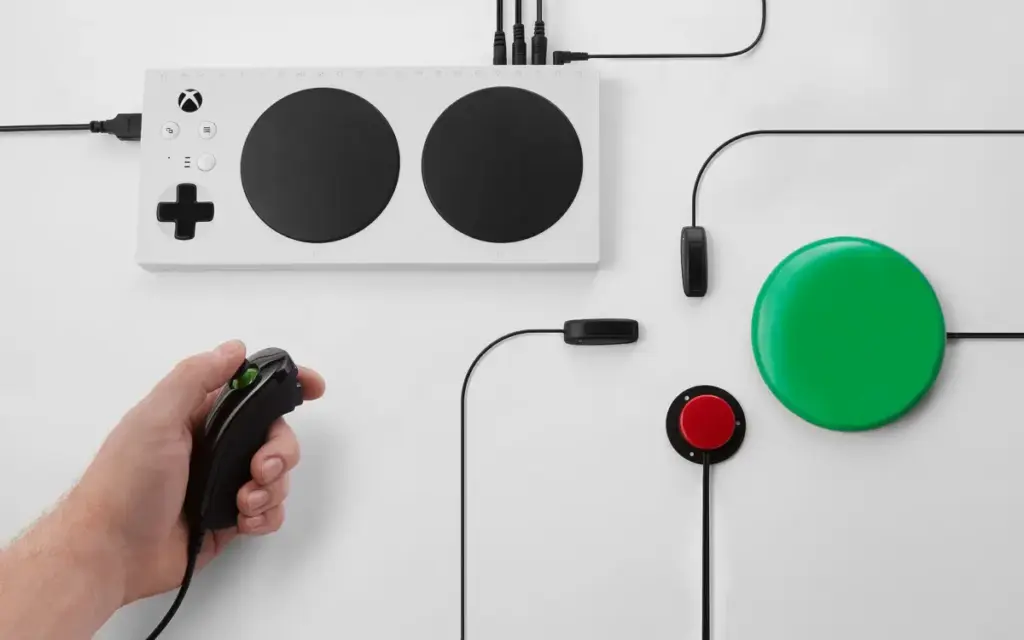
The introduction of these standardized markers addresses a long-standing challenge in the gaming community. For decades, players with physical, sensory, or cognitive disabilities often had to rely on word-of-mouth, vague marketing descriptions, or trial-and-error to figure out if a newly released title would be accessible to them. Specialized hardware, such as the Xbox Accessible Controller, has long allowed gamers with disabilities to utilize alternative inputs—enabling them to play using their feet, mouth, head, and other adaptive options. However, matching that adaptive hardware with software that features compatible UI scaling, adjustable control schemes, and assistive narration has historically been an uphill battle.
The Accessible Games Initiative seeks to bridge that gap by providing a universal vocabulary for game accessibility. Industry leaders hope that the clarity provided by these 24 distinct tags will empower consumers to make informed choices while simultaneously encouraging developers to bake accessibility into their titles from the very beginning of the production cycle.
"Finding a game with the accessibility features you prefer should be straightforward," said Daniella Decker, executive director of the Accessible Games Initiative, emphasizing the dual benefit of the program for both consumers and corporations alike. "As more companies adopt the Accessible Games Initiative tags, we are providing a shared language that makes accessibility features easier to recognize and games easier to discover. It’s a win-win for players and for business."
The expansion of the initiative comes at a time when accessibility has transitioned from an afterthought into a central pillar of modern game design. Modern accessibility features have evolved far beyond basic subtitles. Today’s games frequently incorporate fully remappable controls, colorblind modes, adjustable game speeds, persistent reticles for motion sickness reduction, and comprehensive text-to-speech or speech-to-text engines. By categorizing these diverse accommodations into easily recognizable digital badges, the participating companies are offering a level of consumer transparency that mirrors standard content ratings or genre classifications.
As Electronic Arts, Nintendo, Riot Games, Ubisoft, and Google join Microsoft in implementing the tags, industry observers will be watching to see if other independent studios and international publishers follow suit. The growing coalition behind the Accessible Games Initiative demonstrates a unified industry recognition that video games are a medium meant for everyone, and that removing barriers to play benefits the entire gaming ecosystem.