







In a significant step forward for the field of psychiatric neurosurgery, scientists at Mount Sinai have identified three specific neural connections that are essential for achieving long-term clinical improvement in patients undergoing deep brain stimulation (DBS) for severe, treatment-resistant depression. This discovery, published on October 1 in the American Journal of Psychiatry, offers a roadmap to transition DBS from an experimental, trial-and-error approach to a more precise, data-driven medical intervention.
For individuals suffering from depression that has failed to respond to traditional pharmacotherapy and psychotherapy, the prospect of deep brain stimulation—a procedure involving the surgical implantation of electrodes to modulate malfunctioning brain circuits—represents a last resort. However, the efficacy of this therapy has historically been inconsistent. By mapping the precise white matter pathways that must be activated to produce a therapeutic response, researchers are now closer to solving the mystery of why some patients thrive while others see little benefit from the same procedure.
The Evolution of Connectome-Based Targeting
The recent study represents the largest multi-site analysis to date of patients who received subcallosal cingulate deep brain stimulation (SCC DBS). By examining data across several independent cohorts, including the BROADEN trial and the pioneering patient group at the University of Toronto, researchers were able to look past anatomical landmarks—the traditional guide for surgeons—and instead focus on the brain’s "connectome."

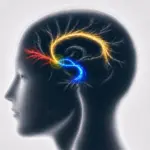
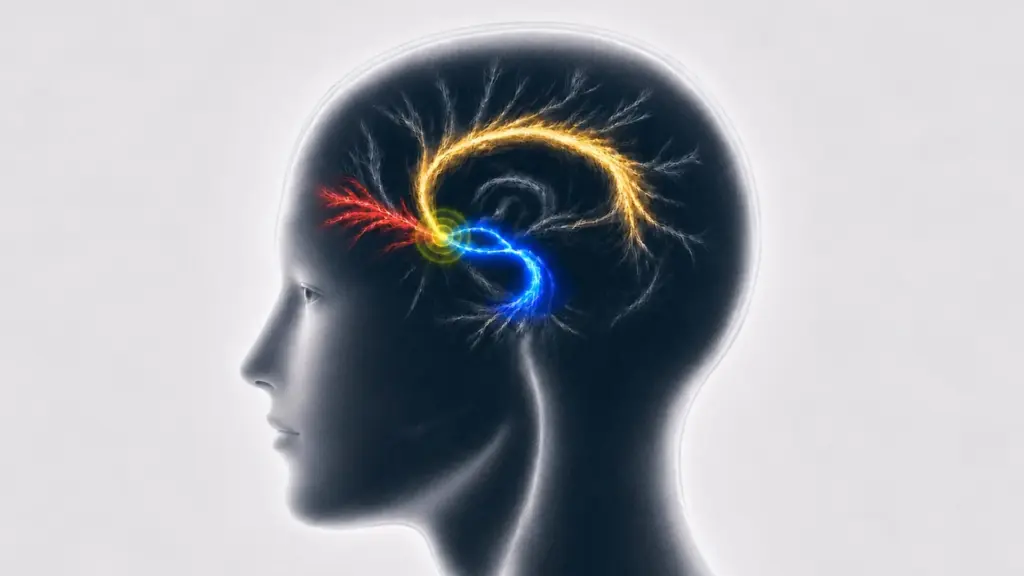
The researchers discovered that sustained symptomatic improvement was consistently associated with electrical stimulation reaching three specific white matter pathways: the cingulum bundle, the forceps minor, and the medial uncinate fasciculus/ventral amygdalofugal pathways. This shift toward "connectome-based targeting" suggests that the success of DBS is not merely about where the electrode is physically placed in the brain, but rather which functional networks that electrode successfully engages.
This strategy is already being put to the test in the Abbott TRANSCEND clinical trial, a randomized, controlled study that utilizes individualized brain connectivity maps to guide the placement of electrodes. By moving away from relying on gross anatomical landmarks—which can vary significantly from person to person—and toward visualizing the unique wiring of each patient’s brain, surgeons hope to standardize outcomes in a field that has long struggled with variability.
"This study underscores the importance of individualized surgical targeting for achieving optimal outcomes with deep brain stimulation for depression," said Helen Mayberg, MD, Mount Sinai Professor in Neurotherapeutics and founding Director of the Nash Family Center for Advanced Circuit Therapeutics at the Icahn School of Medicine at Mount Sinai. "In any randomized controlled trial of a neuromodulation treatment, precise lead placement and confirmation that the intended brain target has been engaged are essential first steps. We still have much to learn about which patients are most likely to benefit from stimulation of this particular target, but developing imaging-based signatures that can match patients to their optimal treatment remains a central goal of our research."
Unlocking the Mystery of Clinical Variability
Deep brain stimulation for depression operates on the principle that the brain is a collection of complex, interconnected circuits. When a patient lives with severe, persistent depression, these circuits are often locked into pathological patterns of activity. The surgical procedure involves placing electrodes that deliver controlled, low-level electrical signals to interrupt these patterns.
A major challenge, however, is that electricity does not respect the boundaries of the specific brain region where the electrode is implanted. Instead, the stimulation travels along white matter pathways—the brain’s "highways"—influencing distant, connected regions within the network. This explains a long-standing clinical paradox: two patients might have electrodes implanted in virtually identical anatomical coordinates, yet one patient may experience a profound, lasting recovery while the other sees no change.
Previous research conducted by teams at Mount Sinai and Emory University, spanning work published between 2014 and 2023 in journals such as Nature and Molecular Psychiatry, laid the groundwork for this understanding. By developing methods to map these networks, the researchers sought to confirm whether these connections were universally linked to success across diverse research sites.
The results of the latest investigation provided a startling insight into the mechanism of failure. Across the different study sites, the researchers observed a consistent pattern: patients who had not shown a clinical response after two years of treatment shared a common deficit—a lack of engagement with the left cingulum bundle. While the study did not definitively prove that moving the electrodes to activate that specific bundle would have resolved those patients’ symptoms, it provided a plausible explanation for why "correct" placement did not always translate into clinical success. The electrode might be in the right neighborhood, but if it fails to hit the specific fiber tracts necessary to modulate the depression circuit, the patient remains symptomatic.
"This study addresses an important question in DBS: not simply which area of the brain to stimulate, but which connections within that area need to be engaged," noted Brian Kopell, MD, Director of the Center for Neuromodulation at Mount Sinai. "For a network disorder such as depression, millimeters can determine whether stimulation reaches the pathways we intend to modulate. Identifying and reproducibly engaging those pathways gives us a more precise surgical target and a framework for understanding why otherwise similar electrode placements may produce different clinical outcomes."
Toward a Future of Precision Psychiatry
Despite the promise of these findings, the research team is careful to note that electrode placement is only one piece of the puzzle. The brain is dynamic, and success in SCC DBS is likely multifactorial, involving not just the anatomical target, but also the patient’s unique biological makeup and the long-term management of stimulation parameters.
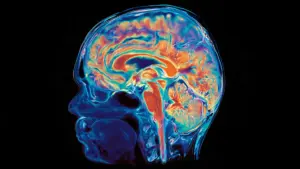
The study faced limitations, most notably the availability of individual diffusion MRI scans—the imaging modality used to visualize white matter—for every participant. In many cases, researchers relied on generalized connectivity maps. While the Emory cohort showed that generalized maps and patient-specific imaging produced largely consistent results, the team acknowledges that the future of the field lies in truly personalized medicine, where the stimulation protocol is as unique as the patient’s own brain structure.
Looking ahead, the research will move toward characterizing the structural and functional brain states that indicate a patient is a good candidate for DBS, as well as optimizing the "settings" of the device. As Ki Sueng Choi, PhD, Associate Professor and Imaging Core Leader at the Center for Advanced Circuit Therapeutics at Mount Sinai, explained, the next phase of research will focus on how to adjust parameters like amplitude, frequency, and pulse width to match the specific needs of an individual’s neural circuit.
"Our findings show precisely engaging these white matter pathways is a critical first step toward sustained response," Dr. Choi said. "The next step is to characterize abnormal functional and structural brain states along these pathways to build more detailed models for setting patient-specific stimulation parameters for precision medicine."
The research was supported by significant funding from the National Institutes of Health (NIH) BRAIN Initiative, the Hope for Depression Research Foundation, and the DANA Foundation. Abbott’s Neuromodulation business provided data from the BROADEN clinical trial but remained independent of the study’s design and analysis.
As the scientific community continues to refine these techniques, the combination of advanced neuroimaging, sophisticated computer modeling, and clinical expertise is creating a new paradigm for treating the most severe cases of depression. While further clinical research is required to translate these findings into universal, standard-of-care protocols, the identification of these three pathways marks a pivotal transition in the quest to provide lasting relief to those for whom conventional medicine has fallen short. By bridging the gap between surgical precision and the complex landscape of the human connectome, Mount Sinai researchers are helping to usher in an era where the treatment of mental health is defined by the same rigor and technological sophistication as the treatment of any other complex physical condition.