







You walk out of the grocery store, ready to head home and make dinner. But as you scan the crowded parking lot, a familiar, sinking feeling of frustration sets in. Where did you leave your car? You try to mentally retrace your steps, picturing the aisle you walked down and the automatic doors you exited, but the specific memory refuses to surface. While a momentary lapse in memory can happen to anyone, the underlying mechanisms governing our ability to recall these mundane events are complex and, as we age, increasingly fragile.
The Foundation of Episodic Memory
Remembering personal experiences like these relies on what neuroscientists call episodic memory. This cognitive faculty allows us to mentally time-travel, recalling specific events from our lives, ranging from monumental milestones—like your first day of elementary school—to the trivial, fleeting details of where you parked your vehicle just minutes earlier. These memories form the essential bedrock of our long-term memory, grounding our sense of self in a continuous narrative of past experiences.
However, this cognitive ability is not immutable. As humans grow older, the sharpness of these memories often begins to dull. The vivid sights, distinct sounds, and sensory details associated with our past experiences can become increasingly difficult to retrieve. While some degree of memory decline is widely considered a standard, albeit frustrating, part of the aging process, these changes can escalate into far more severe, debilitating cognitive impairments in individuals developing Alzheimer’s disease.

Unlocking the Mystery of the Aging Brain
For years, the scientific community has grappled with the "why" behind this decline. Now, a groundbreaking study from researchers at the University of California, Berkeley, has provided significant new clues into the biological processes occurring inside the aging brain. Neuroscientist Omer Sharon and his colleagues, working under the guidance of renowned sleep researcher Matthew Walker, have identified a compelling connection between disrupted brain waves during deep sleep, declining memory performance, and the accumulation of tau—a protein long associated with the pathology of Alzheimer’s disease.
The findings, published in the journal Nature Neuroscience, suggest that the buildup of tau in the brain’s frontal cortex is directly linked to fundamental changes in the coordinated electrical activity that the brain relies on to preserve and consolidate memories overnight.
"This is the first time we’ve shown this relationship between tau and how it messes with memory consolidation by attenuating traveling slow waves that originate in the frontal cortex," said Sharon, a postdoctoral researcher at UC Berkeley’s Center for Human Sleep Science.
How Deep Sleep Facilitates Memory Storage
To understand the magnitude of this discovery, it is necessary to look at the architecture of human sleep. Sleep is not a monolithic state; it is composed of several distinct stages, each defined by unique patterns of electrical activity within the brain. While Rapid Eye Movement (REM) sleep—characterized by rapid eye movements and vivid dreaming—is perhaps the most famous stage, non-REM sleep is arguably the most vital for maintaining long-term cognitive health.
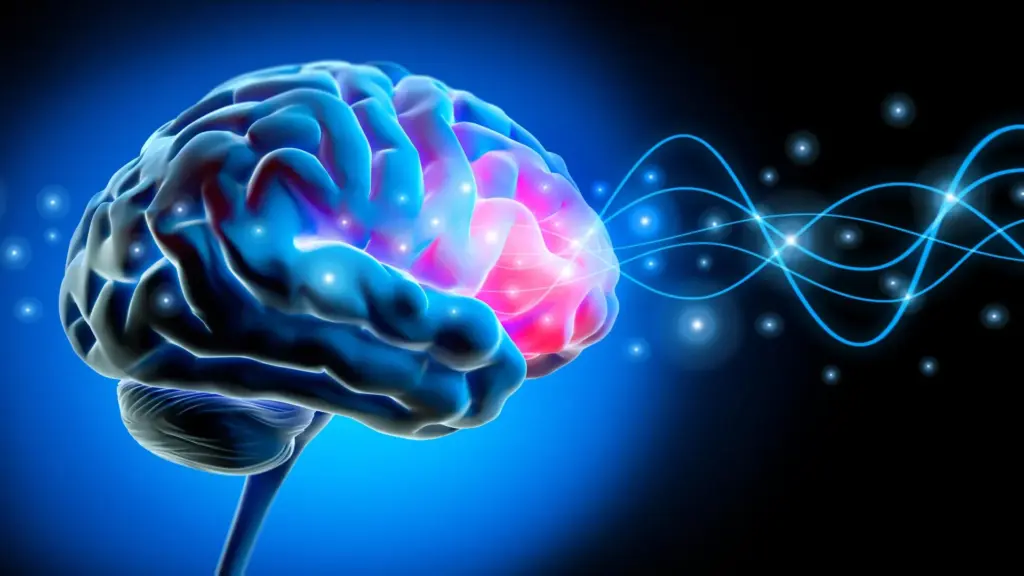
During deep non-REM sleep, when dreaming is largely absent, the brain engages in a critical housekeeping task. Large populations of neurons briefly become inactive and then fire again in a tightly orchestrated sequence. These synchronized fluctuations produce slow electrical waves that sweep across the brain, typically initiating in the frontal cortex.
"Each slow wave reflects an enormous population of neurons switching off and back on together," Sharon explained. "Our study shows that for memory, it’s critical that these events cascade in sequence across large parts of the brain. This coordinated shutdown has been observed only during deep sleep, and may be one reason why we sleep."
The researchers discovered that as tau protein accumulates in the aging brain, this carefully organized, sweeping electrical activity loses its coherence. Instead of traveling in synchronized patterns across broad regions of the brain, the waves become fragmented, scattered, and travel over much shorter distances. These "lonely waves" are directly associated with weaker memory consolidation, a broader decline in cognitive abilities, and the onset of Alzheimer’s disease.
Linking Protein Buildup to Disrupted Waves
To investigate this phenomenon, the UC Berkeley team monitored the brain activity of participants using electroencephalograms (EEGs). The study compared two distinct cohorts: cognitively healthy young adults in their early 20s and older participants between the ages of 65 and 75.
The differences between the groups were striking. In the younger participants, the slow waves moved in fluid, long-distance patterns, spanning roughly the width of a human hand on the scalp. Conversely, among the older adults, these waves were truncated and appeared to operate more independently.
To determine if these patterns correlated with tau levels, the team worked with Dr. William Jagust, a UC Berkeley professor emeritus of public health and neuroscience. Utilizing positron emission tomography (PET) scans—which employ radioactive tracers to visualize the distribution of specific biological substances—the team mapped the brains of the older participants. The results confirmed that greater tau buildup in the frontal cortex was strongly associated with the breakdown of the long-distance traveling waves observed during deep sleep.
Crucially, this disruption was observed even in individuals who had not yet been diagnosed with Alzheimer’s disease. "These people did not have Alzheimer’s," Sharon noted. "They had tau in their brains, but with subclinical impacts. Their memory decline was within the normal range for their age." This suggests that the biological precursors to memory loss may be present and measurable long before a clinical diagnosis is made.
The Impact of "Lonely Waves"
To establish a functional link between these fragmented brain waves and actual memory loss, the researchers designed a memory task. Participants were tasked with learning pairs of associated words in the evening. The following day, their ability to recall those pairs was tested, providing a clear metric for how effectively the brain had consolidated those memories overnight.
The results were telling: participants whose brain waves were more isolated and traveled shorter distances consistently remembered fewer word associations. The researchers dubbed these disconnected patterns "lonely waves." Over several years of monitoring a subset of these participants, the researchers found that as frontal cortex tau levels increased, the slow waves became increasingly disorganized, and the subjects’ ability to retain newly learned information overnight diminished accordingly.
While these observations provide strong evidence of a relationship between tau accumulation, disrupted sleep, and memory loss, the researchers were careful to note that they do not yet prove that tau buildup is the sole, direct cause of memory loss, nor that these waves are the only mechanism responsible.
Strengthening the Evidence
Because PET scans are expensive and require specialized medical facilities, the researchers sought to validate their findings through alternative methods. They collaborated with neurologist Yo-El Ju at Washington University in St. Louis to analyze spinal fluid from a separate group of older adults. This allowed the team to look for markers of Alzheimer’s-associated proteins without relying solely on imaging.
Although spinal fluid analysis cannot pinpoint tau accumulation to the frontal cortex as precisely as a PET scan, the results mirrored the initial findings. Participants whose brains produced more isolated slow waves during sleep also exhibited higher ratios of tau to amyloid—another protein linked to Alzheimer’s—in their spinal fluid. The consistency of these results across different cohorts and testing methodologies has significantly bolstered the researchers’ confidence in their conclusions.
"It’s collected in a totally different place and in a different cohort, so I think that adds to the strength of the evidence," Sharon said.
The Future of Sleep and Cognitive Health
This research indicates that the memory decline often associated with aging is not necessarily an inevitable, monolithic process. Instead, it may be driven by specific pathological changes, such as the accumulation of tau in regions of the brain responsible for generating global, synchronized sleep waves.
"It’s not just about age," Sharon explained. "It’s how much pathology you have in frontal areas where global waves originate."
As researchers continue to explore this connection, the findings open new avenues for both the identification of early memory problems and the development of potential interventions. If deep sleep patterns can serve as a biological marker for early-stage cognitive decline, clinicians may eventually be able to identify at-risk patients long before severe symptoms appear.
However, a significant scientific question remains: does the accumulation of tau cause the breakdown of these sleep waves, or do the disrupted waves somehow facilitate the accumulation of the protein? Understanding the direction of this relationship will be the next major challenge for the field.
"We can see tau and lonely waves rising together over time," Sharon concluded. "What we cannot yet say is which leads—and that question will shape how we design interventions."
The study’s co-authors include Xi Chen, James Westphal, Chelsea Brown, and Vyoma D. Shah of UC Berkeley, along with Jason Dude of Washington University in St. Louis. The research was supported by the National Institute on Aging at the National Institutes of Health, as well as the Glenn Foundation for Medical Research and the Weill Neurohub.