








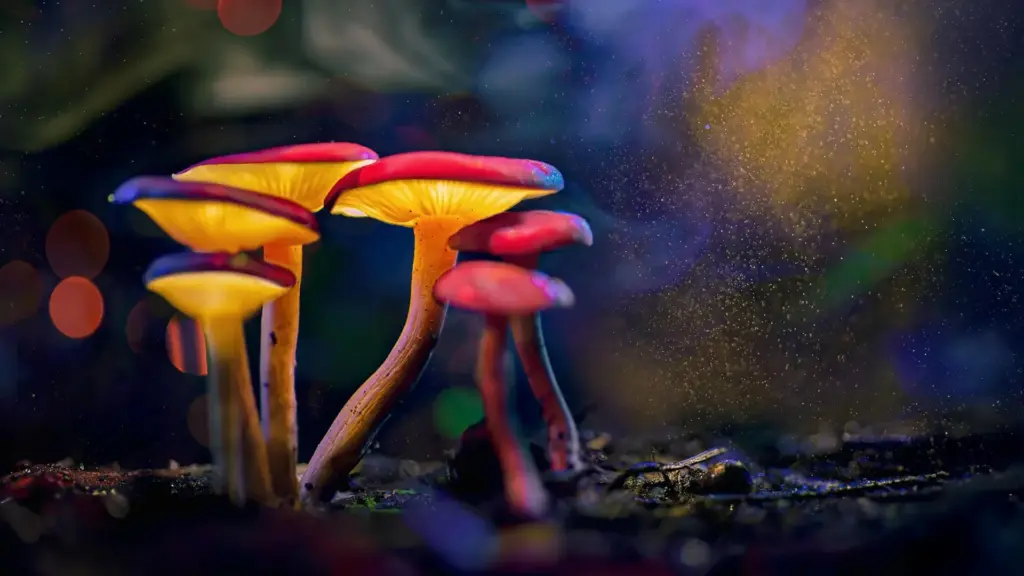
In a study that bridges the gap between marine biology and neuropharmacology, researchers have discovered that psilocybin—the psychoactive compound famously produced by over 200 species of "magic" mushrooms—exerts a surprisingly precise influence on the aggressive tendencies of fish. While the compound is best known for its profound effects on human perception and mood, this new investigation into the amphibious mangrove rivulus (Kryptolebias marmoratus) suggests that psilocybin may act as a selective sedative for high-energy aggression, dampening violent outbursts without hindering broader social communication.
The study, published in the journal Frontiers in Behavioral Neuroscience, represents a significant step forward in understanding how serotonergic substances interact with the brains of vertebrates. By observing how this naturally occurring compound influences social interactions in a controlled laboratory setting, scientists are gaining new, fundamental insights into the neural mechanisms that govern aggressive behavior across the animal kingdom.
A Natural Model for Behavioral Research
The selection of the mangrove rivulus for this experiment was far from incidental. These fish are renowned among biologists for their natural disposition toward combat. When two of these fish encounter one another, they often engage in rapid, high-intensity aggressive displays. Because these behaviors are so pronounced and distinct, they provide an ideal metric for researchers looking to measure the efficacy of pharmacological interventions.

Beyond their temperament, the mangrove rivulus offers a unique genetic advantage. They are among the few vertebrates capable of self-fertilization, a trait that allows them to produce offspring that are essentially genetic clones of the parent. This reproductive strategy essentially removes the variable of genetic diversity from behavioral experiments. By using these genetically identical lines, the research team—led by scientists from Acadia University and The University of British Columbia—could be confident that any behavioral shifts observed were the direct result of the psilocybin exposure, rather than underlying biological differences between individual test subjects.
The Experimental Framework
To isolate the effects of the compound, the researchers implemented a rigorous, multi-staged experimental design. They utilized three genetically distinct lineages of fish to ensure the robustness of their data. One group was administered psilocybin, another served as the "stimulus" group intended to provoke social interaction, and a third group was used to calibrate the dosage by measuring the accumulation of the substance within the fish’s tissues.
The testing environment was carefully constructed to simulate natural social friction while maintaining experimental control. Each fish was placed into a tank partitioned by a fiberglass mesh and an opaque barrier. This setup allowed the fish to detect the presence of another member of their species through visual and olfactory cues without the possibility of physical injury. After an initial five-minute acclimation period, the researchers removed the opaque barrier, exposing the fish to one another for the first time.
The following day, 24 hours after this baseline behavior was recorded, the fish were placed in water infused with a low, acute dose of dissolved psilocybin. Following a 20-minute exposure period, the fish were returned to their tanks to interact once more with their previous counterparts. By removing the opaque cover again, the scientists were able to observe and document the behavioral shift with high precision.
Dissecting the "Calming" Effect
The findings were both striking and nuanced. Under the influence of psilocybin, the treated fish exhibited a marked decrease in overall activity and, more significantly, a reduction in aggressive "swimming bursts." These bursts are considered high-energy, escalated attack behaviors. They signify that a fish is moving beyond simple posturing and is actively attempting to intimidate or strike at a rival.
"We show that an acute, low dose of psilocybin significantly reduces activity and aggressive attack behavior during social interactions in adult mangrove rivulus fish, a species that is naturally highly aggressive," explained lead author Dayna Forsyth, a research associate and former MSc student at Acadia University.
The researchers were particularly intrigued by the selectivity of this response. Psilocybin did not render the fish catatonic or eliminate their social intelligence. Instead, it appeared to act as a filter for energy-intensive violence. While the fish were less likely to launch into frantic, high-energy attacks, their "low-energy" social displays—such as head-on orientation—remained largely intact. These displays, which serve as a form of communication or social assessment, require very little exertion and are fundamental to the way these fish interact within their environment.
"Psilocybin’s calming effect appears to selectively reduce energetically costly, escalated behaviors while lower-energy social display behaviors remained largely unchanged," Forsyth noted. "This suggests that this compound can selectively dampen escalated social conflict rather than shutting down behavior altogether."
This distinction is crucial, according to Dr. Suzie Currie, a biologist at The University of British Columbia and senior author of the study. "These findings provide the first evidence that psilocybin can selectively reduce escalated aggression in a vertebrate model without suppressing social interaction," she added. By dampening only the most aggressive impulses, the compound seems to promote a form of social equilibrium rather than total behavioral inhibition.
Implications for Future Neuroscientific Study
The potential implications of these findings for the broader field of psychedelic research are profound, though the authors are careful to temper expectations. This study, while groundbreaking in its use of a vertebrate model, does not suggest that psilocybin is a ready-to-use clinical treatment for human aggression. The biological and neurological complexities of the human brain are vastly different from those of the mangrove rivulus, and the study did not evaluate clinical applications or long-term therapeutic outcomes.
Rather, the value of this research lies in its capacity to reveal the biological underpinnings of behavior. By identifying which specific neural pathways and social responses are sensitive to psilocybin, scientists can better understand the mechanisms that regulate social conflict. In the long term, this foundational knowledge could inform future studies on how serotonergic pathways influence mood and impulse control.
However, many questions remain. The current study focused on the immediate, short-term impact of a single exposure. It did not investigate the effects of chronic, repeated dosing, nor did it explore whether the fish might develop a tolerance to the compound or exhibit long-term behavioral changes following the initial exposure. There is also the unanswered question of the exact neurological signaling pathways involved—the "how" behind the observed "what."
"Future studies can build on this work to explore how psilocybin alters neural signaling, which serotonin pathways are involved, and why some aspects of social behavior are affected while others are not," Dr. Currie concluded. "These are questions that are difficult or impossible to answer directly in humans."
As researchers continue to peel back the layers of how psilocybin interacts with the vertebrate brain, the humble mangrove rivulus has provided a compelling starting point. By demonstrating that a compound once dismissed as merely hallucinogenic can exert such a controlled, selective influence on animal behavior, this research opens a new chapter in our quest to understand the delicate chemistry of social interaction. Whether these findings will eventually lead to new therapeutic strategies remains a subject for future inquiry, but for now, they provide a fascinating glimpse into the fine-tuned control of aggression in the natural world.