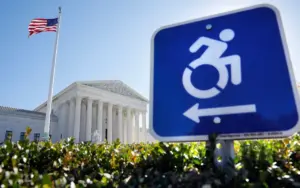







The U.S. Supreme Court is poised to hear a high-stakes legal battle that could fundamentally alter the landscape of disability rights in America. Next week, the justices will hear oral arguments in St. Mary Catholic Parish v. Roy, a case brought by the Archdiocese of Denver, several Catholic schools, and parents in Colorado. At the heart of the litigation is a direct challenge to the state’s universal preschool program, which the plaintiffs argue imposes requirements that infringe upon their First Amendment right to religious exercise.
The conflict arises from the participation of private religious schools in Colorado’s publicly funded universal preschool initiative. Under the state’s program, private institutions that choose to accept public funding must adhere to specific non-discrimination mandates. These provisions require schools to refrain from discriminating against families based on a range of protected characteristics, including race, sexual orientation, gender identity, and disability status.
The Catholic schools initiated the lawsuit, contending that these non-discrimination requirements force them to violate their religious beliefs, particularly regarding LGBTQ families. However, the legal maneuverings of the plaintiffs have introduced a secondary, more controversial argument: they are questioning the very mechanisms the state uses to ensure equal access for children with disabilities.

The Role of IEPs and Algorithmic Matching
The crux of the schools’ argument relies on an examination of the state’s administrative policies. To demonstrate that the universal preschool program is not as rigid or neutral as the state claims, the plaintiffs point to specific exemptions and preferences within the algorithm used to match students with schools.
One such feature is a preference built into the matching system to ensure that children with disabilities are placed in programs capable of meeting their specific needs, as outlined in their Individualized Education Programs (IEPs). The plaintiffs argue that because the Colorado Department of Early Childhood allows for these "flexible" considerations—such as prioritizing students with disabilities or those from historically marginalized communities—it undermines the state’s claim that the non-discrimination mandate is a strict, universally applied obligation.
In their petition to the Supreme Court, the Catholic schools asserted that the state treats the mandate as a flexible provision that allows for the consideration of various interests, while simultaneously refusing to accommodate the sincere religious exercise of the schools. By framing these disability-focused preferences as a form of government-sanctioned flexibility, the schools are attempting to argue that if the state can make exceptions for disability support, it should also be required to provide exemptions for religious beliefs.
Potential Consequences for Disability Rights
Disability advocates, however, view the schools’ legal strategy as a dangerous assault on the bedrock of civil rights law. Organizations representing the interests of people with disabilities warn that if the Supreme Court adopts the reasoning proposed by the Catholic schools, the implications could be far-reaching, potentially dismantling decades of progress in providing equal access to education and public life.
The concern stems from the way the plaintiffs characterize the state’s disability accommodations. By arguing that the preference for students with IEPs is a form of "preferential treatment" that discriminates against other students, the schools are effectively challenging the legal basis for all disability-related accommodations.
Peter Talkington, a staff attorney at the Disability Rights Education and Defense Fund (DREDF), expressed deep concern over the legal precedent this case could set. "The law guarantees people with disabilities things like special education, reasonable accommodations and accessible infrastructure in order to guarantee us an equal opportunity to participate in all aspects of society which people without disabilities automatically enjoy," Talkington said. "If the Supreme Court agrees with the Catholic schools, disability rights like special education, reasonable accommodations and accessible infrastructure can be challenged as ‘discrimination’ against people without disabilities, erasing decades of disability progress."
The argument that accommodations for students with disabilities constitute unfair treatment toward their peers strikes at the heart of the Individuals with Disabilities Education Act (IDEA) and other civil rights protections. These laws are built on the principle that true equality requires more than identical treatment; it requires providing the specific support necessary for individuals with disabilities to have an equal opportunity to participate in society.
A Broad Coalition of Opposition
In response to the case, DREDF and 12 other prominent disability advocacy organizations have filed an amicus brief urging the Supreme Court to reject the argument presented by the Catholic schools. The brief emphasizes that the IEP preference within the Colorado preschool program is not a discriminatory tool, but rather a essential mechanism to ensure that the state complies with federal law and its own commitment to educational equity.
The amicus brief clarifies that the matching algorithm is designed to ensure that students with disabilities are placed in settings where they can receive the services mandated by their IEPs. By attempting to frame this as an exclusionary practice, the plaintiffs are, according to the advocates, fundamentally misunderstanding the role of disability accommodations.
Shira Wakschlag, the senior executive officer for legal advocacy and general counsel at The Arc of the United States, which joined the amicus brief, emphasized the practical necessity of such supports. "Disability laws recognize that students with disabilities may need accommodations or services that other students don’t," Wakschlag explained. "A student who uses a wheelchair may need a lift to board a school bus that other students can enter using stairs. Another student may need assistive technology, specialized instruction or related services. Providing those supports allows students with disabilities to access the same educational opportunities as their peers."
Wakschlag argued that treating these essential support measures as "preferential treatment" would be a catastrophic misinterpretation of disability law. For the advocates, the distinction is clear: the law does not require that everyone be treated the same, but that everyone be given the tools necessary to access the same opportunities. If the court accepts the premise that reasonable accommodations are equivalent to discriminatory preferences, it could provide a roadmap for challenging similar protections in schools, workplaces, and public spaces across the country.
The Constitutional Tension
The case brings to the forefront a complex constitutional tension between the First Amendment’s protection of the free exercise of religion and the state’s interest in ensuring equal access for all citizens.
The Catholic schools are essentially testing the boundaries of the "private religious school versus public funding" debate. Their position is that by accepting public funds, they should not be required to abandon the tenets of their faith, including those that might conflict with secular mandates regarding non-discrimination. The state, conversely, maintains that public funding comes with the obligation to adhere to public standards, which includes ensuring that no child is turned away from a publicly supported program based on their disability or identity.
Legal experts note that the outcome of this case could hinge on how the Court interprets the "neutrality" of the state’s requirements. If the Court finds that the state’s program is not sufficiently neutral because of its exceptions for disability-related services, it could grant the religious schools a broader right to exclude families while still receiving public taxpayer dollars. However, such a ruling would be met with immense pushback from civil rights groups who argue that the state’s obligation to provide equal access to education is a fundamental duty that cannot be set aside by private religious preferences.
As the legal community prepares for the upcoming oral arguments, the case has become a focal point for those concerned about the erosion of institutional protections for marginalized communities. The outcome, which is not expected until sometime next year, will likely have significant consequences for how states structure their public funding for private entities and how the courts balance the competing interests of religious liberty and disability rights.
For now, the disability community remains on high alert, watching as a central tenet of their hard-won rights—the right to reasonable accommodation—faces a high-profile legal challenge that could redefine the meaning of equality in the American education system.