







A groundbreaking study conducted by researchers at the University of California, Santa Cruz, has provided a significant leap in our understanding of how psilocybin—the active compound in "magic mushrooms"—physically alters the architecture of the brain. The research, published on October 15 in the journal Nature Neuroscience, details how the substance rapidly reorganizes neural connections. Beyond the discovery of these structural changes, the study offers a tantalizing possibility: that the therapeutic benefits of psilocybin, particularly its ability to promote neuroplasticity, might be decoupled from its hallucinogenic effects. This distinction could serve as a vital blueprint for the next generation of psychiatric medications.
The Mechanism of Neuroplasticity
For decades, scientists have grappled with the complex ways in which psychedelic substances interact with the human mind. The UC Santa Cruz team, led by senior author Yi Zuo, a professor of molecular, cell, and developmental biology, utilized advanced two-photon microscopy to observe these changes in real-time. This sophisticated imaging technique allowed the researchers to peer into the brains of living mice with unprecedented clarity, tracking the evolution of individual nerve cell connections over several weeks.
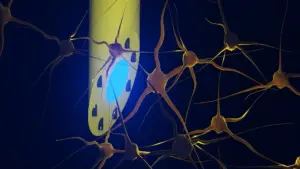
The investigation centered on dendritic spines—tiny, mushroom-shaped protrusions that extend from neurons to form synapses. Synapses are the critical junctions through which neurons transmit information, facilitating everything from memory and learning to emotional regulation. The study found that within just 24 hours of receiving a dose of psilocybin, the subjects exhibited a massive surge in the formation of new dendritic spines.
However, the drug’s impact was not merely a surge in volume; it was a qualitative transformation. Psilocybin appeared to accelerate the maturation of these spines. In a typical state, new connections are often unstable, existing as small "stubby" structures that frequently wither away before they can become functional. Under the influence of psilocybin, a significantly higher proportion of these spines developed into robust, stable "mushroom" structures. These mature spines are richer in the receptors necessary for chemical signaling, allowing for more persistent and effective communication between brain cells. By strengthening these pathways, psilocybin effectively leaves a structural footprint on the brain, potentially creating lasting changes in the circuits that govern mood and cognitive function.
A Shifting Scientific Landscape
The modern scientific interest in psychedelics represents a profound pivot from the mid-20th century. During the 1950s and 60s, researchers were fascinated by the potential of substances like LSD and psilocybin to unlock the mysteries of consciousness and provide relief for psychiatric conditions. However, the momentum of this field was abruptly halted by the passage of the Controlled Substances Act in 1970, which placed these compounds under strict legal restrictions and effectively ended most clinical investigation for decades.
In recent years, the tide has turned back toward these "psychoplastogens"—a term coined by researchers to describe substances capable of stimulating neuroplasticity after only a single dose. Neuroplasticity, the brain’s inherent ability to rewire its structure by forming, strengthening, or removing synaptic connections, is increasingly viewed as a key to treating mental health disorders. Conditions such as depression, anxiety, and post-traumatic stress disorder (PTSD) are often characterized by the degradation of healthy neural circuits. By encouraging the brain to reorganize itself, researchers hope to provide a "reset" for circuits that have become dysfunctional due to chronic stress or illness.
The potential of this field has not gone unnoticed by regulators. The U.S. Food and Drug Administration (FDA) has granted Breakthrough Therapy designations to both psilocybin and MDMA, signaling a high level of institutional interest in expediting the development of these treatments. In September 2026, the FDA hosted a significant public hearing titled "Considerations for Potential Future Therapeutic Use of Psychedelic Drugs." The forum brought together experts to discuss the practicalities of a future where psychedelics might be integrated into mainstream medicine—addressing everything from clinician training and the management of patient risks to the design of future clinical trials.
The Role of Chronic Stress
One of the most nuanced findings of the UC Santa Cruz study is that psilocybin does not affect every brain in the same way. The researchers compared the drug’s impact on healthy mice against those subjected to an "unpredictable mild stress model," which creates behavioral and neurological changes similar to those seen in human depression.
In healthy mice, the increase in new dendritic spines was a temporary phenomenon. Over a period of three weeks, the brain naturally pruned back these excess connections, returning to a state of equilibrium. The brain, it seems, performed a "reorganization" rather than a simple accumulation, ensuring the overall balance of its circuitry was maintained.
The experience of the stressed mice was markedly different. Chronic stress is known to wreak havoc on the brain, leading to a loss of synapses and a subsequent weakening of mood-regulating circuits. When these stressed subjects were treated with psilocybin, the drug did more than just trigger the growth of new connections; it appeared to act as a protective mechanism. It prevented the excessive loss of existing synapses and stimulated the repair of damaged circuitry. This discovery challenges the simplistic notion that psilocybin acts as a universal "booster" for connectivity. Instead, its effects appear to be highly sensitive to the pre-existing state of the brain, suggesting that its primary value may lie in its ability to restore circuits that have been damaged by chronic distress.
Separating Rewiring from the "Trip"
The most significant hurdle for psychedelic medicine has long been the intense, often disorienting, and sometimes unpredictable subjective experience known as the "trip." For many patients, the requirement of a long, medically supervised session to manage the hallucinogenic effects is a barrier to wider adoption.
To determine whether these hallucinogenic effects are intrinsically linked to the therapeutic rewiring of the brain, the research team focused on the serotonin 2A receptor (5-HT2AR). These receptors are highly prevalent in the cerebral cortex, specifically on Layer 5 pyramidal neurons, which act as the brain’s primary highways for sending information to other regions.
Using genetically modified mice, the team performed a series of "gain-of-function" and "loss-of-function" experiments. When they selectively restored serotonin 2A receptors only in the Layer 5 pyramidal neurons, psilocybin successfully stimulated the formation and stabilization of new synapses. Crucially, these mice did not exhibit the "head twitch response"—a characteristic behavioral marker in rodents that is widely used as a proxy for the hallucinogenic effects of psychedelics in humans.
Conversely, when the team removed the receptors from those specific neurons, the mice continued to exhibit the head twitch response, but the drug failed to stimulate any structural growth in the brain. This clear dissociation suggests that the biological mechanism responsible for structural neuroplasticity is distinct from the mechanism that produces the psychedelic behavioral response.
Future Horizons in Psychiatry
For Jacob Baker, a Ph.D. student in the Zuo lab and the study’s lead author, the implications are profound. "Psychedelics are fascinating compounds because they have the potential to profoundly transform who we are by reshaping the neural circuits in our brains," Baker noted. "These newly formed connections can integrate into existing neural circuitry and persist over time, leaving a lasting structural trace of psilocybin’s effects on the brain."
The findings offer a concrete, scientifically backed blueprint for drug development. If researchers can synthesize or identify chemical analogs that target the same neural pathways as psilocybin without triggering the hallucinogenic experience, the medical field could enter a new era of psychiatric care. Such medications would be far easier to administer, potentially allowing patients to receive treatment in a more traditional clinical setting without the need for extensive, time-consuming supervision.
"By showing that therapeutic circuit remodeling and hallucinogenic effects operate through distinct cellular pathways, our study provides a promising blueprint for designing non-hallucinogenic drug analogs," Professor Zuo stated. "Such therapeutics could deliver the fast and lasting antidepressant benefits of psychedelics while eliminating hallucinogenic side effects—making neuroplasticity treatments safer, more scalable, and accessible to a broader patient population."
While the results from the UC Santa Cruz team are highly encouraging, researchers caution that these experiments were conducted in a controlled laboratory setting with mice. Translating these findings to human patients will require rigorous clinical testing to confirm that the same cellular mechanisms govern brain architecture in humans. However, the study provides a vital piece of the puzzle, revealing that the "magic" behind the mushroom may not be the trip itself, but the underlying capacity to reorganize the brain’s own circuitry for the better. The study was supported by funding from the National Institute of Mental Health and the National Institute on Aging, with the psilocybin provided by the National Institute on Drug Abuse (NIDA) Drug Supply Program.