





Occupational therapy has long recognized that human participation does not occur in a vacuum. Every individual navigates a complex web of daily occupations—ranging from work and school to self-care and social interaction—shaped heavily by their surrounding environment. While physical and architectural barriers are frequently evaluated in clinical practice, a growing movement within the profession is highlighting the profound impact of social relationships. To capture this dynamic network, occupational therapists are increasingly adopting a visual graphic organizer traditionally utilized in social work: the eco map.
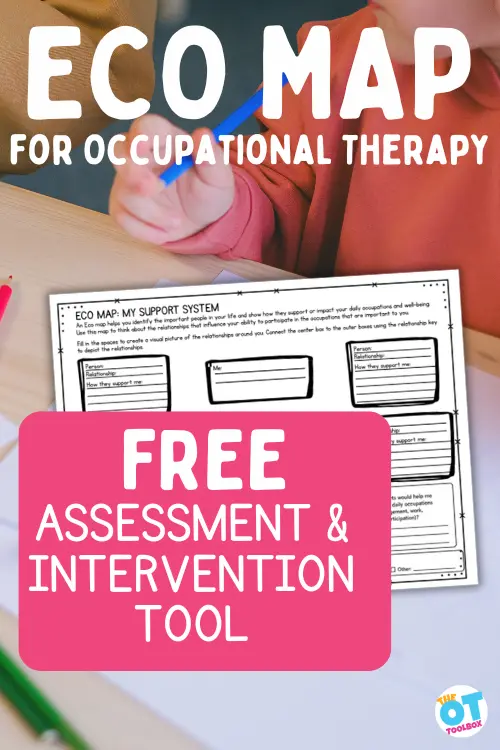
An eco map serves as a visual snapshot of an individual’s social environment, illustrating the web of relationships, groups, organizations, and support systems that influence daily functioning. Unlike a family tree or a genogram, which maps lineage and generational history, an eco map focuses strictly on current connections. It helps therapists and clients alike visualize how interpersonal dynamics either support or hinder occupational performance, well-being, and overall quality of life.
The integration of eco maps into occupational therapy aligns closely with professional guidelines. According to the Occupational Therapy Practice Framework, Fourth Edition (OTPF-4), supports and relationships are formally classified as environmental factors that significantly influence participation and performance. These factors encompass the physical, social, and attitudinal contexts in which people live and engage in meaningful activities. By mapping out these dynamics, clinicians gain a comprehensive understanding of the whole person, identifying both supportive facilitators and stressful barriers that impact day-to-day engagement.
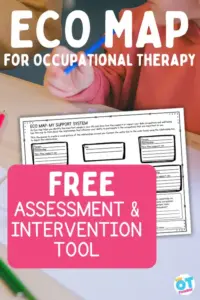
Understanding the Structure and Function of an Eco Map
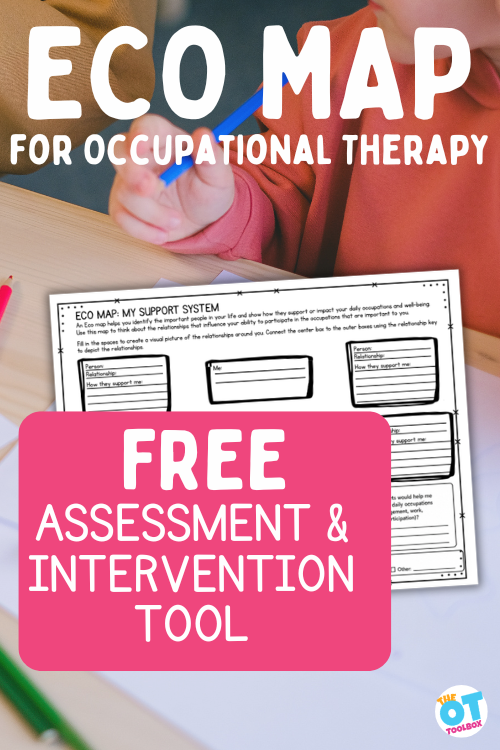
At its core, an eco map features the client positioned securely in the center circle. Radiating outward are connections representing family members, friends, peers, school and work supports, healthcare providers, community organizations, and even online networks. For each identified relationship, individuals can analyze the nature of the interaction, noting whether the connection acts as a positive resource or a source of stress.
In occupational therapy sessions, this visual tool transitions into a powerful screening and discussion instrument. While not a standardized psychometric assessment, the eco map provides immediate qualitative insight into a client’s social support network. When individuals map out their connections, observable patterns often emerge rapidly. Some clients may demonstrate robust family support paired with a total lack of community involvement, while others might maintain extensive social circles while desperately lacking practical assistance for basic daily tasks.
These insights guide therapists in shaping effective intervention plans and establishing meaningful clinical goals. Relationships are known to influence virtually every facet of human performance. For instance, the Occupational Therapy Practice Framework explicitly defines social participation as a primary occupation. This category includes all activities involving interaction with family, friends, coworkers, and community groups. The ability to establish, maintain, and successfully navigate these social structures directly affects a person’s educational participation, career trajectory, leisure pursuits, self-care routines, and emotional equilibrium.
Furthermore, supportive relationships are often the invisible scaffolding that enables individuals to successfully complete Activities of Daily Living and Instrumental Activities of Daily Living. An older adult relying on adult children for transportation to critical medical appointments, a teenager depending on family members to establish structured independence routines, or a college student leaning on peer networks while adapting to residential life all demonstrate the deep intersection between social support and functional independence.
Examining the Impact on Work Performance and Professional Burnout
The influence of interpersonal relationships extends heavily into occupational participation within work environments. Workplace success frequently hinges on advanced social interaction skills, effective communication, collaborative problem-solving, and reliable peer or managerial support. An eco map allows working adults to identify positive workplace dynamics as well as sources of professional friction that may degrade job satisfaction and performance.
Interestingly, this introspective tool is not solely reserved for patients and clients. Occupational therapists are finding immense value in utilizing eco maps for themselves to target professional burnout. Healthcare fields face notoriously high rates of chronic stress and emotional exhaustion among practitioners. By turning the eco map inward, clinicians can critically evaluate their own professional support systems, identify toxic workplace relationships, and actively cultivate supportive networks to protect their longevity in the field.
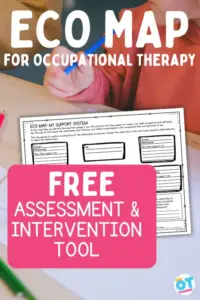
Despite the proven utility of eco maps in related disciplines like social work, their intentional application within occupational therapy has historically been limited. While OTs routinely evaluate relationships during standard client assessments, systematically working through an eco map worksheet specifically tailored to functional performance remains a novel practice. To bridge this gap, specialized clinical resources have emerged to provide therapists with customized frameworks featuring reflection questions directly tied to functional outcomes.
Clinical Application and Holistic Practice
When practitioners incorporate specialized eco map worksheets into their clinical workflows, the resulting guided discussions frequently uncover intervention opportunities that might otherwise remain hidden during standard evaluations. Therapists can explore how specific relationships affect a client’s motivation, energy levels, and physical capacity to engage in meaningful occupations.
By recognizing that participation is fundamentally relational, occupational therapists can collaborate more effectively with their clients to build stronger pathways toward independence, community integration, and emotional well-being. Whether the primary clinical objective is enhancing school performance, regaining self-care skills, or mitigating professional burnout, understanding the intricate web of human relationships remains a vital step toward achieving lasting, meaningful outcomes in daily life.