
In a 2026 interview with the New York Times, screenwriter Aaron Sorkin shared a poignant anecdote that strikes at the heart of our contemporary anxiety regarding artificial intelligence and creativity. He recalled attending a dinner party where he found himself genuinely moved by an abstract painting hanging on the wall. He was having a visceral, authentic reaction to the work, experiencing the elusive "something" that art is intended to provoke. However, when the host casually remarked, "A machine painted that," the experience vanished instantly. Sorkin noted that while he remained impressed by the technological achievement, the emotional connection—the bridge between the viewer and the creator’s intent—had been severed.
This reaction raises a profound question about the nature of art: is the object itself enough, or does the humanity of the artist—their motivation, their struggle, and their specific intention—act as an essential lens through which we view their work?
This inquiry echoes a classic debate in literary theory. In his 1969 lecture, "What Is an Author?", French philosopher Michel Foucault famously questioned the necessity of the "author function" in interpreting a body of work. He asked whether we should, for instance, include the mundane laundry lists of Friedrich Nietzsche in the canon of his philosophical masterpieces to aid our understanding. While the literal answer is likely no, the broader implication remains: does knowing the mind of the creator fundamentally alter our consumption of the art?
I believe that firsthand knowledge of an artist’s internal state significantly enriches the viewing experience. This philosophy is precisely why The Other Art Fair has become my favorite venue for engaging with contemporary work. Unlike the traditional gallery model, which often encourages a silent, isolated, and somewhat reverent distance between the viewer and the object, The Other Art Fair fosters a "rogue" intimacy. It offers the rare opportunity to stand in front of a canvas with the artist herself, hearing directly about the motivations, technical processes, and personal philosophies that birthed the work. This access transforms the experience from a static observation into a dynamic dialogue, rewarding the kind of bold, communicative artist who refuses to remain sequestered behind her canvas.
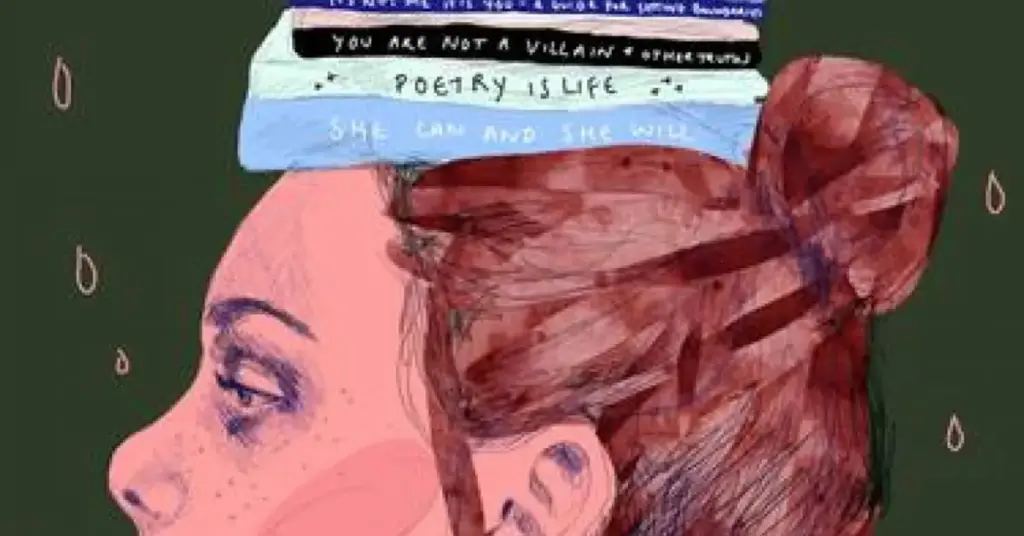
During my tour of the fair this past weekend, I found that these conversations provided a vital context that transformed my understanding of the pieces on display. My first stop was with Hannah Gilson, whose painting "Knowledge" served as a compelling critique of traditional educational frameworks. The work depicts a collection of books that the artist envisions for her daughter’s future—books that do not yet exist.
Gilson explained that the traditional literary canon—the foundational texts many of us were assigned in high school and college—no longer serves the diverse needs of modern society. Having studied the humanities in the 1980s, I am well aware of the common criticism that the "canon" of that era is increasingly viewed as an exclusive collection of "Dead White Males." While the existential, moral, and psychological themes addressed in those texts remain relevant, Gilson argues that it is time to invite new, diverse voices to grapple with what it means to be human in the 21st century. I found her perspective wonderfully irreverent; there was a powerful, rebellious energy in the realization that a mother would rather imagine a new, enlightening library for her child than rely on the transmission of antiquated knowledge.
Moving through the fair, I encountered Halle Ross, who was exhibiting a piece titled "Trust, but Verify." When I asked her about the conceptual roots of the work, she described it as a meditative reminder to surrender to the unpredictable unfolding of life. The painting, she explained, represents the delicate balance between active discernment and the willingness to trust a path that remains obscured.
Ross’s explanation resonated with me on a clinical level, as it mirrors the advice I frequently give to my own patients. In our daily lives, we are often plagued by the desire to control outcomes or predict the future—a tendency that frequently leads to anxiety. I often suggest that we approach life with authenticity and discernment, but without the baggage of prejudice or the rigid expectation that we must solve every mystery in advance. We must learn to endure uncertainty, which is perhaps the most difficult skill to cultivate. Hearing Ross articulate this internal struggle gave "Trust, but Verify" a weight that I might have missed had I simply walked past it in a quiet hallway.
Finally, I spoke with Isabel Maddahi regarding her piece, "The Big One." The story behind this painting was a testament to the therapeutic potential of the creative process. Maddahi shared that she had been suffering from a period of creative block; she felt the weight of her emotions, yet she struggled to articulate them through language. She found herself constantly feeling that her attempts to verbalize her state were "this, but not quite that."
In a moment of frustration, she returned home and began to paint without a plan or a conscious expectation. She allowed her internal state to dictate the shapes and colors on the canvas, bypassing the filter of verbal communication. This struck me as a profound example of art as a non-verbal language for sensations that are simply too large or too complex for words. Maddahi’s "rebelliousness" was not directed at the art world, but at language itself—at the societal pressure to always have a tidy, contained, and articulate explanation for one’s interior life. There was something quietly radical in her decision to let the canvas speak for itself, rather than forcing her experience into a restrictive narrative.
Speaking with each of these artists acted as a catalyst for my own reflection on the therapeutic nature of artistic expression. The opportunity to stand shoulder to shoulder with the creators allowed me to see the "blind spots" in my own perception. Interpreting a painting, I realized, is remarkably similar to the work a therapist does when trying to understand a patient’s behaviors and beliefs. We are all piecing together a puzzle, attempting to bridge the gap between an internal reality and its external expression. As Shakespeare famously wrote in Hamlet, art’s role is to "hold, as ’twere, the mirror up to nature." When we have access to the artist, that mirror becomes significantly clearer.
The "inside access" afforded by The Other Art Fair is, in my view, a transformative development in how we consume culture. I found Hannah Gilson’s skepticism toward the traditional canon to be a justified and necessary critique; I found Halle Ross’s philosophy on trust and discernment to be deeply courageous; and I found Isabel Maddahi’s rejection of linguistic constraints in favor of pure, expressive form to be truly edifying.
To return to the challenge posed by Foucault, I suspect that I do not need to read the laundry lists of history’s great masters to appreciate their work. However, there is a distinct, visceral difference between viewing a piece of art in a vacuum and discussing the intent behind it with a living, breathing creator. When that intention is offered freely, standing right in front of the work, it does not diminish the art—it illuminates it. It reminds us that at the center of every brushstroke, every color choice, and every composition, there is a human being attempting to communicate something that words alone cannot capture. That connection is what keeps the art alive, and it is a connection that no machine, regardless of its technical brilliance, can ever truly replicate.