




When people picture modern robotics, the image that typically comes to mind is one of rigid, highly specialized machines operating within the tightly controlled confines of a factory floor. These traditional systems demand exhaustive programming, immense computational power, massive datasets, and meticulously managed environments to function correctly. If a single variable shifts or an object is slightly out of place, the entire system is prone to failure. They are powerful, but they are fundamentally brittle.
Yet, a profound question has long driven researchers in the field: What if robots could learn the way living beings do?
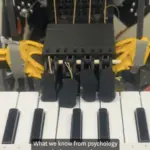
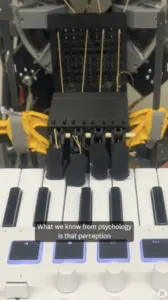
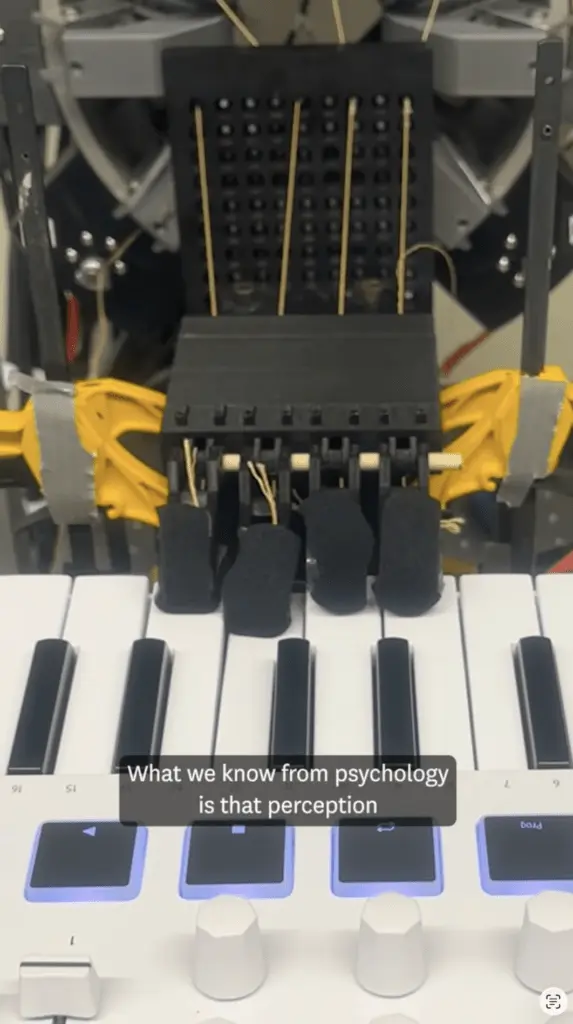
In a recent breakthrough emerging from the USC Viterbi School of Engineering, researchers have answered that question by developing a novel robotic system known as the "Musician Hand." This remarkably simple, tendon-driven mechanical hand achieved something extraordinary during its initial public demonstration: after hearing a 30-note musical melody, it played the composition back flawlessly on a standard piano on its very first attempt.
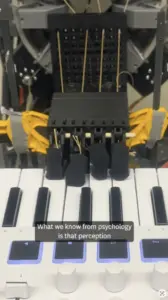
There were no weeks of intensive machine learning training cycles, no massive cloud-based datasets, and no exhaustive rehearsals. The device achieved this complex feat following just two minutes of self-guided, autonomous practice.
While a robot playing a piano can easily be dismissed as an impressive parlor trick or a technological novelty, the underlying implications for the future of assistive technology are profound. This research demonstrates conclusively that physical machines are capable of learning from brief, real-world experiences and adapting dynamically to unpredictable environments. In doing so, it opens the door to an entirely new paradigm of highly personalized assistive tech that can tailor itself to individual users on the fly.
How the Musician Hand Works: The Perception-Action Loop
The core mechanism behind the success of the Musician Hand is rooted in a biological concept known as the "perception-action loop." Rather than being hardcoded or pre-programmed to execute a specific sequence of movements to play a pre-determined song, the robot was engineered to autonomously discover how its own physical body operated.
Through brief, exploratory movements akin to motor babbling, the system mapped out its mechanical properties, tendon tensions, and physical limitations in real time. It learned by doing, sensing the results of its actions, and instantly updating its internal understanding of its physical form.
Traditional artificial intelligence models, such as those that power contemporary self-driving cars or complex robotic arms, typically require massive amounts of electrical power and years of accumulated data to function reliably. In sharp contrast, the Musician Hand accomplished its sophisticated musical task using remarkably efficient, low-power computing hardware—specifically, a standard laptop computer.
Because this perceptual robotics model operates with such high efficiency and adaptability, it carries immense potential for the evolution of physical assistive devices. Traditional prosthetics, exoskeletons, and robotic mobility aids often require painstaking, custom calibration for each user, and they frequently struggle when faced with novel physical environments or unexpected obstacles. A system that can rapidly calibrate and adapt through brief, natural interactions with its user could dramatically streamline the deployment and effectiveness of physical support technologies.
Beyond the Physical: Abstract and Cognitive Applications
The significance of this engineering achievement extends well beyond robotic hands and physical mobility aids. The fundamental underlying concept—utilizing efficient perceptual learning loops to adapt instantly to a user—has the capacity to radically transform how engineers design software, educational tools, and cognitive assistance systems.
Digital assistive tools have historically suffered from a rigid one-size-fits-all approach, requiring users to conform to the interface or the predetermined parameters of the software. By applying principles derived from perceptual robotics, future assistive technologies could dynamically adjust to cognitive patterns, communication styles, and learning speeds in real time. This ensures that the technology serves the individual rather than forcing the individual to struggle with the technology.
The traditional trajectory of robotics and artificial intelligence has frequently relied on forcing humans to adapt to the constraints of the machine. The development of the Musician Hand signals a shift toward an era where machines can quickly, efficiently, and intuitively adapt to the needs of humans.
By pivoting away from rigid, pre-determined programming and embracing perceptual learning, the next generation of assistive technology promises to evolve beyond simple tools. Instead, they are poised to become intelligent systems capable of comprehending the nuances of how people move, learn, and navigate their daily lives.