







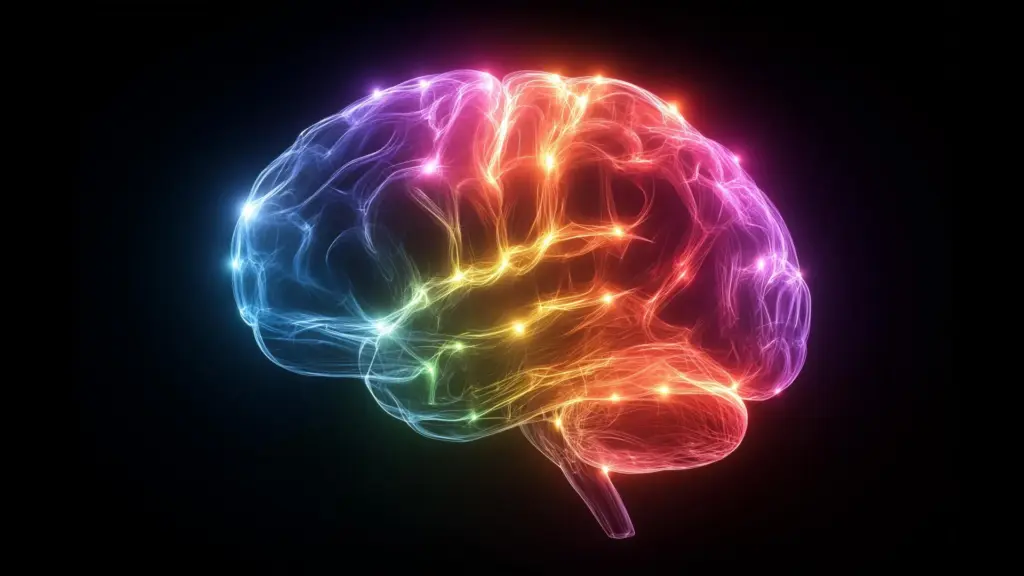
Stress is an inescapable part of the human experience, acting as a biological alarm system that shifts our focus, heightens our senses, and prepares us for potential threats. While stress is often associated with anxiety or a sense of being overwhelmed, it serves a profound evolutionary purpose: it helps the brain distinguish between the mundane and the significant. New research from Yale University has unveiled the precise neural mechanisms behind this process, explaining how cortisol—the primary hormone released during stressful encounters—reconfigures brain networks to ensure that emotionally charged experiences are etched into long-term memory.
The study, recently published in the journal Science Advances, offers a sophisticated look at the "emotional filter" of the brain. By examining the interplay between emotional perception and memory encoding, the researchers have clarified why some moments in life remain vivid for decades while others fade into obscurity almost immediately. This discovery not only advances our understanding of human cognition but also provides a window into the complex, often misunderstood relationship between stress and learning.
The Biological Blueprint of Emotional Memory
For years, the scientific community has operated under a well-established premise: stress and its associated hormone, cortisol, act as a catalyst for emotional memory. Studies involving both human subjects and animal models have consistently shown that when individuals undergo stressful events, they are more likely to retain those memories with greater clarity and detail. Central to this process is the amygdala, a small, almond-shaped structure deep within the brain that serves as a sentinel for emotional significance. The amygdala identifies which experiences warrant heightened attention and which can be discarded.
However, moving from the general observation that stress enhances memory to understanding the exact "how" has remained a formidable challenge for neuroscientists. The human brain is a dense, interconnected web of regions, many of which serve multiple functions simultaneously. Determining whether cortisol is influencing the raw emotional response, the cognitive process of encoding a memory, or a combination of both has been notoriously difficult to isolate.
Elizabeth Goldfarb, an assistant professor of psychiatry at the Yale School of Medicine and a member of Yale’s Wu Tsai Institute—an interdisciplinary initiative dedicated to exploring the depths of human cognition—notes that the complexity lies in the distinct phases of memory formation. According to Goldfarb, the process involves two critical stages: first, the perception of an event as intense or emotional, and second, the actual encoding of that experience into a durable, long-term memory. By teasing these processes apart, the Yale research team sought to map exactly how cortisol directs the brain to prioritize and preserve information.
Watching the Brain in Motion
To investigate these neural pathways, the Yale team designed a rigorous, double-blind study. Participants were administered either a dose of hydrocortisone—a synthetic form of cortisol—or an inactive placebo. Following the administration of the substance, participants were tasked with viewing a series of images while undergoing functional MRI (fMRI) scanning. This advanced imaging technique tracks blood flow and oxygen consumption in the brain, providing researchers with a real-time map of neural activity.
As participants engaged with the images, they were asked to report their emotional reactions to each one. This allowed researchers to quantify the intensity of the experience from the participant’s perspective. The following day, the participants returned for a memory test to determine which images they could accurately recall. By having each participant complete the experiment twice—once with hydrocortisone and once with the placebo—the researchers were able to establish a direct, individual-specific comparison of how the brain operates under the influence of stress hormones versus a baseline state.
A New Lens on Functional Connectivity
One of the most significant innovations of this study was the methodology used to analyze the fMRI data. Traditional neuroscience research often relies on "functional connectivity" measurements that require several minutes of data to capture a clear picture of how different brain regions communicate. While effective for resting-state analysis, these long windows are often too broad to capture the rapid, dynamic changes that occur during the split-second processing of a specific stimulus.
The Yale team pivoted to a more granular approach, analyzing functional connectivity during individual trials that lasted only about five seconds. By narrowing their focus to these brief, event-specific snapshots, the researchers could determine if specific patterns of brain activity correlated with two distinct outcomes: the level of emotional intensity reported by the participant and the likelihood that the image would be remembered the next day.
This approach proved highly successful. By successfully isolating the neural signatures of emotional intensity and memory encoding, the scientists could observe, with unprecedented clarity, how cortisol shifted the engagement of these networks and, crucially, how it synchronized their interactions.
The Orchestration of Memory
The results of the study provided a two-fold insight into the mechanics of the stressed brain. First, the data confirmed that cortisol significantly improved the participants’ memory for emotionally significant experiences, reinforcing the findings of decades of previous research. More importantly, however, the study identified the specific neural adjustments that make this possible.
In the networks responsible for emotional processing, cortisol induced more consistent, robust activity patterns. This suggests that the hormone essentially "turns up the volume" on the brain’s emotional response, making it more reliable and sensitive to the significance of an experience. Conversely, in the memory networks, the effect was one of specialization. Under the influence of cortisol, these regions became more finely tuned to process emotional information, effectively shifting their focus away from neutral or irrelevant data to prioritize the meaningful.
Perhaps most striking was the increased coordination between these two distinct systems. Cortisol appeared to act as a bridge, facilitating a more effective dialogue between the brain’s emotional centers and its memory-storage networks. Rather than a single "memory center" being activated, the study highlights that stress creates a holistic, cross-network shift that ensures the brain is operating in a state of heightened readiness for meaningful experiences.
Rethinking Stress and Learning
These findings offer a fresh perspective on the long-standing debate regarding the impact of stress on the human mind. While chronic, overwhelming stress is universally recognized as detrimental to mental health, this research underscores that the body’s acute stress response is fundamentally adaptive. Evolutionarily, it is advantageous for an organism to have a memory system that prioritizes events associated with survival, danger, or social significance.
The study suggests that the benefits of stress on memory are highly selective. The brain does not simply record everything with more intensity during a stressful event; instead, it uses the chemical signals provided by cortisol to categorize experiences based on their emotional weight.
For those looking to apply these findings to daily life, Professor Goldfarb offers a practical takeaway. Since the brain is primed to store information that is perceived as emotionally significant, individuals attempting to learn new or complex information—even in a stressful environment—may benefit from finding ways to attach personal or emotional meaning to that information. By engaging the brain’s emotional networks, a learner can effectively "piggyback" onto the system that cortisol naturally optimizes.
This research, supported by grants from the National Institutes of Health and involving a team of distinguished experts including Rajita Sinha and Todd Constable of the Yale School of Medicine, marks a significant step forward in our understanding of cognition. By moving beyond the idea that stress is a monolithic force that either helps or hinders, the study illustrates a nuanced, sophisticated system that allows the human brain to navigate a complex world by holding onto what truly matters. As scientists continue to unravel the connections between hormones and neural networks, the promise of better strategies for learning, memory, and emotional regulation becomes increasingly clear.