







In the complex landscape of modern healthcare, interdisciplinary teams are the standard for managing patient outcomes. These teams, composed of physicians, nurses, physical therapists, and social workers, are designed to cover the physiological, clinical, and logistical needs of those in recovery or managing chronic conditions. Yet, amidst this robust collaboration, a recurring challenge persists for the field of occupational therapy (OT): the struggle to articulate and quantify the unique, irreplaceable value that OTs bring to the table. While other disciplines focus on curing disease or restoring mobility, the occupational therapist occupies a distinct niche, focusing on the intersection of human function and meaningful living.
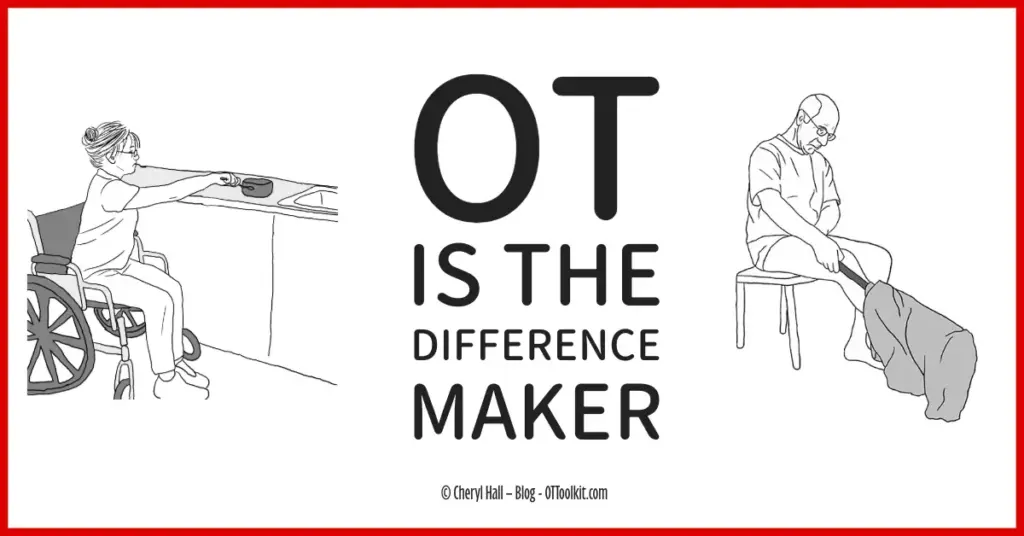
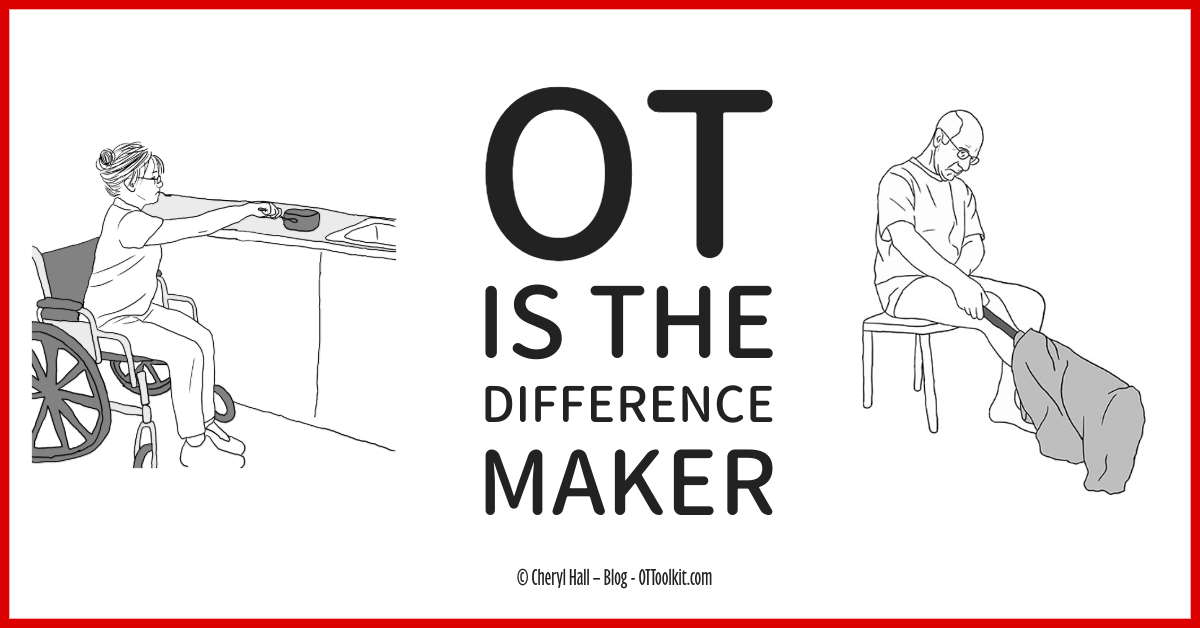
Reflecting on the role of OTs within these high-stakes environments, it becomes clear that the profession’s greatest challenge is not a lack of impact, but a deficiency in communication. Too often, the nuances of occupational therapy are overlooked by stakeholders who prioritize clinical metrics over the lived experience of the patient. To bridge this gap, perhaps the profession needs to rebrand its narrative. By defining the occupational therapist as the "difference maker" on the healthcare team—and supporting that identity with concrete, anecdotal evidence—the industry can better illustrate how it meets patients precisely where they are in their health journey, fundamentally altering the quality of their lives.
Over the years, many practitioners have found that the most profound moments in patient care are those that escape the standard clinical chart. These are the instances where the OT identifies a specific, often overlooked barrier to independence or joy, and intervenes in a way that no other member of the medical team would have considered. These interventions demonstrate that OT is not merely about physical rehabilitation; it is about restoring agency, dignity, and the capacity for mischief, humor, and self-sufficiency.

One such story involves "Paul," a ten-year-old patient diagnosed with terminal cancer. Confined to a wheelchair and struggling with the immense psychological burden of his condition, Paul had become profoundly withdrawn. For weeks, the clinical team attempted various interventions to boost his mood, but every session of occupational therapy seemed to end exactly as it began: with the heavy, stifling atmosphere of a child losing his battle with illness. The clinical interventions, while medically necessary, were failing to reach the human spirit trapped beneath the diagnosis.
Recognizing the need for a shift in perspective, the OT on the case decided to introduce a tool that had nothing to do with traditional therapy: a grabber. During a session, while Paul’s mother was in the kitchen washing dishes, the therapist handed the grabber to the boy and whispered a simple, conspiratorial instruction: "Hide it under the table." The transformation was instantaneous. When Paul’s mother returned and began searching for her missing dish towel, Paul’s eyes lit up with a spark that had been absent for months. As his mother searched through drawers, confusion mounting, Paul broke into genuine, uninhibited laughter, waving the towel in the air.
That single, simple act of play provided Paul with a sense of control and joy that no medication could replicate. The therapist left the grabber with him, and for the final two weeks of his life, Paul used it to engage in playful mischief with his parents and siblings. When his parents later reached out to report his passing, their gratitude was not focused on the clinical milestones he had reached, but on the fact that the OT had brought a measure of childhood fun back into his final days. This is the "difference maker" role in action—recognizing that the quality of a life is defined not just by its duration, but by the ability to engage with the world in a meaningful way.
Another example of this unique clinical contribution involves a patient named "Jack," who was suffering from severe, uncontrolled diabetes. Following a surgery that left him with only his thumbs and half of his dominant index finger, Jack was struggling to navigate the basic tasks of daily living. During a session focused on helping him adapt his strategies for maintaining independence, Jack hit a wall of embarrassment. After some gentle encouragement, he finally confided in his therapist, noting that the surgery had removed his "nose-picking finger." While this might seem trivial in the context of major surgery, for Jack, it represented yet another loss of autonomy and a source of deep personal frustration.
The therapist, viewing this not as a minor complaint but as a genuine barrier to daily comfort and independence, assessed the sensation, skin integrity, and circulation of the remaining digit. After consulting with the nursing and surgical teams, the OT fabricated a custom device using specialized splinting material and Velcro. With a few minor adjustments, the device successfully restored Jack’s ability to perform the task, granting him back a small, private piece of his personal hygiene and independence. By validating Jack’s concern and applying technical skill to a "non-medical" problem, the OT proved that the patient’s dignity is as much a part of the recovery process as the healing of a wound.
Perhaps the most striking illustration of the OT’s role as a silent advocate is the case of "Dorothy," a 75-year-old living with severe rheumatoid arthritis. The therapist arrived for an evaluation, but instead of answering the door, Dorothy called out to instruct the visitor that the door was unlocked. Upon investigation, the OT discovered that Dorothy had lived in her apartment for a decade, yet she had never been able to open her own front door. She had spent ten years relying on neighbors to let her in, leaving her door unlocked to ensure she could get inside.
The solution was deceptively simple: the therapist inspected the door and found that the magnetic seal was extraordinarily strong, creating resistance that exceeded Dorothy’s physical capabilities. By applying masking tape to cover half of the seal’s surface, the friction was reduced enough for Dorothy to open the door by herself for the first time in ten years. Before leaving, the therapist ensured that the modification met safety standards, coordinating with the building manager and the local fire station to confirm the door remained compliant for fire protection. In a matter of minutes, the OT had fundamentally altered the trajectory of Dorothy’s daily life, transforming her from someone who was essentially a prisoner in her own home into an independent resident.
These stories, while appearing small in the broader scope of hospital admissions and surgical interventions, are the true markers of the occupational therapy profession. They represent the instances where a clinician stops looking at a patient as a collection of symptoms and starts seeing them as a person with specific environmental, social, and emotional needs. None of these issues—the need for play in a terminal child, the desire for personal hygiene after amputation, or the struggle to operate a simple door—would have been addressed by the rest of the healthcare team.
The value of occupational therapy lies in this granular, patient-centered approach. By documenting and sharing these stories, practitioners can provide the evidence needed to remind healthcare colleagues, administrators, and patients that OT is not just an ancillary service. It is a vital component of the care team that looks for the "difference" that can be made in the moments between the medical procedures. As the profession looks toward the future, these narratives will serve as the most effective tools for communicating that value, proving that the small differences are often the ones that matter most.