





Core ideas embedded within Buddhist and Daoist spiritual traditions continue to reflect deep commonalities shared across many human-scale indigenous cultures worldwide. In a modern era dominated by industrial abstraction, scholars and researchers are increasingly examining how a compassionate framework of love—understood as vulnerable mutual knowing—remains entirely compatible with a panpsychic relational philosophy. At the root of this inquiry is a fundamental human reality: everyone wants their lived experience to be taken seriously. As embodied spirits, humans are compelled to make sense of a complex world, yet that sense-making can only truly happen in good company.
Life
As environmental scientist Janine Benyus famously observed, life creates conditions conducive to life. This simple observation hints at the underlying dynamic process of life, which consists entirely of feedback loops. Life is thoroughly relational, sacred, cyclical, fleeting, compostable, nested, regenerative, and forever mysterious for all participating beings.
Rather than viewing existence through a purely mechanical lens, ecological and anthropological studies increasingly point to the living planet as a sacred relational ecology of care that weaves together all living beings. From the smallest cellular interactions to vast bioregional ecosystems, the living world operates through continuous feedback and learning loops.
Spirits
Any high-dimensional space providing a reasonable description of Gaia—encompassing all of life, including the potential of homo ecologus—is best conceptualized relationally, starting from the foundational layers of physics upwards. Life consists entirely of relationships, which function as feedback and learning loops. In aggregate, these loops form the building blocks of what human-scale perception experiences as consciousness.

While human cognitive limitations prevent science from scientifically proving to a quantifiable certainty that consciousness emerges in this exact way, science is equally incapable of disproving it. This reflects the inherent boundaries of human comprehensibility, much like mathematical systems that contain statements which can never be definitively proven true or false.
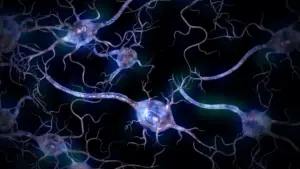
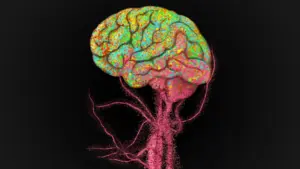
At the spatial and temporal scales relevant to biological systems, the smallest feedback loops emerge between molecules, driving the staggering complexity of cell biology and molecular genetics. These loops scale upward into bioregional terrestrial and marine ecosystems. In contrast, popular anthropocentric definitions of consciousness typically restrict the phenomenon to animals possessing brains, thereby excluding the myriad feedback loops operating across smaller and larger living systems.
Within biological organisms, sustainable feedback loops are maintained in a balanced state, fueled by external energy and producing outputs that can be reassembled into new life. Similarly, healthy social relationships depend on shared lived experiences, generating cultural output that integrates back into the local ecology of care. When viewed through the lens of dynamic feedback loops, the universe naturally aligns with a panpsychic philosophy where consciousness is omnipresent across all scales—a perspective deeply compatible with Eastern philosophies such as Buddhism and Daoism.
Spiritual Traditions
Buddhism, also known as Buddha Dharma, originated as an Indian philosophical tradition based on the teachings of the historical Buddha in the 5th or 6th century BCE. Today, it stands as one of the world’s major religions, emphasizing a Middle Way between asceticism and sensual indulgence that leads to awakening and liberation from dukkha, or suffering and unease.

This core Buddhist focus on minimizing suffering corresponds directly with the active desire of hypersensitive neurodivergent individuals to minimize cognitive dissonance. It also highlights the societal fractures that occur when a culture normalizes or enforces high levels of cognitive dissonance over extended periods.
Similarly, Taoism, or Daoism, is a diverse philosophical tradition emphasizing harmony with the Dao, an enigmatic process of transformation underlying reality. Taoist ethics emphasize virtues such as effortless action, naturalness, simplicity, and the three treasures of compassion, frugality, and humility. These virtues align closely with the sensory and neurodivergent profiles of many individuals, offering a timeless critique of anthropocentric empire-building that dates back to the ancient Warring States period.
Together, Buddhist and Daoist traditions mirror the egalitarian operating principles found across thousands of years of human-scale indigenous and hunter-gatherer societies.
Love
The extent to which human beings feel truly alive emerges from mutual trust, shared commitments, and mutual understanding within their relationships. By contrast, relationships with abstract, super-human anthropocentric institutions are inherently devoid of genuine shared experience. When modern cultures force populations to invest trust in such abstract entities, individuals lose the capacity for authentic relationships with living beings, diminishing their overall sense of aliveness.

Understanding these dynamics allows for a sober perspective on institutional collapse—viewing it as the natural expiration of an invalid social license. Indigenous societies that have resisted the myth of homo economicus offer vital lessons in relational health. Relationships can be understood as continuous, multi-modal dialogues within ecologies of care. Reframing evolution through collaborative niche construction, rather than sheer competitive struggle, highlights a compassionate approach to conscious evolutionary design that thinkers like Pyotr Kropotkin advocated over a century ago.
Sensitivity Profiles
Every human possesses a unique sensitivity profile shaped by neurological baseline dispositions and lived ecological experiences. This is particularly pronounced among hypersensitive neurodivergent people, many of whom navigate traumatic experiences within a society that frequently marginalizes and pathologizes them.
Data indicates that a significant majority of neurodivergent adults frequently feel overwhelmed, misunderstood, disrespected, or unsafe. Overall wellbeing depends heavily on the alignment between an individual’s sensitivity profile and their surrounding ecology of care. Diagnostic criteria for conditions like autism often overlap heavily with complex trauma responses, making it difficult to separate innate neurological baselines from the impact of living in a hypernormative industrial society.
Consequently, simplistic diagnostic labels centered on decontextualized individuals fail to capture the full spectrum of human experience. Advocates within the neurodiversity movement emphasize intersectional solidarity beyond rigid categorical labels, pointing out how standard diagnostic manuals often enforce narrow bands of culturally acceptable behavior while pathologizing human diversity.

Culture Co-Evolution
Major evolutionary milestones in the history of Gaia share co-evolutionary characteristics, exemplified by the emergence of biological cells and multi-cellular organisms. Cell biology demonstrates the complementary roles of abstract symbol systems and semantics within ecological processes. The semi-permeable membranes of cells provide a time-tested model for co-evolutionary relationships between living organisms.
Cultural co-evolution at human scales relies on conscious collaborative niche construction rather than energy-intensive head-to-head competition. Egalitarian hunter-gatherer societies have prioritized these cooperative values for millennia. Recognizing these evolutionary patterns encourages a shift away from destructive competition and toward open-source, omni-directional learning models.
The Human Spirit Within Gaia
Humans evolved to make sense of the world at human scales. Utilizing transparent digital tools and open-source frameworks can help extend human collaborative niche construction to larger scales without centralizing decision-making power in the hands of authoritarian structures. Embracing radical egalitarianism aligns with the adaptive intelligence of the human species, contrasting sharply with industrialized societies that have become detached from their cultural evolutionary roots.
As cultural metamorphosis unfolds, recognizing Gaia as the ultimate authority allows societies to move beyond the atomized, profit-driven models of homo economicus and return to life-affirming ecologies of care.

Becoming Aware of Cultural Bias
To recognize cultural bias across academic and scientific disciplines, it is necessary to examine how human cultural outputs interact with empirical attempts to understand Gaia. Modern scientific investigations, particularly within technology and economics, often rely on unexamined assumptions that normalize competition and extract utility from human lives based strictly on economic productivity.
This worldview reduces human value to net worth and disrupts intergenerational learning by stratifying populations into isolated age cohorts. Overcoming these biases requires re-evaluating the foundational assumptions of modern institutions and fostering genuine, multi-generational dialogue.
Reviving Trust in Humanity
The erosion of human-scale cultural organisms has left modern populations isolated and distrustful. The competitive pressures of homo economicus enforce a culture of enforced independence, where expressing vulnerability is discouraged, leading to widespread anxiety, self-hate, and shame.
Data from neurodiversity research highlights a profound paradox: while neurodivergent individuals deeply desire to help others, many hesitate to ask for help themselves due to systemic mistrust. Addressing these patterns requires dismantling toxic economic ideologies and supporting the organic growth of human-scale ecologies of care. Cooperatives and community-led initiatives continue to demonstrate alternative models for global collaboration.

As communities navigate the transition away from decaying industrial systems, embracing the relational wisdom found in indigenous traditions, Daoism, and Buddhism offers a viable path forward. By prioritizing human-scale connections, honoring diverse sensitivity profiles, and aligning human systems with the wisdom of Gaia, societies can begin to heal the fractures of the modern era and foster a truly sustainable future.