








By Jorn Bettin
The core ideas embedded within ancient Buddhist and Daoist spiritual traditions are increasingly seen as deeply reflective of the commonalities found across human-scale indigenous cultures throughout history. At the heart of this philosophical convergence is a compassionate framework of love defined as vulnerable, mutual knowing—one that is fully compatible with a panpsychic relational philosophy of the universe. Across societies, everyone ultimately wants their lived experience to be taken seriously. As embodied spirits, human animals are compelled to make sense of a complex world, yet we can only achieve this in good company and at a manageable scale.
Life
"Life creates conditions conducive to life," observed sustainability thinker Janine Benyus. This simple yet profound observation hints at the fundamental reality that the dynamic process of life consists entirely of feedback loops.
Life is entirely relational, sacred, cyclical, fleeting, compostable, nested, regenerative, and forever mysterious for all who participate in it. When we examine the high-dimensional spaces that provide a reasonable description of Gaia—encompassing all of life, including the potential of homo ecologus—the biosphere is best conceptualized entirely through relationships, stretching upward from the very bottom layers of physics.

Life consists entirely of relationships acting as feedback and learning loops. In aggregate, these loops form the building blocks of what human-scale perception experiences as consciousness. This perspective is hardly novel; it becomes immediately apparent when studying Eastern spiritual and philosophical texts.
As humans constrained by biological and cognitive limitations, we will never scientifically prove to a quantifiable certainty that consciousness emerges through these relational networks. However, science is equally incapable of disproving that consciousness exists and emerges in this manner. This limitation does not render science useless; rather, it highlights the inherent boundaries of scientific inquiry, which mirror the limits of human comprehensibility. In the abstract symbolic universe of mathematics, certain statements can never be proven true or false, leaving humanity unequipped to identify all such truths.
At spatial and temporal scales relevant to biological and ecological systems, the smallest feedback loops emerge between molecules, resulting in the mind-boggling complexity found in cell biology and molecular genetics. These feedback loops scale upward into bioregional terrestrial and marine ecosystems across the planet. Popular anthropocentric conceptions of consciousness typically generalize only to animals equipped with brains, systematically excluding the countless feedback loops operating within living systems at both micro and macro scales.
Powered-up or positive feedback loops occur when, over time, information—whether molecular or encoded abstractly—accumulates in specific living cells or beings more than in others. These powered-up feedbacks are always temporary phenomena relative to the lifespans of the entities involved.

Human bodies grow to a certain scale and remain intact for a lifetime. During this period, internal molecular feedback loops between cells and organs are maintained in a balanced, de-powered state, fueled by external energy from living food. This metabolic process generates waste consisting of building blocks ready to be reassembled into new life through the thermonuclear energy of the sun.
Similarly, social feedback loops between human animals grow into relationships that remain stable over a human lifetime. Healthy relationships maintain their internal feedback loops in a de-powered state, fueled by shared lived experiences and mutual understanding. This yields cultural outputs ready to be absorbed by local ecologies of care and integrated into new communal relationships.
Spirits
A universe conceptualized entirely through dynamic feedback and learning loops naturally leads to a panpsychic philosophy where consciousness is omnipresent across all scales. This viewpoint aligns seamlessly with Eastern spiritual traditions such as Buddhism and Daoism, inviting humanity to embrace non-anthropocentric perspectives. It also alerts us to the profound cultural bias inherent in modern industrialized notions of intelligence and success, drawing attention to the cognitive and emotional boundaries of the human scale.
Historical spiritual traditions have long wrestled with these concepts. Buddhism, also known as Buddha Dharma, emerged as an Indian philosophical tradition rooted in the teachings of the historical Buddha during the fifth or sixth century BCE. Teaching a middle way between extreme asceticism and sensual indulgence, Buddhism focuses heavily on minimizing suffering, or dukkha.

This foundational focus on minimizing unease corresponds directly to the active desire of hypersensitive neurodivergent individuals to reduce cognitive dissonance. It also illuminates the severe social problems that arise when a modern culture normalizes or insists on maintaining high levels of cognitive dissonance over extended periods.
Similarly, Daoism emphasizes harmony with the Dao, an enigmatic process of transformation underlying reality. Daoist virtues—such as effortless action, naturalness, simplicity, compassion, frugality, and humility—align closely with the sensitivity profiles of many neurodivergent individuals. Furthermore, they provide a timeless critique of anthropocentric empire-building dating back to the early Warring States period, advocating for the subversion and dismantling of such systems.
Love
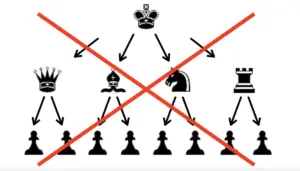
The extent to which living beings are truly alive emerges from mutual trust, commitments, and shared understanding woven into every relationship. Because of their scale and design, relationships with abstract, superhuman, anthropocentric institutions are entirely devoid of genuine shared understanding. The more a culture forces people to invest in these institutional structures, the less capacity remains for authentic relationships with living beings, ultimately diminishing our vitality.
Once these dynamics are understood, the prospective collapse of rigid institutions can be viewed through a sober lens as the natural expiration of an invalid social license. Modern society has much to learn from indigenous societies that have not yet been crushed by the myth of homo economicus.

Relationships can be understood as continuous, multi-modal, de-powered dialogues within ecologies of care. By reframing evolution around collaborative niche construction rather than cutthroat competition, we align with early insights from thinkers like Pyotr Kropotkin alongside contemporary voices. Love, understood as vulnerable mutual knowing, forms the cornerstone of a panpsychic relational philosophy grounded in life-affirming ecologies of care.
Sensitivity Profiles
All humans possess unique sensitivity profiles shaped by neurological baselines and lived experiences within specific ecological contexts. This is particularly true for hypersensitive neurodivergent people, many of whom navigate traumatic environments in a social world that systematically marginalizes and pathologizes them.
Data indicates that a vast majority of neurodivergent adults frequently feel overwhelmed, misunderstood, disrespected, and unsafe. Overall wellbeing depends on alignment between an individual’s sensitivity profile and their surrounding ecology of care. Because official diagnostic criteria for autism heavily overlap with symptoms of complex trauma, separating innate neurodivergent baselines from environmental trauma responses is exceptionally difficult.
Simplistic diagnostic labels rooted in the modern medical model often fail marginalized populations. Everyone wants their lived experience taken seriously, yet decontextualized individual therapies fall short. The neurodiversity movement advocates for intersectional solidarity beyond rigid diagnostic categories that obscure individual human realities.

Powered-up relationships generate cognitive dissonance, experienced as a deep dis-ease demanding resolution. Ignoring this dissonance leads to mental, spiritual, and bodily ailments. Hypersensitive individuals often possess a conscious awareness of this dissonance and actively seek to reduce it, whereas others tolerate it for extended periods, remaining unaware of its toll on their health.
Culture Co-Evolution
Major evolutionary milestones in the history of Gaia exhibit distinctly co-evolutionary characteristics, mirroring the emergence of biological cells and multicellular organisms. Cell biology demonstrates the complementary roles of abstract symbol systems and semantics in evolutionary processes. Semi-permeable cellular membranes provide a road-tested model for co-evolutionary interactions between organisms.
Cultural co-evolution at human scales relies on conscious collaborative niche construction rather than wasteful, head-to-head competition. Egalitarian hunter-gatherer societies have practiced these principles for hundreds of years, prioritizing values that foster omni-directional learning and community wellbeing.
The Human Spirit Within Gaia
Humans evolved to make sense of the world at human scales. Transparent, well-designed digital tools can extend human collaborative niche construction without centralizing decision-making power in the hands of authoritarian figures. Radical egalitarianism forms the architectural foundation of human adaptive intelligence, differing fundamentally from the social structures of other primates.

Viewing human nervous systems through this relational lens reveals the absurdity of defining "normalcy" or "adaptiveness" at the level of the isolated individual. Modern Western, Educated, Industrialized, Rich, and Democratic (WEIRD) societies have detached from their evolutionary roots, immersing populations in superficial spectacles and corporate-dominated communication channels.
In the ongoing cultural metamorphosis, Gaia remains the sole true authority. By critically examining academic disciplines, the mathematical sciences, and the engineering practices that frame modern investigations, society can uncover the pervasive cultural biases and pseudoscience embedded within the digital economy.
Reviving Trust in Humanity
When human-scale cultural organisms erode, human trust in both humanity and Gaia is shaken. The competitive frame of homo economicus normalizes the compulsion to appear independent and strong, instilling a culture of ubiquitous mistrust and mental health struggles. Autistic and neurodivergent research data consistently show an eagerness to help others paired with a deep-seated fear of asking for help.
Overcoming these systemic failures requires discarding the ideology of homo economicus and nurturing human-scale ecologies of care. As UN initiatives and cooperative models demonstrate across the globe, embracing Buddhist and Daoist values of compassion, humility, and simplicity offers a viable path toward healing. By abandoning life-denying institutions and fostering genuine human connection, humanity can navigate the transition toward a sustainable, life-affirming future within Gaia.