





At a time when modern industrial society faces compounding ecological crises and systemic disillusionment, thinkers and researchers across disciplines are increasingly looking to ancient philosophies, relational ecology, and the lived experiences of neurodivergent individuals to chart a new path forward. Core ideas found within Buddhist and Daoist spiritual traditions, alongside the commonalities shared across human-scale indigenous cultures, offer a profound framework for understanding humanity’s place within the living planet, or Gaia.
This perspective suggests that a compassionate frame of love—defined as vulnerable, mutual knowing—is entirely compatible with a panpsychic relational philosophy. At its core, this worldview posits that everyone wants their experience to be taken seriously. As embodied spirits compelled to make sense of this world, humans can only do so in good company and at a human scale.
Life as a Dynamic Feedback Loop
Observing that life creates conditions conducive to life, evolutionary thinkers like Janine Benyus highlight that the dynamic processes of existence consist fundamentally of feedback loops. Life is entirely relational, sacred, cyclical, fleeting, compostable, nested, regenerative, and forever mysterious for all who participate in it.


When examining high-dimensional spaces that describe Gaia—including the potential of homo ecologus—scientists and philosophers find that life is best conceptualized relationally, all the way from the bottom layers of physics upwards. Life consists of relationships, which function as feedback and learning loops. In aggregate, these loops build the foundation of what human perception experiences as consciousness. While science cannot scientifically prove to a quantifiable certainty that consciousness emerges in this exact way, it is equally incapable of disproving it. This reflects the inherent limits of human comprehensibility, much like the mathematical statements that can never be proven true or false within abstract symbolic systems.
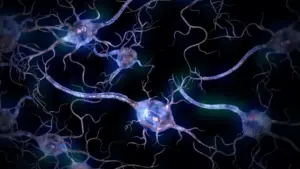
At biological scales, the smallest feedback loops emerge between molecules, giving rise to cell biology and molecular genetics. These scale up into bioregional terrestrial and marine ecosystems. Popular anthropocentric definitions of consciousness typically restrict the concept to animals with brains, inadvertently excluding the countless feedback loops operating at smaller and larger scales across living systems.
The Panpsychic and Spiritual Dimensions
Conceptualizing the universe entirely in terms of dynamic feedback and learning loops leads directly to a panpsychic philosophy, where consciousness is omnipresent across all levels of scale. This view aligns seamlessly with Eastern spiritual traditions such as Buddhism and Daoism, inviting humanity to move beyond anthropocentric viewpoints and recognize the cultural biases deeply embedded in modern industrialized notions of intelligence and success.

Buddhism, founded on the teachings of the historical Buddha in the 5th or 6th century BCE, centers heavily on the path toward awakening and liberation from dukkha, often translated as suffering or unease. This foundational focus on minimizing suffering corresponds directly with the deep, active desire of hypersensitive and neurodivergent individuals to minimize cognitive dissonance. It also highlights the widespread social friction that occurs when a culture normalizes or enforces high levels of cognitive dissonance over extended periods.
Similarly, Daoism emphasizes harmony with the Tao, an enigmatic process of transformation underlying reality. Daoist virtues—such as effortless action, naturalness, simplicity, compassion, frugality, and humility—resonate strongly with the sensitivity profiles of many neurodivergent individuals. Furthermore, they provide a timeless critique of anthropocentric empire-building that stretches back to ancient times, encouraging individuals to disengage from destructive societal machinations and embrace community-oriented wisdom.
Love, Relationships, and the Critique of Abstraction
The vitality of life emerges directly from mutual trust, shared commitments, and genuine understanding within relationships. However, modern institutional structures often establish abstract, superhuman-scale "relationships" that are entirely devoid of authentic shared experiences. As cultures pressure individuals to invest in these bureaucratic and economic abstractions, people lose their capacity for genuine connection with living beings, ultimately diminishing their sense of aliveness.

From this vantage point, the perceived "collapse" of modern institutions can be interpreted more soberly as the expiration of a social license that was inherently invalid from the start. Indigenous societies that have resisted the myth of homo economicus offer vital lessons in relational health. By understanding relationships as continuous, multi-modal, de-powered dialogues within ecologies of care, society can transition away from wasteful head-to-head competition toward collaborative niche construction.
Sensitivity Profiles and the Neurodiversity Paradigm
Every human possesses a unique sensitivity profile shaped by neurological baseline dispositions and lived experiences within specific ecological contexts. This reality is particularly pronounced for hypersensitive, neurodivergent individuals, many of whom navigate systemic marginalization, pathologization, and trauma in hypernormative industrial societies.
Research indicates that a significant majority of neurodivergent adults frequently feel overwhelmed, misunderstood, disrespected, or unsafe. Official diagnostic criteria for conditions like autism are frequently entangled with complex trauma symptoms, making it difficult to cleanly separate innate neurodivergent baselines from the chronic stress of living in an unaccommodating world. Consequently, simplistic and pathologising diagnostic labels centred on decontextualised individuals often fail to capture the richness of human experience, sometimes resulting in institutional harm, particularly for intersectionally marginalized groups.

Advocates within the neurodiversity and disability movements increasingly champion intersectional solidarity beyond rigid diagnostic categories. They point out that persistent, unbalanced feedback loops—such as powered-up relationships and rigid social hierarchies—generate acute cognitive dissonance. When suppressed over time, this dissonance manifests as mental, spiritual, and physical distress.
Co-Evolutionary Culture and the Path Forward
Major evolutionary milestones across the history of Gaia are inherently co-evolutionary. Just as cellular biology demonstrates the complementary roles of symbol systems and semantics through semi-permeable membranes, human cultures must evolve through collaborative niche construction rather than resource-intensive competition.
Egalitarian hunter-gatherer societies, shaped by hundreds of thousands of years of cultural co-evolution, prioritized values of mutual aid, humility, and decentralized learning. Reviving these priorities requires rethinking digital communication, collaboration, and institutional design for the coming centuries. Rather than attempting to sustain dying, superhuman-scale institutions driven by the myth of economic utility, communities can focus on providing palliative care for obsolete systems while building viable, human-scale alternatives.

As movements like the UN International Year of Cooperatives highlight, cooperative models offer essential pathways for addressing global challenges. By anchoring human activity in trusted, human-scale ecologies of care, and by embracing the wisdom inherent in both ancient traditions and modern ecological science, humanity can navigate the ongoing cultural metamorphosis toward a more equitable and life-affirming future.