


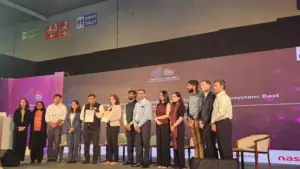


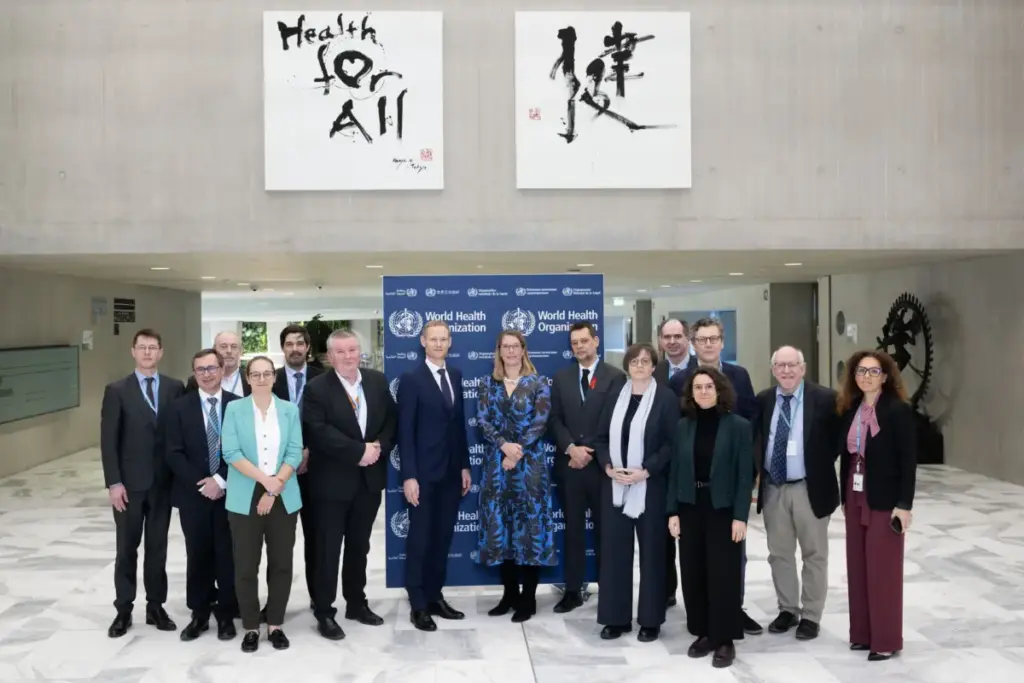
GENEVA — In a comprehensive three-day strategic dialogue, representatives from Belgium and the World Health Organization (WHO) met to review the robust progress of their longstanding partnership, charting a shared course to further boost collaboration on universal health coverage, health-systems strengthening, and equitable access to essential vaccines, medicines, and health technologies.
The high-level engagement brought together a diverse Belgian delegation alongside WHO leadership and technical experts from headquarters and the regional offices for Africa and for Europe. Headed by H.E. Christophe Payot, Ambassador of Belgium to the United Nations and other international organizations in Geneva, the delegation featured representatives not only from the Belgian Federal Government but also from the regional Flemish and Walloon governments, highlighting a unified national commitment to international health cooperation.
During the intensive multi-day sessions, participants discussed critical issues of strategic importance and exchanged views on aligning WHO’s overarching strategic directions with Belgium’s core development cooperation priorities within an evolving and increasingly complex global health landscape. The discussions allowed both partners to evaluate ongoing initiatives, address operational challenges on the ground, and ensure that mutual investments continue to yield maximum impact for vulnerable populations worldwide.
Reflecting on the productive exchanges, Mr. Koen Van Acoleyen, Minister Counselor at the Permanent Representation of Belgium to the UN, emphasized the value of the partnership during times of global uncertainty. "After listening to the leaders and experts of WHO, we now better understand how they are navigating these challenging times," Mr. Van Acoleyen said. "We are honoured that we can walk this road together."
Dr. Catharina Boehme, WHO Assistant Director-General for External Relations and Governing Bodies, warmly acknowledged Belgium’s steadfast commitment and multifaceted engagement. "We thank you for your support, honesty, and strong engagement for global health," Dr. Boehme noted. "Your efforts in supporting our work in Mozambique and Senegal are clear examples of the crucial work we accomplish together."
Accelerating equitable access to vaccines, medicines and health technologies
A central pillar of the dialogue focused on evaluating the current status and notable results achieved through the Access to Medicines programme, which receives vital financial support from Belgium. To ground the high-level discussions in operational realities, WHO illustrated its work and ongoing challenges by presenting a detailed case study of country-level implementation in Senegal.
The session also delved into WHO’s broader policies concerning equitable access and the promotion of local manufacturing capacities for health products in developing regions. Both parties recognized that ensuring the long-term sustainability of the Access to Medicines initiative remains a shared goal. They concurred that effective market-shaping strategies are key to guaranteeing that life-saving interventions remain affordable, available, and responsive to public health needs over the long term.
Health emergencies and pandemic prevention, preparedness and response
The strategic dialogue placed significant emphasis on global health security, reviewing WHO’s pivotal role in strengthening the worldwide architecture for health emergency prevention, preparedness, response, and resilience. Discussions tackled complex geopolitical and technical elements, including ongoing negotiations surrounding the global pandemic agreement and the practical implementation of the One Health approach, which recognizes the interconnectedness of human, animal, and environmental health.

To underscore the real-world impact of WHO’s operational capabilities during crises, technical experts demonstrated the organization’s crucial field work through presentations on emergency response activities in Gaza. The debate further expanded to address mounting contemporary threats, such as the acceleration of biological risks and zoonotic spillover events. Participants examined proactive risk mitigation strategies and evaluated how WHO and its member states can better collaborate to anticipate and counter emerging infectious threats before they escalate into international crises.
Universal Health Coverage (UHC)
Progress made under the UHC-Partnership served as another vital focal point for the delegations. Participants reviewed the collective achievements realized with Belgian support between 2021 and 2024, placing particular emphasis on outcomes within Belgium’s designated partner countries. Looking to the future, the partners explored opportunities to enhance collaboration at the country level, discussing potential frameworks for better aligning WHO country office programs with Belgium’s bilateral development cooperation initiatives.
To ground these policy discussions in concrete examples, the delegations reviewed work and operational hurdles encountered in the Democratic Republic of Congo. The visitors also received a comprehensive recap of WHO’s strategic policies and ongoing programmatic work regarding mental health integration within primary health care frameworks.
Beyond core UHC initiatives, the partners reviewed progress across other collaborative areas supported by Belgium, including specialized programs addressing Neglected Tropical Diseases as well as Sexual and Reproductive Health and Rights. Both sides reaffirmed that grounding these programs in rigorous, evidence-based approaches is essential for achieving sustainable health outcomes.
Looking into the future
As the three-day dialogue drew to a close, the partners turned their attention to the future trajectory of the Belgium-WHO collaboration framework. Discussions centered on shaping a renewed multi-year agreement and advancing toward an updated WHO-Belgium Country Cooperation Strategy.
Both delegations agreed that their enhanced partnership will serve as a vital instrument in supporting the ambitious global health agenda outlined in the WHO 14th General Programme of Work (GPW14). A shared vision emerged recognizing that universal health coverage and health-systems strengthening must remain at the very heart of GPW14 ambitions, functioning as the foundational scope across WHO’s ongoing prioritization efforts.
Concluding the strategic dialogue, Mr. Dirk Brems, Director of Thematic and Multilateral Cooperation at the Directorate-General for Development Cooperation and Humanitarian Aid, offered an optimistic perspective on the future of the alliance. "We recognize WHO as a trustworthy partner in global health. We felt proud hearing how crucial our support is to the Organization and how it is having a positive impact at country, regional, and global levels," Mr. Brems stated. "It’s important we continue these discussions as we tread uncharted territories, and we look forward to working together for strong and sustained multilateralism."