





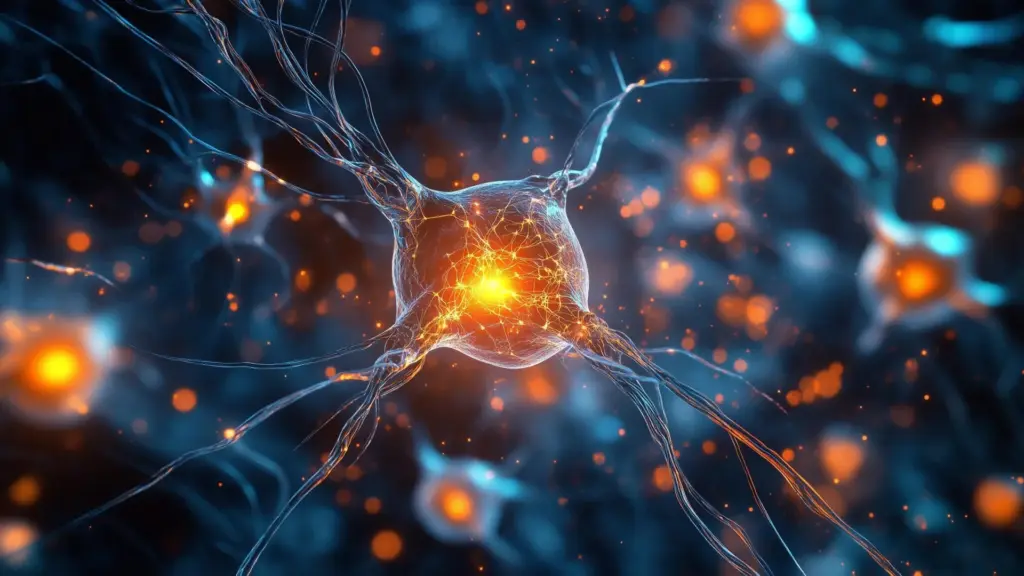
For decades, the prevailing consensus in neuroscience has been that the staggering cognitive capabilities of the human brain—our capacity for abstract language, complex mathematics, intricate imagination, and rapid invention—stem primarily from two factors: the sheer volume of our gray matter and the complexity of the "connectome," the massive, intricate web of connections linking our 100 billion neurons. We have long viewed the brain as a grand circuit board, where intelligence is an emergent property of billions of simple, binary "on-off" switches communicating in tandem.
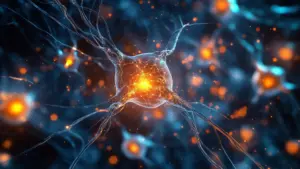
However, a groundbreaking study recently published in the Proceedings of the National Academy of Sciences (PNAS) has introduced a radical shift in this perspective. The research suggests that the secret to human intelligence may not lie solely in the quantity of our brain cells or the complexity of their network, but in the extraordinary, hidden computational power of the individual neurons themselves. According to this new research, human neurons are far more than mere biological switches; they are, in effect, highly sophisticated, independent information-processing units, functioning more like complex microchips than simple binary gates.
Human Neurons: Powerful Information Processors
The research, led by a team at the Edmond and Lily Safra Center for Brain Sciences (ELSC) at the Hebrew University of Jerusalem, including Profs. Idan Segev and Mickey London, alongside PhD students Ido Aizenbud and Daniela Yoeli, and in collaboration with Prof. Chris de Kock from the Free University, Amsterdam, posits that the individual building blocks of the human cortex possess computational capabilities far beyond those of their mammalian counterparts.
"People often think of a neuron as a simple switch that either turns on or off," Prof. Segev explained. "What we show is that a single human neuron is itself an extraordinarily sophisticated computing device."
This finding challenges the long-standing architectural model of the brain. If individual human cortical neurons are inherently more powerful than those found in other mammals, it implies that the evolutionary leap toward human consciousness may have been driven as much by the upgrading of individual biological components as by the expansion of the neural network. By looking at the neuron not as a passive transmitter of electrical signals, but as an active processor of data, researchers are opening a new frontier in our understanding of how the brain manages the heavy lifting of cognition.
Measuring the Computing Power of a Brain Cell
To arrive at these conclusions, the research team had to overcome a significant hurdle: how does one quantify the "computing power" of a single biological cell? The team developed a novel, systematic methodology that bridges the gap between neurobiology and computer science. By combining advanced computer modeling with the analytical power of artificial intelligence, they sought to determine the computational "cost" of imitating a human neuron.
The experimental logic was designed to be straightforward yet rigorous: if a digital, artificial "twin" of a neuron requires an immensely complex architecture—a deep neural network—to successfully replicate the behavioral output of a biological neuron, then that biological neuron must, by definition, be performing a high level of complex computation.
The researchers focused on how neurons process incoming information and translate it into a response. They found that human cortical neurons possess richly branching dendritic trees—the tree-like structures that receive signals from other neurons—and unique electrical properties that allow them to perform sophisticated tasks on incoming data. For instance, these individual cells demonstrated a remarkable ability to process visual information, such as the nuanced task of distinguishing between images of cats and dogs, a feat that would traditionally be attributed to the work of a large, multi-layered neural circuit.
The data revealed a striking advantage for the human brain. The individual cortical neuron acts as a stand-alone computing unit with abilities that rival those of the deep neural networks currently utilized in advanced artificial intelligence systems. This suggests that the brain is not merely a collection of simple switches organized into a complex architecture; it is a nested hierarchy of powerful, intelligent processors.
A New View of Human Intelligence
This discovery forces a re-evaluation of the evolution of human cognition. While the sheer size of the human brain compared to other primates is a well-documented factor in our evolutionary history, this research suggests that "hardware upgrades" at the cellular level were likely critical. If individual neurons are computationally deeper and more capable, the brain can achieve higher levels of processing with the same number of connections, or perhaps, achieve levels of thought that were previously impossible for other species.
The implications for neuroscience are profound. The researchers have established a broad, systematic framework that connects the physical structure of a neuron—the way it is shaped, how its dendrites branch, and its unique electrical behavior—to its specific computational output. This link between anatomy and function provides a new roadmap for researchers attempting to map the origins of higher-order thought. By understanding how individual cells compute, scientists are moving closer to deciphering the mechanisms behind learning, memory, and the elusive nature of human consciousness.
Human Neurons Could Inspire New AI
Beyond the biological implications, the study offers a provocative new direction for the field of artificial intelligence. Current machine learning systems, including the most advanced deep learning models, are constructed from highly simplified, artificial units. These units are based on a mid-20th-century understanding of neurons—essentially as basic linear processors that weigh inputs and produce a single output.
The Hebrew University research suggests that the future of AI might lie in moving away from these simplistic units and toward "brain-inspired" architectures. If engineers could develop artificial units that mirror the computational depth and complexity of a biological human neuron, it could lead to a new generation of AI that is significantly more efficient, powerful, and capable of nuanced understanding.
By emulating the biological efficiency of our own cortical cells, developers might overcome current bottlenecks in AI performance, where massive amounts of data and energy are required to solve problems that a single, biological human neuron might manage with far greater elegance. The prospect of "computationally deep" artificial units, designed to mimic the branching, electrical, and data-processing complexity of the human cortex, suggests that the next major breakthrough in machine intelligence may not come from adding more transistors or servers, but from changing the fundamental building blocks of the software itself.
As the team continues their work, the focus remains on the interplay between the structural beauty of the brain and the functional complexity of thought. By peeling back the layers of the individual neuron, scientists have uncovered a level of intelligence that was previously hidden in plain sight. We are beginning to see the human brain not just as a network of wires, but as a vast, highly efficient, and extraordinarily powerful colony of microscopic, biological computers, each one contributing to the complex tapestry of human experience. This discovery marks a pivotal moment in our quest to understand not just how we think, but what we are made of.