






Core ideas within Buddhist and Daoist spiritual traditions are deeply reflective of the commonalities found across many human-scale indigenous cultures. A compassionate framework of love, understood as vulnerable mutual knowing, is inherently compatible with a panpsychic relational philosophy. Ultimately, everyone wants their experience to be taken seriously. We are embodied spirits, compelled to make sense of this world, and we can only do so in good company.
Life
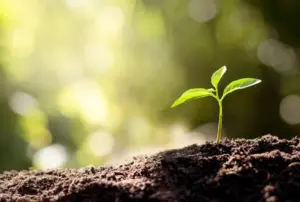
As Janine Benyus famously observed, life creates conditions conducive to life. This simple observation hints at the fundamental truth that the dynamic process of life consists of continuous feedback loops. Life is entirely relational, sacred, cyclical, fleeting, compostable, nested, regenerative, and it forever remains mysterious for all participants.
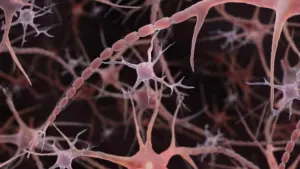
Any high-dimensional space that provides a reasonable description of Gaia—meaning all of life, including the potential of homo ecologus—is best conceptualized relationally, all the way from the foundational layers of physics upwards. Life consists entirely of relationships, which operate as feedback and learning loops. In aggregate, these loops constitute the building blocks of what our human animal-scale perception experiences as consciousness. There is no shortage of thinkers who conceptualize life this way, a perspective that becomes transparent when studying Eastern spiritual and philosophical texts.
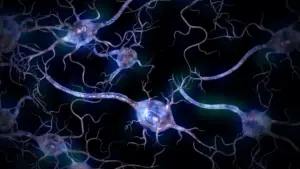

As humans bound by biological limitations, we will never scientifically "prove" to a quantifiable degree of certainty that consciousness emerges in this exact way, but science will equally never be capable of disproving it. This does not render science useless; it merely highlights the boundaries of science, which are tied to the limits of human comprehensibility. Similarly, within the abstract symbolic universe of mathematics, there are statements that can never be proven true or false, and we are not even equipped to identify all such statements.
At the spatial and temporal scales relevant to biological and ecological systems, the smallest feedback loops emerge between molecules, resulting in the astonishing complexity of cell biology and molecular genetics. These loops scale upward into bioregional terrestrial and marine ecosystems across Gaia. Popular anthropocentric conceptions of consciousness at best generalize to animals with brains, entirely excluding the vast network of feedback loops operating at smaller and larger spatial and temporal scales.
Spirits
Powered-up feedback loops occur when information accumulates disproportionately within certain living cells or beings over time. These are always temporary phenomena relative to the lifespans of the entities involved. Human bodies grow to a certain scale and remain intact for a lifetime, during which internal molecular feedback loops are maintained in a balanced state, fueled by external energy from living food and generating waste that is readily reassembled into new life by the sun.

Similarly, social feedback loops between humans grow into relationships that remain stable throughout a lifetime. These relationships are maintained through shared experiences and mutual understanding, resulting in cultural outputs that integrate naturally back into the local ecology of care.
This universe of dynamic feedback loops points directly toward a panpsychic philosophy where consciousness is omnipresent across all scales, aligning closely with Eastern traditions like Buddhism and Daoism. It invites non-anthropocentric viewpoints, challenges industrial biases regarding intelligence and success, and draws attention to our cognitive and emotional boundaries.
Buddhism, as a philosophical tradition based on the teachings of the historical Buddha, emphasizes a path of development leading to awakening and liberation from dukkha—often translated as suffering or unease. This focus on minimizing suffering corresponds directly to the desire of neurodivergent individuals to minimize cognitive dissonance, while highlighting the societal dangers of normalizing high levels of cognitive dissonance.

Similarly, Daoism emphasizes harmony with the Dao, focusing on effortless action, naturalness, simplicity, and the virtues of compassion, frugality, and humility. These values offer a timeless critique of anthropocentric empire-building, aligning closely with the operating principles of egalitarian hunter-gatherer societies and incorporating humor to subvert centralized power.
Love
The extent to which we are truly alive emerges from mutual trust, commitments, and shared understanding across our relationships. By contrast, relationships with abstract, super-human scale institutions are devoid of genuine shared experience. The more a culture forces individuals to invest in such institutional relationships, the less capacity remains for authentic connections with living beings.
When we reorient our lives toward a human scale, the prospect of institutional collapse can be viewed soberly as the expiration of an invalid social license. There is much to learn from indigenous societies that have not been fully subjugated by the myth of homo economicus. Relationships can be understood as continuous, de-powered dialogues within ecologies of care, reflecting a collaborative framing of evolution that contrasts sharply with relentless competition.

Human sensitivity profiles are shaped by neurological baselines and ecological contexts. This is particularly pronounced for hypersensitive neurodivergent people, many of whom experience marginalization and trauma in hypernormative industrial societies. Official diagnostic criteria for autism are frequently entangled with complex trauma responses, revealing the limitations of a medical model that pathologizes individuals out of context. Intersectional solidarity and a recognition of diverse sensitivity profiles offer a more accurate understanding of human diversity than rigid diagnostic manuals.
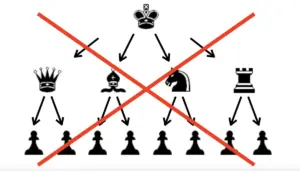
Cultural co-evolution mirrors the transition from single-celled organisms to multi-celled life, emphasizing ecological relationships over species-specific competition. Egalitarian hunter-gatherer societies demonstrate that minimizing head-to-head conflict is foundational to sustainable living. Moving away from power-driven hierarchies toward collaborative frameworks allows us to design digital and social tools that support human scale interaction rather than amplifying destructive impulses.
Ultimately, humanity is called to transition from the life-denying doctrine of homo economicus to the life-affirming ethos of homo ecologus. By rebuilding trust within human-scale ecologies of care and honoring the wisdom inherent in Gaia, we can navigate the complexities of cultural metamorphosis and foster genuine partnership systems for generations to come.