








In contemporary discourse, the concept of tribalism is almost universally burdened with negative connotations, frequently treated as an undesirable psychological flaw that yields dangerous biases. However, a deeper, more rigorous analysis suggests that modern antipathy toward tribalism is largely the product of superficial research alongside a collective cognitive and emotional blind spot. This blind spot obscures the immense collaborative potential inherent in networked, egalitarian, human-scale cultural organisms.
The Trouble with Tribalism
The 2019 study Tribalism is Human Nature, published in the journal Current Directions in Psychological Science, serves as a prime illustration of how Western psychological disciplines frame the phenomenon. The researchers argued that while tribal loyalties can inspire noble behaviors, they frequently compel individuals to sacrifice sound reasoning and judgmental accuracy for the sake of group belonging and commitment. According to the study’s authors, tribal loyalties foster biases because fervent beliefs, strong emotional displays, and costly commitments function as trustworthy signals of allegiance. Dogmatism and resilience in the face of contrary evidence often enhance the persuasiveness of these signals, demonstrating an unwavering dedication to a group’s ideology despite potential consequences like factual error.
Furthermore, the study asserted that humans evolved in the context of intense intergroup competition, where groups composed of loyal members consistently outperformed those that were not. Consequently, selective pressures have supposedly sculpted human minds to be inherently tribal, with group loyalty and concomitant cognitive biases existing across all populations. The authors concluded that tribal bias is a natural and nearly ineradicable feature of human cognition from which no group is immune, noting that political polarization in modern spheres heavily mirrors these ancient coalitional conflicts.

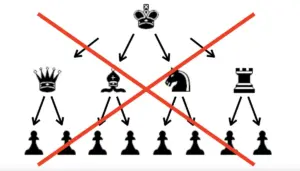
While these conclusions acknowledge certain beneficial aspects of tribalism—such as group cohesion and moral purposes like supporting disadvantaged groups—their foundational premises reveal a distinct cultural bias. The assumption that human evolution was driven primarily by intense intergroup competition stems from the internalized worldviews common in hierarchically structured empires. Culturally well-adjusted individuals embedded within massive institutional states often view the living world as fundamentally competitive, rendering them largely incapable of imagining genuinely collaborative relationships between distinct groups.

The Reality of Human-Scale Collaboration
Outside the borders of historical and modern empires, anthropology reveals no shortage of egalitarian, collaborative cultural environments, even if the vast majority of contemporary humans find themselves trapped within powered-up institutional landscapes. These egalitarian groups typically rely on sophisticated conflict resolution strategies designed to prevent disputes from escalating rather than engaging in a naive denial of tension.
Moreover, conventional psychological theories concerning the propagation of beliefs within and between tribes frequently overlook human diversity and gloss over the distinct ways different categories of belief shape cultures. Persuasion by external figures is not necessarily the primary source of human belief systems. The negative characteristics typically associated with tribalism only emerge when tribes expand far beyond a sustainable human scale, or when groups that lack a culture of inter-group egalitarianism collide in resource-constrained environments.
Modern industrial societies, having spent more than two centuries separated from the visceral experience of operating as an integral part of a human-scale cultural organism, suffer from a profound cognitive and emotional blind spot. This modern condition acts much like a cataract, creating a cultural blindness toward authentic human community and the broader cycles of life. Direct experience with human-scale cultural organisms is now largely confined to indigenous communities and those who have intentionally rediscovered collaborative niche construction through egalitarian worker cooperatives. Within the narrow Overton window of the global monoculture, indigenous populations and neurodivergent individuals frequently occupy a precarious space, viewed by mainstream systems through a lens that ranges from undesirable to entirely non-human.
Workplace Culture and Institutional Dysfunction
The practical implications of these structural dynamics are readily apparent to those operating outside hypernormative institutional frameworks. Contemporary workplace cultures across various governmental and corporate entities frequently exhibit severe systemic dysfunctions. Across numerous public service departments and municipal agencies, waves of resignations persist even during economic downturns when alternative employment is scarce.

Toxic workplace environments are not isolated anomalies; rather, they represent the visible symptoms of a pervasive institutional culture that runs through every layer of modern life. This widespread systemic distress helps explain the immense popularity of works like The Myth of Normal: Trauma, Illness, and Healing in a Toxic Culture by Gabor Maté.
In competitive institutional environments, the values professed by culturally well-adjusted individuals frequently diverge from their actual behaviors. Participatory research into cognitive dissonance indicates that neurodivergent individuals often struggle with internalized blame after repeatedly being disadvantaged by participants in the standard competitive economic game. This conventional game consistently prioritizes successful perception management and short-term performance over genuine honesty and integrity.
Mutual Aid and Compassion in the Present
When examining these dynamics alongside traditional philosophies, observers note that individuals generally operate to the best of their ability based on their unique personal histories, sensitivity profiles, and underlying values. Accepting the cognitive dissonance inherent in competitive environments without blaming individuals allows people to maintain their capacity for trust. This approach enables mutual aid networks to flourish quietly within the structural cracks of the global monoculture.
Minimizing exposure to the futile debates engineered by digital social media and hyper-competitive environments is vital for human well-being. As industrial management expert W. Edwards Deming observed decades ago, merit-based reward systems and short-term performance metrics ultimately annihilate long-term planning and genuine teamwork. When promotion relies on outperforming peers rather than collaborative achievement, systemic fear takes root, crippling organizational contributions and eroding trust.

Overcoming these systemic barriers requires embedding oneself within small, trustworthy ecologies of care that reject hyper-competitive models in favor of collaborative niche construction. Incrementally learning to nurture genuine, trusted relationships is a deliberate process that resists quick-fix programs and commercialized silver bullets. Building thriving cultural organisms takes time, relying on deep trust as a catalyst for organic growth up to human scale.
As communities work to build a global knowledge commons centered on egalitarian relationships, they tap into a wealth of indigenous wisdom and shared human experience. Creating spaces of deep trust demands immense commitment and a willingness to confront and dismantle destructive institutional narratives, ultimately paving the way for renewed communal and ecological well-being.