






By Cheryl Hall
June 23, 2026
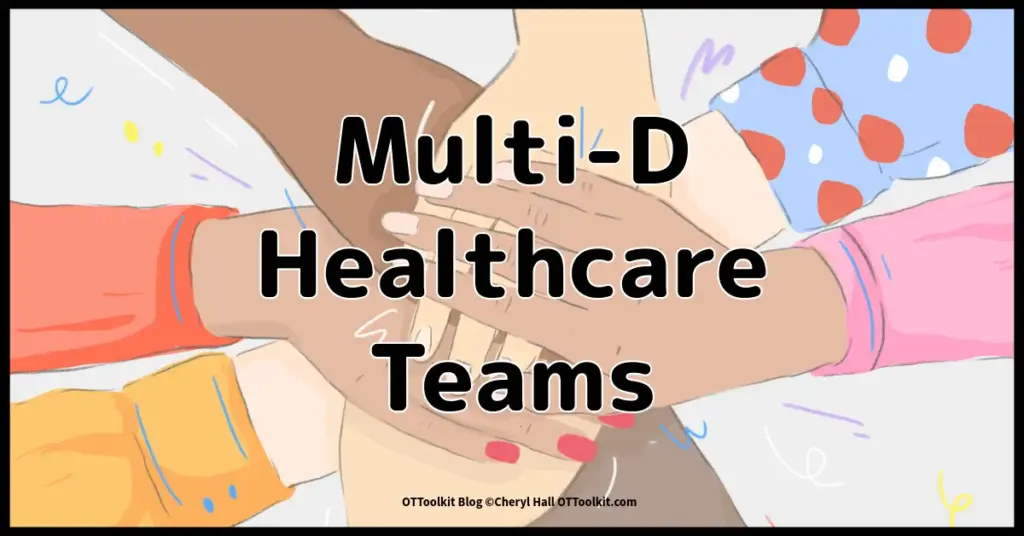
As an occupational therapist, have you ever found yourself feeling overlooked or undervalued by the broader clinical team? It is a sentiment that resonates across the healthcare spectrum, transcending the boundaries of any single discipline. While OTs often feel the sting of being sidelined, this experience is not unique to our profession. If you engage in candid conversations with nurses, physician assistants, physical therapists, or speech-language pathologists, you will quickly discover that they, too, have personal anecdotes about feeling disconnected from the primary decision-making processes within their organizations. Yet, despite these systemic challenges, the objective remains constant and universal: it is all about the patient. It is an established clinical truth that patients navigating complex medical conditions achieve better outcomes when occupational therapy is recognized as an active, integrated participant in the multidisciplinary team.
This ongoing struggle for visibility and integration is why recent efforts to formalize interprofessional education are so critical for the future of healthcare. A notable development in this arena comes from the University of Wisconsin-Milwaukee, which has launched a significant initiative to bring together students from occupational therapy, physical therapy, speech-language pathology, and nursing for a comprehensive interprofessional education simulation. The project, titled "Building Better Care through Teamwork—Expanding Inter-Professional Simulation at UWM," serves as a blueprint for how academic institutions can bridge the gap between classroom theory and the chaotic, high-stakes reality of clinical practice.
The students who participated in the UWM simulation emphasized that the value of the experience extended far beyond the technical skills acquired. They reported that the most profound takeaway was the opportunity to gain a deeper understanding of the distinct roles, scopes of practice, and unique perspectives that other disciplines bring to the bedside. By stepping out of their academic silos, these students began to build essential competencies in communication, collaboration, and leadership. These soft skills are increasingly recognized as being just as vital as clinical knowledge, as they directly influence the quality of patient care and the efficacy of the entire treatment plan. This initiative highlights a path forward for the healthcare industry: if we want to build better care, we must start by training our future clinicians to view themselves as members of a cohesive unit rather than isolated practitioners.
The necessity for these interdisciplinary approaches has never been greater. In our current healthcare landscape, the trend toward hyper-specialization has created a paradox: while clinicians are becoming more expert in their specific niches, the patient population is simultaneously becoming more complex. Managing patients with comorbidities and multifaceted needs requires a synthesis of perspectives that no single professional can provide alone. Interdisciplinary teams are most commonly deployed in these complex cases, particularly during the high-stakes periods of care planning meetings and transitions of care—such as discharge planning—where the risk of error is highest.
Occupational therapists, with our inherently holistic perspective, are uniquely positioned to add value to these discussions. Our expertise in functional performance, environmental adaptation, and the facilitation of patient independence is often the missing piece in a plan that focuses solely on pathology or medical stabilization. When we sit at the table, we must be prepared to contribute meaningfully, advocating for the functional reality of the patient’s life outside the hospital walls.
The effectiveness of these team-based approaches hinges almost entirely on the quality of communication. For an OT, effective communication means moving beyond general clinical updates and focusing on the "why" behind our interventions. We must articulate the functional impact of our assessments in ways that resonate with the broader team. For instance, when discussing a patient’s readiness for discharge, our input is invaluable if we can clearly communicate how functional deficits—such as poor executive functioning or diminished motor control—will manifest as safety risks in the home environment.
To elevate our role, our charting and verbal contributions must be concise, specific, and actionable. We should avoid vague observations and instead provide clear details regarding the necessary adaptive equipment, the exact level of physical assistance required for tasks, and the specific home modifications that would allow for a safe transition. Furthermore, proactive collaboration is essential to prevent the frustration of service overlap. By regularly consulting with physical therapists and speech-language pathologists, we can ensure that our interventions are complementary rather than redundant. This collaborative spirit not only optimizes the patient’s schedule and energy but also demonstrates a professional respect that strengthens the team dynamic. Above all, we must consistently emphasize the unique perspective of occupational therapy: a holistic approach that addresses the real-life tasks most vital to a patient’s independence and their ability to find enjoyment in daily living.
Beyond the individual clinician’s actions, there is a broader responsibility to advocate for a team-based culture within our respective organizations. We must champion the systemic advantages of this approach to leadership, highlighting how it benefits the organization as much as the patient. A robust, interdisciplinary team approach has been shown to reduce medical errors, lower readmission rates, and improve the management of chronic conditions—all of which are key metrics for hospital performance and patient satisfaction.
When organizations successfully eliminate clinical silos, they empower their staff to optimize workloads by assigning tasks based on the specific expertise of each professional. This not only speeds up clinical decision-making but also enhances the overall quality of care. Perhaps most importantly in the current climate of widespread healthcare fatigue, effective team dynamics can serve as a powerful buffer against clinician burnout. By sharing the mental and emotional load of complex cases and fostering a culture of peer learning, teams create an environment where clinicians feel supported rather than isolated.
The evidence is clear: teams are a powerful, transformative tool in the delivery of modern healthcare. They are not merely a logistical convenience but a clinical necessity for providing safe, efficient, and compassionate care. For the occupational therapist, the call to action is twofold. First, we must hone our communication skills and prepare to be vocal, evidence-based contributors to the complex cases that define our work. Second, we must act as advocates within our organizations, pushing for structures that encourage, reward, and sustain the team approach. As we continue to bridge the gaps between our disciplines, both the patients we serve and the clinicians we work alongside will be significantly better off. By shifting the focus from the individual practitioner to the collective power of the interprofessional team, we can ensure that occupational therapy is not just present, but central to the future of healthcare.