








Scientists have identified a specific, underlying brain signal that may serve as a common denominator for the diverse and often bewildering array of symptoms associated with schizophrenia. The discovery, which sheds new light on why the disorder manifests through such a wide spectrum of impairments—ranging from sensory perception and motor coordination to complex speech patterns—suggests that seemingly disparate clinical features may actually stem from a singular, shared disruption in how the brain processes information.
Schizophrenia remains one of the most complex and challenging psychiatric disorders to treat and diagnose. It fundamentally alters how individuals experience their environment, interact with the people around them, and communicate their internal states. Traditionally, clinicians and researchers have studied these symptoms as distinct, compartmentalized features of the condition. However, a landmark study published in the journal Science Advances suggests that these symptoms may share a common biological mechanism, offering a potential path toward more unified diagnostic and therapeutic approaches.
The study was a collaborative effort involving researchers from McGill University, the McConnell Brain Imaging Centre, the University of Montreal, the Research Centre of the University of Montreal Health Centre, and the Douglas Research Centre. By bridging these institutions, the team sought to identify a common thread that could explain the multifaceted nature of the disorder.

A Weakened Brain Signal Links Multiple Schizophrenia Symptoms
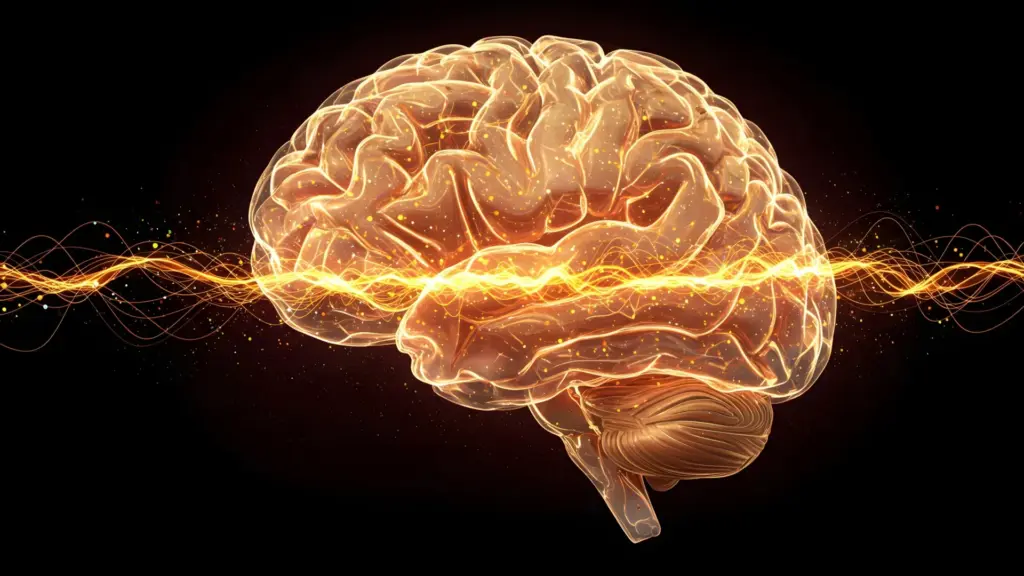
To investigate the possibility of a shared mechanism, the research team conducted a controlled study comparing 25 individuals diagnosed with schizophrenia against 25 healthy participants. The core of their investigation centered on "beta-band activity"—rhythmic patterns of electrical oscillation within the brain that are essential for orchestrating the timing of information processing, sensory perception, and the execution of movement.
During the study, participants engaged in a series of tasks designed to measure the precision of their temporal perception. Specifically, subjects were required to judge the timing of visual and auditory stimuli. Simultaneously, the researchers conducted detailed analyses of the participants’ speech patterns, looking for markers of disorganized thinking—a hallmark symptom of the disorder.
The results revealed a striking and consistent pattern. Participants diagnosed with schizophrenia exhibited significantly weaker and slower beta-band activity compared to the healthy control group. More importantly, there was a direct correlation between the severity of the neurological signal abnormality and the clinical manifestation of the disease: individuals with the most pronounced deficits in beta-band activity were also those who struggled the most with the timing of sights and sounds, demonstrated the highest levels of disorganized speech, and suffered from more severe overall clinical symptoms.
The fact that these three distinct features—sensory timing, verbal communication, and clinical severity—were all tethered to the same neural signature provides compelling evidence that a shared underlying process is likely contributing to the diverse effects observed in patients.
A New Window Into How the Brain Processes Reality
The discovery offers researchers a new perspective on how the human brain constructs, maintains, and updates its model of the world. "This gives us early but compelling evidence that measuring the brain’s operations, especially how it builds and revises its own model of the world, may help us appreciate that there is a common thread behind the confusing array of symptoms we see in disorders like schizophrenia," said Dr. Lena Palaniyappan, senior author of the study, Professor of Psychiatry at McGill, and director of the Centre of Excellence in Youth Mental Health at the Douglas Hospital.
The human brain does not passively receive sensory input; rather, it is constantly engaged in a dynamic process of utilizing incoming information to refine its understanding of the surrounding environment. This predictive processing is what allows an individual to interpret sensory data, anticipate future events, and coordinate physical actions with precision. The new findings suggest that when the brain’s beta-band oscillations are weakened, this entire predictive framework may be disrupted, leading to the varied and often debilitating symptoms that define schizophrenia.
To achieve this level of detail, the researchers utilized high-resolution magnetoencephalography (MEG). This sophisticated imaging technique allows scientists to track the tiny magnetic fields generated by the brain’s electrical activity with exceptional temporal and spatial precision. The scans, performed at the McConnell Brain Imaging Centre at the Montreal Neurological Institute-Hospital (The Neuro), provided the researchers with an granular view of neural activity that would be impossible to capture with standard EEG or MRI scans.
"What struck us was that the same weakened brain signal kept showing up wherever we looked, whether patients were processing a sound, a sight or completing a movement," noted Hsi (Tiana) Wei, the study’s lead author and a postdoctoral scholar in McGill’s Department of Psychiatry and the Douglas Research Centre. "Seeing the same pattern across these different domains suggested there may be a common underlying process linking the symptoms."
Could the Discovery Help Detect Psychosis Earlier?
Beyond the immediate theoretical implications for understanding the pathology of schizophrenia, the study offers hope for more practical clinical applications. One of the most significant challenges in modern psychiatry is the delayed identification of psychosis, which often begins to manifest during adolescence. Because the early warning signs of schizophrenia can be subtle and are frequently missed, patients often go without support during the critical early stages of the illness.
Psychosis represents a profound disruption in how a person perceives or interprets reality, often involving distressing experiences such as hallucinations or delusions. If the neural signatures identified in this study can be validated, they could eventually serve as a biomarker to identify young people who are at a higher risk of developing these conditions.
"The very first sign of schizophrenia begins in our adolescence, but this often gets missed for a long time," Dr. Palaniyappan explained. "If this finding is confirmed in larger samples, we may have a potentially useful method to identify who, among youth seeking help for mental health, needs extra support to prevent psychosis."
Despite the optimism surrounding these findings, the research team is careful to emphasize that the results are preliminary. The study was limited to a total of 50 participants, a modest sample size that limits the generalizability of the findings at this stage. Consequently, the team stressed the necessity for larger, independent studies to verify these associations.
"This is a first, modest-size study, and the associations with speech and clinical severity will need to be tested in larger independent samples before we can be confident in them," Wei stated.
Looking forward, if future research confirms that beta-band activity is indeed a reliable indicator of symptom severity and onset, it could transform the clinical approach to schizophrenia. Beyond its use as a diagnostic tool, the brain signal itself may represent a viable target for future therapeutic interventions. By understanding the common neural mechanism that unites these diverse symptoms, the medical community may one day be better equipped to provide early, targeted support to those at risk, potentially altering the long-term trajectory of the disorder.