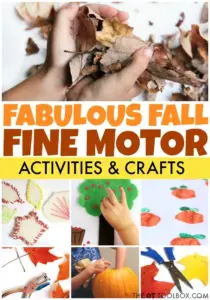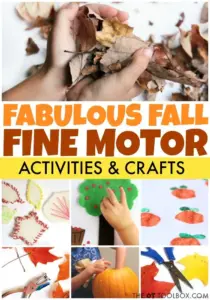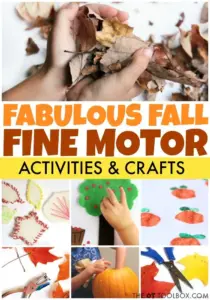








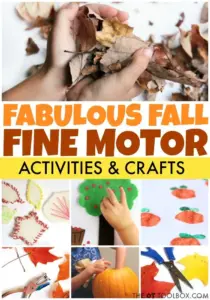
As crisp autumn air arrives and seasonal motifs like changing leaves, pumpkins, and apples fill classrooms and homes, pediatric occupational therapists and educators are leaning into fall-themed materials to support crucial childhood development. Rather than choosing seasonal projects simply for holiday fun, professionals are leveraging autumn elements to systematically target foundational physical capabilities, including hand strength, finger dexterity, scissor proficiency, visual-motor integration, and handwriting development.
The transition into cooler weather offers a natural influx of tactile and visual stimulation that can be seamlessly integrated into therapeutic interventions and everyday play. Experts note that many seasonal craft and sensory activities address multiple developmental domains simultaneously, allowing practitioners to adapt exercises to meet the specific needs of toddlers, preschoolers, and early elementary students.
To support families and clinicians, specialized resources such as seasonal sensory booklets have been developed to encourage both fine and gross motor movements through immersive autumn experiences. These materials highlight how everyday items—from backyard foliage to common household recyclables—can become powerful tools for developmental growth.
Fall Hand Strength Activities
Building hand and finger strength is essential for daily tasks such as manipulating clothing fasteners, opening containers, and maintaining a proper pencil grasp. When small hand muscles are weak, children often fatigue quickly during writing or drawing tasks. Autumn themes provide diverse opportunities to introduce resistance in playful ways.
Apple-themed geoboards, for instance, require children to stretch rubber bands across pegs to recreate specific fruit designs. This action provides controlled resistance to the fingers and hands while demanding precision and a controlled release, simultaneously supporting bilateral coordination and visual-motor planning. Therapists can easily adjust the difficulty by swapping in thicker, more resistant bands or simplifying visual patterns for younger participants.
Similarly, classic play dough activities offer resistive feedback that targets the intrinsic muscles of the hands. Rolling, squeezing, pinching, and pressing dough aids in arch development, wrist stability, and the establishment of pincer and tripod grasps. Therapists frequently enhance these exercises by hiding miniature fall erasers, beads, or leaves within the dough or by pairing the medium with seasonal shape cards to incorporate tactile and proprioceptive sensory input.
Another effective approach involves hole-punching activities using apple or leaf templates. Operating a standard hole punch requires sustained hand force and bilateral coordination, as one hand stabilizes the paper while the other exerts continuous pressure, effectively building the gross grasp strength necessary for academic and self-care tasks.
Fall Dexterity Activities
Manual dexterity relies on the brain and hands working together to perform fast, precise, and coordinated finger movements. When children struggle with dexterity, everyday tasks involving small objects can become frustrating. Seasonal manipulatives—such as craft pom-poms, seeds, paper clips, and small craft items—transform routine tasks into targeted exercises for finger manipulation.
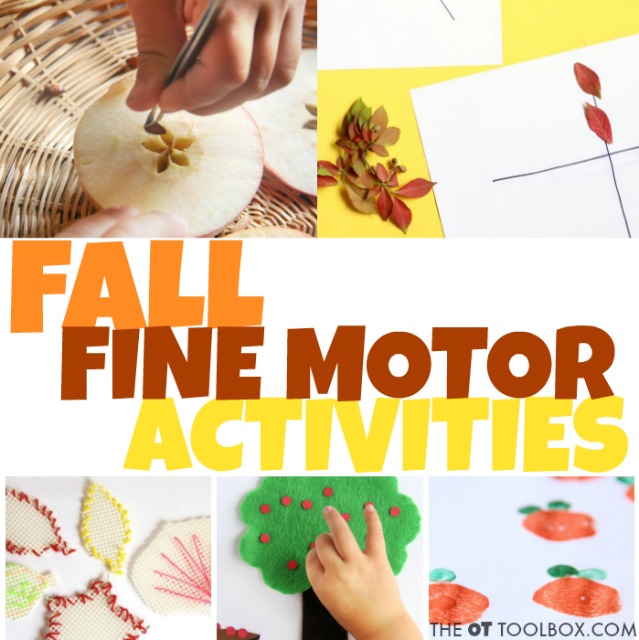
Using tongs or tweezers to transfer fall-colored pom-poms into ice cube trays or muffin tins refines fingertip precision and eye-hand coordination. The precision required can be easily graded by altering the size of the pom-poms or changing the grabbing tools.
Paper clip counting cards offer another portable dexterity exercise. Attaching the correct number of paper clips to laminated apple cards requires exact fingertip movements and encourages cooperative bilateral hand use. Meanwhile, fall tree geoboard printables challenge children to stretch and position rubber bands using their fingertips rather than grasping with the entire hand, fostering isolated finger movement and spatial awareness.
Scissor Skills and Cut-and-Paste Crafts
Cutting with scissors is a complex task that demands distinct roles for each hand: the dominant hand opens and closes the blades along a visual path, while the non-dominant helper hand stabilizes, turns, and guides the paper.
Specialized apple-cutting practice sheets allow children to practice following structured visual lines, giving therapists an opportunity to assess stability, grip maturity, and paper-turning coordination. For children with access to outdoor autumn foliage, cutting real leaves into small pieces or snipping around edges introduces a natural sensory element that builds strength and line awareness.
More complex projects, such as farm-themed cut-and-paste crafts, elevate the cognitive and physical demands of an activity. Beyond cutting out individual components, children must visually determine where pieces belong, orient them correctly, follow an assembly sequence, and apply glue. This multi-step process integrates scissor proficiency with visual-spatial skills, executive functioning, and direction-following.
Visual-Motor Integration in Autumn Tasks
Adequate hand strength and dexterity alone are not always enough for academic success; children must also coordinate what they see with how their hands move. Visual-motor integration is vital for tasks ranging from copying designs off a whiteboard to writing evenly on lined paper.
Fall-themed directed drawing pages—featuring acorns, leaves, and pumpkins—ask children to observe a visual model and reproduce its spatial relationships on paper. By determining where lines begin and end, children practice the exact visual-motor pathways required for letter formation.
Pattern block designs combine fine motor manipulation with visual discrimination and spatial awareness as children select, orient, and position geometric pieces to match a template. Additionally, seasonal "I Spy" seek-and-find activities train visual scanning, figure-ground perception, and sustained visual attention. Therapists often enhance these visual tasks by adding a fine motor component, such as having the child circle items, cover them with small counters, or attach a clothespin to the corresponding picture.
Fall Handwriting Activities
Rather than practicing isolated letters out of context, seasonal writing prompts provide a meaningful framework for handwriting development. Printable prompt sets can be adapted to suit varied developmental stages across a single therapy caseload or classroom.
Emerging writers can focus on writing a single fall-themed vocabulary word, while beginning writers construct simple sentences. Developing writers respond to short thematic prompts, and older students plan and draft complete paragraphs. This flexible approach allows educators and therapists to target specific handwriting components—such as line awareness, letter spacing, sizing, formation, and writing endurance—within an engaging, seasonal context.
No-Prep and Nature-Based Fine Motor Ideas
Many effective developmental activities require little to no preparation and utilize items found directly in the yard or home. Natural materials provide rich sensory and physical challenges:
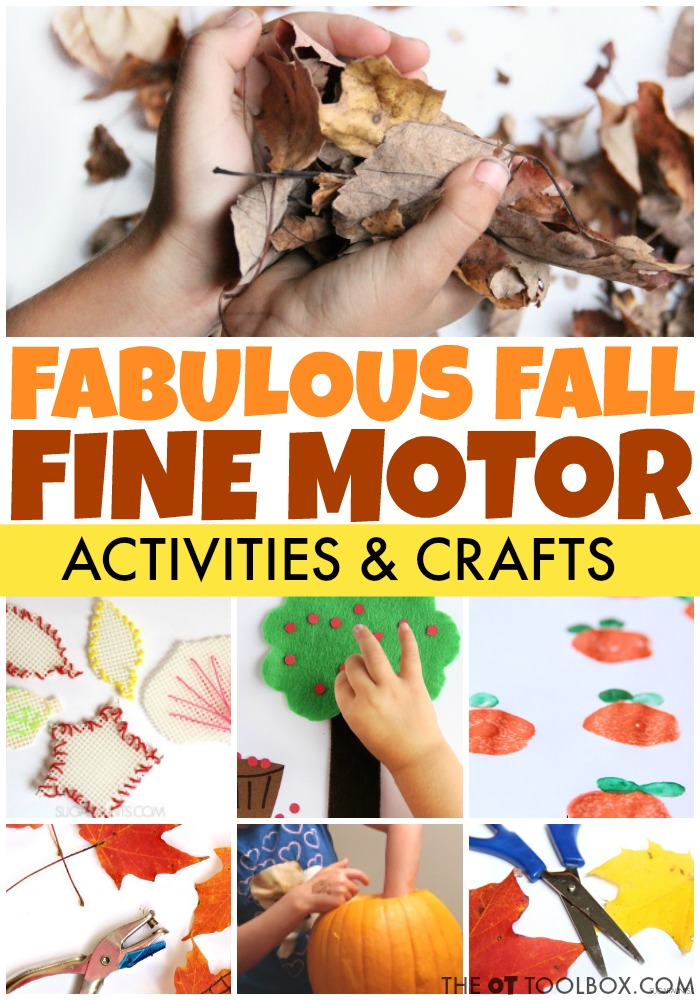
- Leaves can be torn, crumpled, punched, cut, sorted, or strung.
- Acorns can be picked up with tongs, sorted, counted, or transferred.
- Play dough can be molded into apples, pumpkins, and gourds.
- Paper scraps can be torn for collages or linked to create paper chains.
- Clothespins can be clipped onto cardboard trees to simulate falling foliage.
Clinicians and educators emphasize that these playful interventions directly reinforce the functional skills children need for academic and everyday independence, proving that seasonal celebrations can successfully double as meaningful developmental milestones.