






For decades, the central dogma of neurobiology has held that the brain is an immunologically privileged site—a sequestered, closed system shielded by the blood-brain barrier. Under this long-standing model, the brain’s specialized immune cells, known as microglia, were thought to be established during embryonic development and to remain a self-sustaining, isolated population throughout an individual’s lifespan. The blood-brain barrier was perceived as a rigid gatekeeper, preventing the systemic immune system from encroaching upon the delicate architecture of the central nervous system.
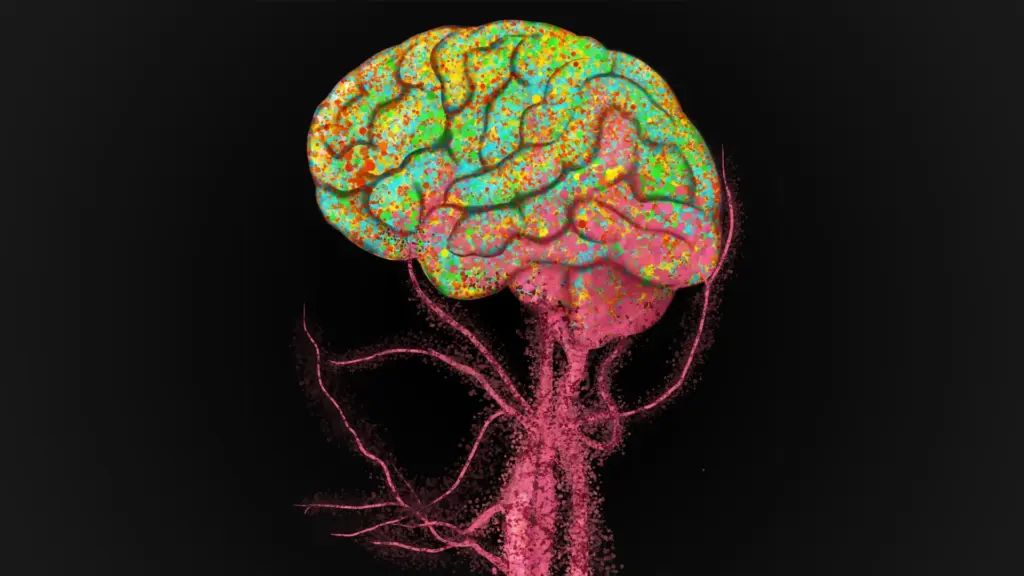
However, groundbreaking new research from Stanford Medicine is fundamentally challenging this paradigm. In a study published recently in the journal Nature, scientists have discovered that large numbers of immune cells from elsewhere in the body do not merely interact with the brain; they actively migrate into it as humans age. This revelation not only reshapes our fundamental understanding of how the human brain ages but also opens entirely new frontiers for the treatment of complex neurodegenerative conditions, such as Alzheimer’s disease.
The research, which was supported in part by the Knight Initiative for Brain Resilience at the Wu Tsai Neurosciences Institute, suggests that the brain is far more porous to the body’s systemic immune responses than previously imagined. "We usually think of the brain as a closed system," said Julia Belk, a postdoctoral scholar in pathology at Stanford Medicine and the study’s first author. "What we found is that actually a lot of immune cells enter the human brain during aging."
An Unexpected Path Into Brain Research
The trajectory of this discovery is as interdisciplinary as the findings themselves. Julia Belk’s path to this breakthrough began while she was a graduate student in the Department of Computer Science at Stanford Humanities and Sciences. During her tenure, she underwent rigorous training through the Chemistry/Biology Interface Predoctoral Training Program at Sarafan ChEM-H. Belk credits this experience with fostering the analytical, cross-disciplinary mindset necessary to merge the worlds of computer science, basic biology, and clinical medicine.
This interdisciplinary foundation facilitated a critical collaboration with Siddhartha Jaiswal, a senior author of the study, an associate professor of pathology at Stanford Medicine, and a member of the Institute for Stem Cell Biology and Regenerative Medicine. The team’s partnership was built on a foundation of previous inquiry. In earlier work, the researchers analyzed vast troves of genetic data from thousands of individuals—some of whom had been tracked for decades—to understand the link between systemic immunity and brain health.
That initial study revealed a striking correlation: individuals who harbored certain clones of immune cells—produced by mutated blood stem cells—were significantly less likely to develop Alzheimer’s disease. This finding hinted at a tantalizing, albeit unorthodox, possibility: that these specific immune cells might be interacting with the brain in a protective capacity. The researchers eventually uncovered evidence suggesting that some of these mutant cells were capable of breaching the blood-brain barrier and entering the brain tissue itself.
The mutations in question are associated with a condition known as clonal hematopoiesis of indeterminate potential (CHIP). While CHIP is found in only a minority of the population, the implications were transformative. It prompted the team to ask a broader, more provocative question: If these specific mutant cells could enter the brain, could it be that immune cells from the blood routinely infiltrate the brains of all humans as they grow older?
"Unlike most immune cells, which are continuously replenished by blood stem cells from the bone marrow, immune cells in the brain were presumed to renew themselves throughout the lifespan without contribution from outside the brain," Jaiswal explained. "Our first study showed that this might not always be the case."
Challenging a Longstanding View of Microglia
The traditional scientific consensus regarding microglia was rooted in the idea that they were a static population, born at the dawn of life and remaining constant. If these cells were indeed self-sustaining, then the migration of peripheral immune cells into the brain should have been an impossible event. Yet, Belk and her colleagues began to entertain the possibility that this migration was not a rare, pathological anomaly, but rather a regular, overlooked feature of human aging.
The hypothesis that blood-based immune cells could influence Alzheimer’s pathology was, at the time, both unusual and met with skepticism. In 2022, Jaiswal and his colleagues sought support from the Knight Initiative for Brain Resilience, a program dedicated to rethinking the mechanics of brain resilience and the progression of neurodegenerative diseases. With the aid of a Knight Initiative Innovation Award, Belk, Jaiswal, and co-senior author Howard Chang—the Virginia and D. K. Ludwig Professor of Cancer Research and a professor of genetics at Stanford Medicine—embarked on a mission to determine whether peripheral immune cells could, in fact, replenish the brain’s microglia population.
Tracing Immune Cells From Blood to Brain
To test their hypothesis, the researchers needed direct evidence. They turned to human brain tissue, utilizing samples from the Stanford Rapid Autopsy Center, led by co-author and professor of pathology Jody Hooper, as well as samples from the University of Washington’s Alzheimer’s Disease Sequencing Project. These programs were invaluable, as they provided the team with the rare opportunity to compare blood samples and post-mortem brain tissue from the same individuals, both with and without Alzheimer’s disease.
The core challenge was establishing a definitive lineage. Because immune cells are constantly dividing, the scientists needed to trace the "cellular family trees" of the cells they found in the brain. They needed a way to distinguish between the original microglia—those present since birth—and the "immigrant" cells that had arrived later from the bone marrow.
The team utilized a clever, technically demanding strategy: they compared the DNA from immune cells in the blood with the DNA from immune cells in the brain, using shared mutations as biological markers of ancestry. Much like a commercial ancestry testing service identifies family relationships through genetic signatures, the researchers identified shared mutations that occurred in blood stem cells as people aged. Because these mutations are passed down to all descendant cells, if a group of immune cells in the brain carried the same rare mutation as those in the blood, the researchers could definitively conclude that the brain cells were descendants of the blood cells.
"If we see the same mutations in the blood and in the brain’s microglia, then we can be very confident that immune cells in the brain are descendants of those immune cells in the blood," Belk noted.
Using advanced genetic techniques, the team compared paired blood and brain samples. The results were definitive: the genetic signatures matched. The findings revealed that peripheral immune cells indeed migrate into the brain, a process that appears to begin as early as middle age. Furthermore, the researchers observed a startling transformation: once these peripheral immune cells successfully entered the brain, they underwent a metamorphosis, adopting the specialized characteristics of microglia. Notably, the team observed that this phenomenon does not appear to occur in other common laboratory models, such as mice or non-human primates, highlighting this as a potentially unique feature of human biology.
A Possible New Route for Brain Immunotherapy
The discovery that the brain is continuously replenished by the body’s immune system fundamentally alters the landscape of neuroimmunology. It suggests that the brain is not an isolated fortress, but a dynamic environment influenced by the systemic health of the body. This shift in understanding provides a new, viable pathway for the development of future immunotherapies.
"Now that we know that these immune cells actually can get into the brain, we can think about all kinds of new engineering strategies to have those peripheral immune cells do useful things," said Jaiswal.
One potential strategy involves engineering these peripheral immune cells to specifically target and clear the amyloid and tau protein aggregates that characterize diseases like Alzheimer’s. If clinicians could program these cells to act as a cleanup crew, they might one day be administered as a preventive measure, stopping the accumulation of toxic proteins before significant neurological damage occurs.
Furthermore, the discovery suggests that the "life history" of an individual’s blood stem cells may be a critical, under-explored factor in neurological health. Because a significant portion of a person’s microglia may be derived from the bone marrow later in life, any factor that alters the health or behavior of blood stem cells—be it through environmental exposure, chronic inflammation, or natural aging—could have profound consequences for the brain.
For Belk, the significance of the findings extends beyond the clinical potential. It highlights a biological mechanism that appears to be uniquely human. "I think this is exciting because this is also a uniquely human feature of aging that we had no idea about," she said. As the team continues to explore the implications of this discovery, the work stands as a testament to the power of interdisciplinary research in uncovering the hidden complexities of the human body.