








A groundbreaking study led by Stanford Medicine has unveiled a novel method for identifying the risk of Alzheimer’s disease years before the onset of memory loss or the accumulation of toxic proteins in the brain. By analyzing subtle patterns of functional brain activity, researchers have developed a scoring system that can distinguish individuals at high risk for cognitive decline from those who possess an exceptional, natural resistance to aging—the so-called "super agers."
The findings, published on November 4 in the journal Science Advances, suggest a paradigm shift in how clinicians might eventually detect and address cognitive decline. Unlike traditional biomarkers, which often reflect irreversible damage or late-stage pathology, these newly identified patterns of brain activity offer a potential window for early, targeted intervention. By understanding the functional architecture of the brain, scientists believe it may eventually be possible to pivot treatment strategies toward preserving cognitive health rather than merely managing symptomatic decline.
A New Way to Detect Alzheimer’s Before Memory Loss
To conduct this investigation, the Stanford research team analyzed the brains of adults aged 75 and older, selecting cohorts that represented the extreme ends of the cognitive aging spectrum. One group consisted of individuals already diagnosed with Alzheimer’s disease, while the second group was comprised of "super agers"—individuals whose cognitive performance remains as sharp as that of people several decades their junior. By isolating the functional differences between these two distinct groups, the scientists were able to develop a specialized scoring system designed to evaluate the brain activity of cognitively healthy adults in the 55-to-70 age range.

The results of the analysis were striking. Participants whose brain connectivity patterns more closely mirrored those of the Alzheimer’s patients were found to be at a significantly higher risk for cognitive decline, the buildup of amyloid-beta plaques, and a clinical diagnosis of Alzheimer’s disease over follow-up periods lasting up to 12 years. Conversely, those whose brain patterns resembled the super agers demonstrated a remarkable ability to maintain cognitive faculties and avoid the hallmark outcomes of the disease.
"We want to address a major challenge in the Alzheimer’s field nowadays—most studies are looking at well-known Alzheimer’s disease biomarkers, such as amyloid-beta or tau. But those are observable at relatively late stages of the disease," said Yu Zhang, PhD, assistant professor of psychiatry and behavioral sciences at Stanford Medicine and senior author of the study. "What we really care about is defining early markers that can detect earlier signs of cognitive decline and potentially help us deliver timely interventions to people."
Zhang envisions a future where clinical interventions could potentially shift a patient’s brain activity toward a more resilient state. While currently theoretical, potential approaches could include targeted cognitive training or non-invasive techniques like transcranial magnetic stimulation (TMS), which utilizes magnetic pulses to influence neural activity. While TMS has already shown efficacy in treating conditions like depression, its application for preventing cognitive decline remains a subject of future investigation.
What Makes Super Agers’ Brains Different?
Defining a "super ager" is a nuanced process, but for the purposes of this study, the term was reserved for individuals at least 75 years old who performed on memory tests at a level typical of a 45-year-old, all while maintaining executive function appropriate for their age. Approximately 10% of the older adult population meets such criteria, and they have become a focal point of intense scientific interest.
Historically, many researchers compared super agers to the general population of "normal" older adults. However, Zhang argued that this approach is inherently flawed due to the biological heterogeneity of the average aging population. A person might score normally on a memory test while already harboring significant biological abnormalities, such as early amyloid-beta deposits. By comparing super agers against a group of cognitively healthy individuals who may already be on a trajectory toward decline, the true biological markers of resilience become obscured.
To solve this, the Stanford team adopted a more rigorous approach. Instead of using a broad, diverse control group, they compared super agers directly with patients already diagnosed with Alzheimer’s disease. By mapping the functional "connectome"—the intricate web of communication between different brain regions—the researchers were able to establish clear benchmarks for both vulnerability and resilience.
Brain Scans Reveal a Hidden Pattern
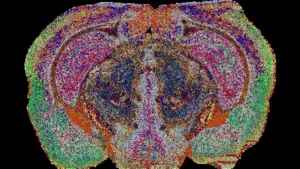
The study utilized resting-state functional MRI (fMRI) data from 180 super agers and 110 Alzheimer’s patients, sourced from prominent research initiatives such as the Alzheimer’s Disease Neuroimaging Initiative, the Harvard Aging Brain Study, and the Open Access Series of Imaging Studies. By recording the brain’s activity while participants rested, the researchers identified distinctive patterns of functional connectivity that reliably differentiated the two groups.
From this, the team developed the "Alzheimer’s resilience-vulnerability connectome," or ARC score. This metric demonstrated approximately 85% accuracy in distinguishing the highly resilient brains of super agers from those affected by Alzheimer’s. When this ARC scoring system was applied to more than 1,300 cognitively healthy adults between the ages of 55 and 70, the predictive power of the model became clear.
Predicting Alzheimer’s Risk Years in Advance
While the initial cohort of 55-to-70-year-olds showed no overt cognitive differences at the start of the study, their ARC scores acted as a clear harbinger of future health. Over the course of follow-up periods ranging from five to 12 years, those with high ARC scores—indicating patterns more similar to Alzheimer’s patients—experienced a significantly more rapid decline in memory, attention, and executive function.
"We used the ARC score to make a prediction of how likely this patient will convert into mild cognitive impairment or Alzheimer’s disease," explained Kanhao (Alex) Zhao, PhD, a postdoctoral scholar in psychiatry and the study’s lead author. "Our model shows comparable or better prediction ability, and it can do so at an earlier time point. And if we combine our score with the existing biomarkers, the prediction performance improves."
The study suggests that the ARC score provides a more targeted, nuanced understanding of neurological health than the "brain age" metric, which is often used to estimate aging based on structural MRI data. Because ARC specifically measures the functional pathways associated with cognitive resilience, it offers a more precise look at a person’s long-term vulnerability.
Could Brain Training Help Prevent Alzheimer’s?
Despite these promising results, the research team emphasizes that the ARC score is not a diagnostic tool for Alzheimer’s disease, nor is it a permanent verdict on a person’s cognitive future. Brain activity is dynamic, and the patterns that define an individual’s resilience can shift over time due to various factors, including aging, brain injury, or neuropsychiatric conditions.
However, the malleability of these brain patterns is precisely what offers hope. If it is possible for the brain to shift toward a state of vulnerability, it may also be possible to nudge it toward resilience through targeted intervention. The Stanford team is now preparing a clinical trial to determine if specific forms of cognitive training can measurably alter brain activity patterns in the direction of the "super ager" profile.
"The critical part is that we have to intervene at an early stage," Zhang said. "That’s why we focus on the cognitively unimpaired population to identify super-ager-like versus Alzheimer’s-like individuals. If we can precisely identify such an early indicator, I’m optimistic that we can reverse or prevent this process through advanced intervention technologies."
While it remains to be seen whether modifying these connectivity patterns will successfully prevent or delay the onset of Alzheimer’s, the discovery provides a vital new roadmap for neuroscientific research. By identifying the functional signatures of resilience, scientists are moving closer to the goal of intervening while the brain is still fully functional, potentially changing the trajectory of the disease before the first symptom of memory loss ever appears.
The study included contributions from researchers at the University of Texas at Austin, Children’s National Hospital, Lehigh University, Penn State College of Medicine, New York University Grossman School of Medicine, and the University of California, Los Angeles. Financial support was provided by the National Institutes of Health, the Alzheimer’s Association, and the joint Rosenkranz Foundation-Knight Initiative.